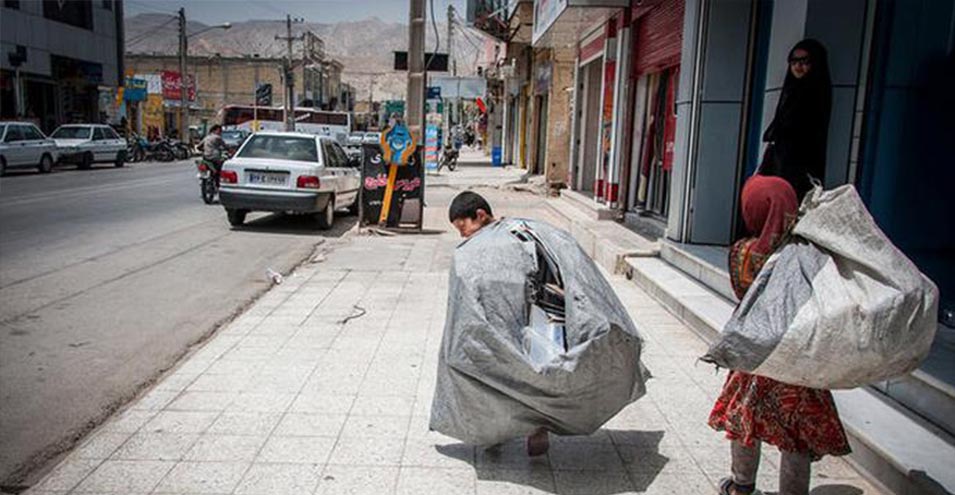
Stories of rape in Iran; you have to be a woman to know…
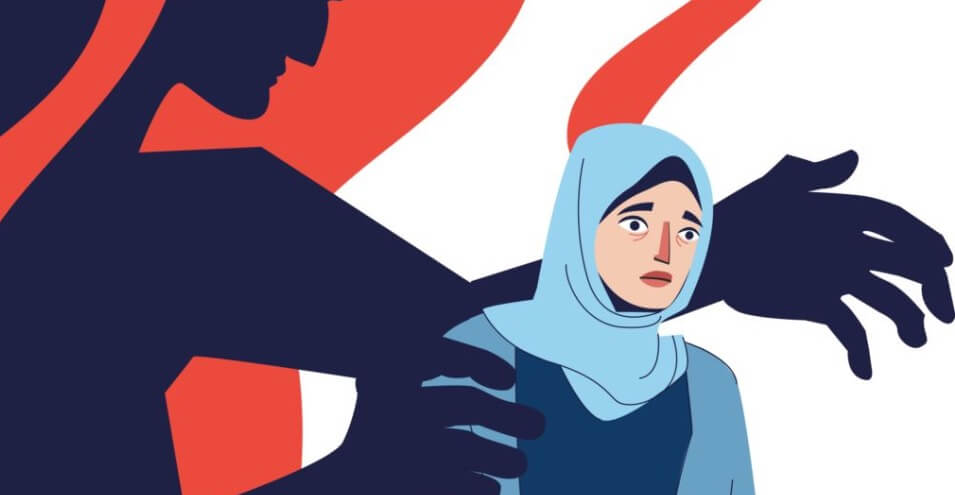
Rough hands are drawn over their bodies and breaths are drawn into their ears. Their hearts are beating not from pleasure, but from fear, fear of the man who is now at the helm of their fragmented lives.
They have neither the courage to scream nor the legs to run away, their lives, their evening meal, and their four walls of refuge depend on the man who possesses them. Their suffering bodies, no longer able to bear poverty, submit to the demands of the man whose life depends on a stroke of his pen. A signature can be their evening meal and their daytime shelter.
What you hear is the story of the lives of women who, in order to obtain the simplest social support, have been forced to submit to the demands of a man who sees women as mere objects to satisfy his sexual needs. Women who, following a call from Radio Farda, have shared their life stories with us and in return have only one request: that we change their voices, so that these same words do not become a vehicle for further harassment; a repeated request, and they remain, all doors closed.
Alone. Homeless and abandoned. Neither the law nor society supports female heads of households in Iran. They have no shelter or support. In their youth and happiness, they are sent to the house of fortune to wear white clothes and come out with a white shroud. But when the man, whom the law calls the head of the family, leaves them alone, all doors are closed to them.
Let's hear the story of Mitra, a woman who approached an organization for support:
"I am a 52-year-old woman who lost my husband, who was a cook, 10 years ago. I have three children. Unfortunately, my husband was not covered by any insurance and we did not receive any pension or assistance from anywhere. After my husband died, I went to people's homes and worked as a cleaner. Sometimes, in addition to cleaning, I also cooked at their parties and celebrations. But despite this, unfortunately, the cost of living was so high that it was not enough to support me and my three children. I always had to pay the eighth of the ninth. I had to borrow money..."
In a family where the man is the sole breadwinner, in the absence of social support for women, the death of a man can change the fate of several families. Nevertheless, women try to bring bread to their small family table as much as they can. Zahra says about the death of her husband and living with her husband's mother:
"I am 38 years old. I am the mother of a 7-year-old son. I live with my mother-in-law, who is 68 years old. My husband was killed in a car accident four years ago. We are in the Yakhchi Abad neighborhood, District 16 of Tehran, in a 50-meter house left by my father-in-law. I live with my mother-in-law and my son. My husband was an only child. He has no other siblings. Now, after his death, we are in the same house together. This house is dilapidated and dilapidated, but we are happy that we have a roof over our heads and are not tenants."
According to the laws of the Islamic Republic, the man is considered the head of the family and, in addition to being responsible for providing for the family's expenses, he is also responsible for the compulsory guardianship of the children. The civil law of the Islamic Republic also considers the man to be the authority to determine housing and in return for these, he has the right to obey the woman; a right that some men extend to the women around them, female colleagues, female clients, etc. They expect the woman to obey in return for performing their duties.
“I am a head of household. Mother of three children. Three years ago, due to financial need, I went to (…) to get a self-employment loan, but I had to give in to the demands of the person responsible for this in order to cover my living expenses and those of my children, so that I could get my loan… Those were very bad days. I was abused for months but I couldn’t say anything. On the one hand, I was threatened, on the other hand, I was afraid for my reputation… Thank you for making my voice heard and that of other women who have been abused.”
Although many organizations claim to support female heads of households and have set numerous rules to support women, no one talks about their unwritten rules. Rules that you cannot receive support unless you obey them. Mitra is a woman who was forced to obey these rules:
“I went to clean… I met a woman who was this lady (…). When she found out about my life, she told me that she would introduce you to the Women’s Empowerment Center (…) where they help unaccompanied women to some extent. She introduced me there and I went and filed a case. This woman’s recommendation was very useful to me. There was a man named (…) who handled my case. He had to confirm whether I would receive [support] or not. When I first met that man, I thought he was a nice person. He told me that it was okay, I would help you. I was happy to go and that would help me. It was then that he told me that he would give me one condition, that you be friends with me. At first, I didn’t understand, I was shocked when he said that we should be friends. I said what did he mean by being friends? He said that we should have a relationship. I still didn’t understand what he meant. I said, "I don't understand, Mr. (…)." He said, "I like you and I want us to have a relationship. Even if you're a religious person, I'll marry you and all that." It was very difficult to decide on this issue, and what should I really do? With the children I had, the expenses I had, the tenants, and... I was very upset. After a while, I gave in to this request. I saw that I had no other choice..."
In traditional families, family support can sometimes fill the gap in social support. Sometimes, a father and brother, or even a cousin and sister's family, can be a refuge in difficult times. But if you have neither social support nor a traditional family, all it takes is a heavy rain to make you need help. Let's hear from Zahra, a woman whose husband was the only child in the family:
"Last year, when there was a lot of snow and rain, the wall of our house got wet and part of the plaster on the ceiling fell off. I was scared and very upset. I didn't have money to fix it. In short, I went to the relief committee to ask for help. They said go there, they will help you, so I went and went to the women's affairs office. From there, I did some administrative work. Then they told me that an expert should come and inspect it, how much it would cost, and then they would do it for me. In short, five days later, a gentleman called me and said that he wanted to come and see the house and so on. He came to the house around noon. From the first moment he entered the house, that gentleman knew that he wanted to repair the house of a head of household. He was a sly, a man of great wit... He started to tease me and so on. He said things that I, a woman, don't understand. So why should this man behave like this?"
As the women who have been sexually harassed say, their age and level of education have no effect on the offers they receive. It is enough to be a woman to allow them to make their offer and to bring the pressure to a point where the woman has no choice but to give in.
Although, according to Article 30 of the Constitution, the government is obliged to provide free education for all people until the end of secondary school, and to expand higher education facilities free of charge to the extent of the country's self-sufficiency, providing education expenses is one of the tricks used to force women to satisfy men's sexual needs. This time, let's hear from a native speaker who applied to a center claiming to support female heads of households to receive educational grants:
"I was the head of the family, and I went to (…) to cover my daughter's university expenses. There, they sent me to the social and cultural affairs department. I went to the department's office and they said, 'Tell your daughter to come to me so I can do her work.' I trusted them and sent my daughter. Don't tell me that the man had another goal and started a relationship with my daughter. My daughter was forced to give in to the man's demands in order to receive support (…) and this was also a disaster that happened to us, unfortunately."
If you think that women heads of households will have a happy life just by meeting expenses and starting a job and being employed in a government or semi-government company, you are wrong. The complex and intricate structure of companies and offices is such that what is not achieved is the complaints of victims of such harassment in these offices. There are no statistics, no numbers and figures of women who have been victims of sexual harassment in office environments.
"I also want to inform you about what happened to me and I ask you to address the problems of women in (…) as well. My managers kept asking for friendship and illicit relationships. They said that if you have a relationship, if you are with us, your future job will be guaranteed, you will have better benefits, a better position and contract, etc. Because I did not give in to their requests, I was under a lot of pressure and problems. Unfortunately, one day when my manager asked me to work overtime, my boss entered my room and forcibly raped me. I suffered a lot of psychological trauma and could not even go to work anymore. They filed a case against me and ultimately caused me a lot of problems."
In the final years of the Iran-Iraq war, when the rising number of unaccompanied women had become a serious crisis for the officials of the Martyrs' Foundation, the official platforms of the Islamic Republic were at the disposal of those who saw concubinage or mut'ah as a way for men to support these women; a form of marriage in Shiite jurisprudence, in which a man and a woman are married to each other with a specific dowry and a set period. The man can give the woman the rest of the period and divorce her at any time, and the woman, in return, does not have the slightest legal protection to receive the full amount of what is called dowry.
Critics of the prevalence of concubinage in Iran believe that the prevalence of this form of marriage, which did not pay the slightest attention to ensuring women's rights, was a new way to pressure women to submit to men's desires; marriage is the only legal means of taking control of a woman's body.
"Look, madam, in Iran, concubinage and becoming a concubine is not a crime. It's legal. That's right. If my child hadn't gotten sick, I would never have agreed to become that man's forced concubine. That man took advantage of our situation in life, but he hadn't committed any crime that we could sue him for in Iran. He forced us to become his concubines. We became his forced concubines out of financial need. In Iran, there is no legal way to complain about this abuse. These parties are bigots, they have a hand in the government, what could we do..."
This is not the only concubine that Katayoun says complaints about are fruitless. Many cases of sexual harassment against women remain fruitless if they reach the stage of legal complaints, unless they create more difficult conditions for the woman. Let's listen to Zahra's words together:
"Then I went and told them that this gentleman who came [to inspect and repair the roof of the house] was not paying attention at all. After a few days, the same gentleman called me. He said that because you lied, I will sue you. He said that you are a widow, you are looking for someone to be with, and you want to take advantage of my situation. He said a lot of bad and unkind things to me. After that, not only did they not fix the roof of our house, but they also stopped answering me. In the end, my mother-in-law was forced to sell her gold. I also had a ring, so I sold it. But that gentleman still calls me from different numbers and [causes] trouble. I have gone to different places, such as the police and the telecommunications company, several times, that this gentleman is bothering me, but no one has taken care of it. He still bothers me, calls me. He calls me from different numbers. I even changed my line, but he still calls me. "He says nasty things. He says, 'Come be my concubine, let's be together.' I'm afraid of my reputation as a widow, so I'm afraid to pursue this further, lest I become the target of criticism. I went to get my problem solved, but they created a bigger problem for me. Anyway, I wanted to tell you about my problem. I hope this disgraceful person will one day be punished for his actions."
The continued verbal, telephone, and street harassment is only part of the price that women who have rejected such men pay. As female heads of households who are victims of this pressure say, no matter what your response to this request, the bitterness of its memory will never be erased from your mind. Katayoun says of her experience:
"My friend and I have now set up a sewing workshop with that man's money and are paying for our children's expenses. Before we became concubines, he would tell us that there is no loan, no budget, bring a guarantor... He would make a thousand and one excuses. He would always say that if you become my concubine, I will start your business myself, I will give you money, I will be your guarantor, I will solve your problem. By God, madam, we were happy to take the five million loan without any hassle, but we would never be in the psychological trauma that we went through in the concubine relationship with that man. It is really painful to tell the details, madam. You are also a woman, you can understand us, madam. We were forced to do it out of financial need. There is no work in Iran, there is nothing, something that was our right... Well, the self-employment loan that was our right, kept us going and going and going, we were forced to give in to his demands. "We see mental and psychological damage."
Sometimes it's not difficult to break free from a man who abuses a woman's body to provide legal assistance. But what can a woman who heads a household do with the memory of all that suffering?
"I was in a relationship with that man for about two years. I tried my best to increase my income, to save money… After two years, I gradually distanced myself from this man… I couldn't do it anymore. I really couldn't. Those two years are the worst memories of my life. There's a black spot in my soul, but I had to. I had to because he didn't leave me any other way… After that, I saved money for a while and found a somewhat better financial situation. I was able to open a home kitchen and cook there myself. In addition to working there myself, I also got three other women to help me with this. My business flourished, it got a little better… I was out of that state. But unfortunately, it is very, very difficult… You can be a housewife, work and sell your soul and have a guilty conscience, do something you don’t like… It was difficult for me and I left bad memories for myself spiritually… But I had no other choice… I had no other choice, but this was a reality of my life. I had to earn money so that I could bring my children out of that [previous] state with at least an average life. Our society is not a good society. Our society is not a good society for women at all… Unfortunately, I had to sell my soul… sell my soul so that I could build a good life for myself and my children… Sometimes I look back on these memories and think that I have had nothing but suffering and hardship in all my life… I hope that no woman, no one will ever experience our conditions and that our society will give women at least their rights… at the level of something basic…”
You have to be a woman to know that the memory of those rough hands, that tight breath in your ear, those endless nights of coercion will never leave you. These female heads of households carry the burden of suffering that their request for help from government and non-government organizations has placed on them. Organizations that were established to help these women, however, add endless suffering to the pain of these women.
Source: Radio Farda