A group of Iranian civil activists called for a review of discriminatory laws against women.
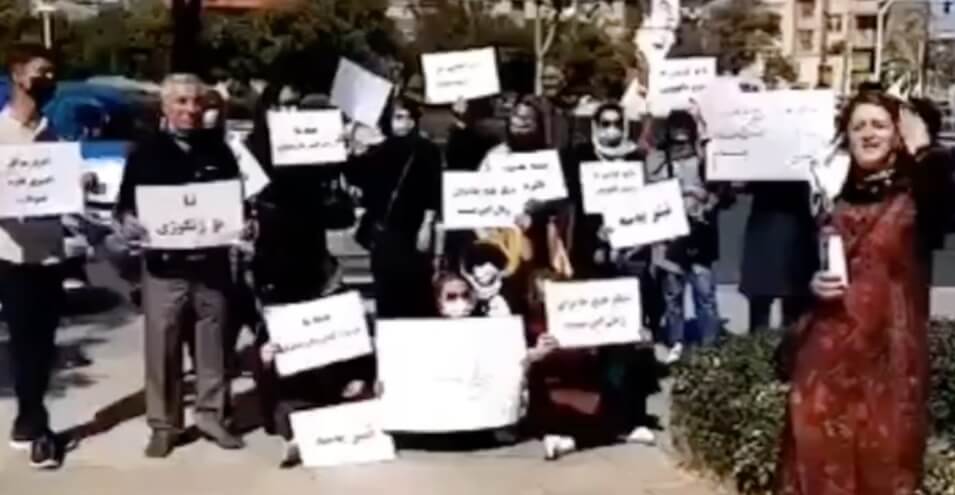
Following the death of a 22-year-old girl who was allegedly the victim of an honor killing, a number of civil activists in Sanandaj gathered in front of the city's courthouse to protest the increase in violence against women.
According to the human rights website "HeNgao", on Wednesday, October 4, these civil activists held placards that read "No to femicide", "We are all Faezeh", and "Nowhere is safe for women anymore", protesting the increasing number of women being killed in Iran and the failure of the judicial system to reach a conclusion on their cases.
Those present at the rally, referring to the death of Faezeh Malekinia, also called for judicial and law enforcement authorities to investigate and clarify the case of the murder of women in previous years.
The human rights website "Hengao" further added that one of the protesters, regarding the death of this 22-year-old girl and the failure of the police and judicial system to pursue her case, called for changing the laws governing women in Iran and also called on the Sanandaj prosecutor to "transparently and compassionately" take the necessary measures in the case of Faezeh Malekinia.
In recent days, Dr. Iman Navabi published the news of the young girl being burned by her father on her Instagram, writing that the father set her on fire with gasoline after learning that his daughter had a boyfriend.
Mohammad Jabbari, the public prosecutor and revolutionary of the capital of Kurdistan province, said, however, that it is still unclear whether the 22-year-old girl's father burned her or whether the cause of death was self-immolation.
The Kurdistan Public Prosecutor continued by calling the publication of the news of the young girl's death by the surgeon a "violation" and said: "This person should not have posted it on the internet when nothing has been determined yet. We have notified the medical system officials of this issue so that they can put it on the agenda of the disciplinary committee and take the necessary action."
Dr. Navabi said in response to the news that he accepts responsibility for what he did and that his action was "supporting the voice of an oppressed person who had no voice to cry out to." He also said that some of his account posts had been inaccessible for unknown reasons.
This is not the first time that reports of violence against women have been published in Iran. Last year, several reports of violence against women and honor killings made headlines in Iran, including the beheading of Romina Ashrafi, a 13-year-old girl from Taleshi, by her father, the murder of Reyhaneh Ameri, a 22-year-old girl from Kermani, by her father with an iron bar, and the killing of Fatemeh Farhi in Abadan by her husband, who was also her cousin.
In July of this year, a 16-year-old girl was brutally stabbed to death by her father in Kermanshah for coming home late.
For years, civil society and human rights activists have been calling for the Islamic Republic to pass the bill to eliminate violence against women as soon as possible.
In Iranian law, based on Article 612 of the Islamic Penal Code, a father who kills his child is not subject to retribution and, if convicted in court, is sentenced to pay blood money and imprisonment for up to ten years.
Source: Voice of America