Death of 11,000 Migratory Birds in Miankaleh Wetland from “Botulism Toxin”
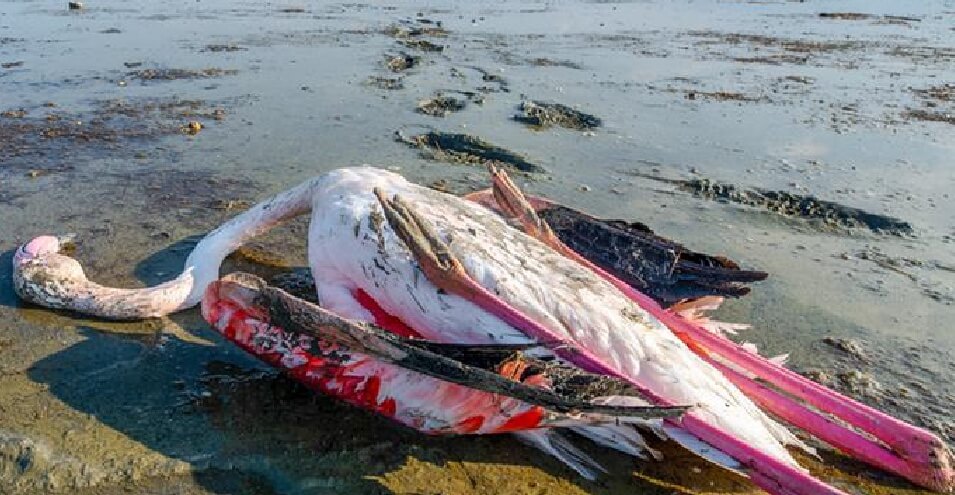
After examining various possibilities, Iran’s Veterinary Organization announced that the cause of death of thousands of migratory birds in Miankaleh Wetland was poisoning. Environmental officials in Mazandaran had declared the cause of these birds’ deaths unknown about a month earlier.
The death of migratory birds in the Miankaleh International Wetland is not a new issue, and there has been much speculation about its cause; ranging from intentional poisoning of the wetland’s water by illegal hunters to an outbreak of highly pathogenic avian influenza.
The state news agency IRNA reported on Tuesday, March 10, citing the country’s Veterinary Organization, that the cause of the death of thousands of migratory birds in Miankaleh Wetland was poisoning with botulism toxin.
The organization stated that from the beginning of this year until March 1, more than 11,000 migratory birds died in Miankaleh Wetland, and after examining “all hypotheses” in reference laboratories and applied research studies, it was determined that these birds were poisoned with botulism toxin.
One of the ways botulism toxin is created in wetlands and stagnant waters is through bacterial interactions in plant species such as algae under conditions of severe oxygen depletion.
The Veterinary Organization stated that field research shows that 94 percent of dead birds were of the pintail species, 3.5 percent were flamingos, and the rest were from 20 different species.
“100 Percent” Emphasis on Botulism and Denial of Other Causes
The agency’s report states that examination of “environmental factors, estimated timing of the event’s onset, involved species, age and sex of birds involved, number of sick and dead birds, at-risk population, characteristics of the occurrence location, as well as analysis of field data collected from the site” shows that the main factor in the high mortality of Miankaleh Wetland birds was “100 percent heat-sensitive biotoxin (botulism).”
Ali Safar Makneali, head of the country’s Veterinary Organization, emphasizes that the organization’s latest tests show that the death and mortality of migratory birds in Miankaleh was not due to highly pathogenic avian influenza, Newcastle disease, and the presence of heavy metals, and these cases are ruled out.
According to IRNA, in 2019, more than 50,000 migratory birds died in the Miankaleh International Wetland due to what was termed botulism toxin poisoning. Based on this, the losses of migratory birds in the first 11 months of this year were far less than the previous year.
Doubt About the Veterinary Organization’s Theory
Despite the Veterinary Organization’s emphasis on definitively determining the cause of migratory bird deaths, some experts and environmental activists accuse authorities of covering up the actual cause and consider botulism toxin poisoning unlikely.
Ismail Kahrom, an environmental activist, in May this year, referring to the history of poison being dumped in the wetland by illegal hunters, told the “Rokna” website that authorities, to avoid involving police, intelligence, and courts, are “solving and covering up the issue” under the pretext of botulism toxin.
Homayun Khoshroavan, director of an international project studying the impact of Caspian Sea fluctuations on the environment of coastal regions, told the “Aftab” website at the same time that given the fundamental difference in habitat between flamingos and pintails, accepting poisoning from botulism toxin for both species is not credible.
Khoshroavan stated: “In flamingo habitats, there is no algae at all that would die, turn into keratin, or have its shell destroyed to produce botulism toxin.”
This expert does not consider poison dumping in water as a cause of migratory bird deaths and says that if this hypothesis were correct, we should also witness severe loss of aquatic life, which has not occurred on a large scale this year.
One of the issues that most environmental activists agree on is the role of interference by institutions and influential individuals in protected areas, change of land use, incorrect policies, and neglect of the requirements for protecting such areas.
One manifestation of the failure of government policies in protecting the environment is the drying up of the Gorgan Bay in Golestan Province. This bay and Miankaleh Wetland were registered as international protected areas in 1975.
Source: DW