Ukraine: Iran is responsible for the deaths of Ukrainians by sending a drone to Russia; EU should sanction
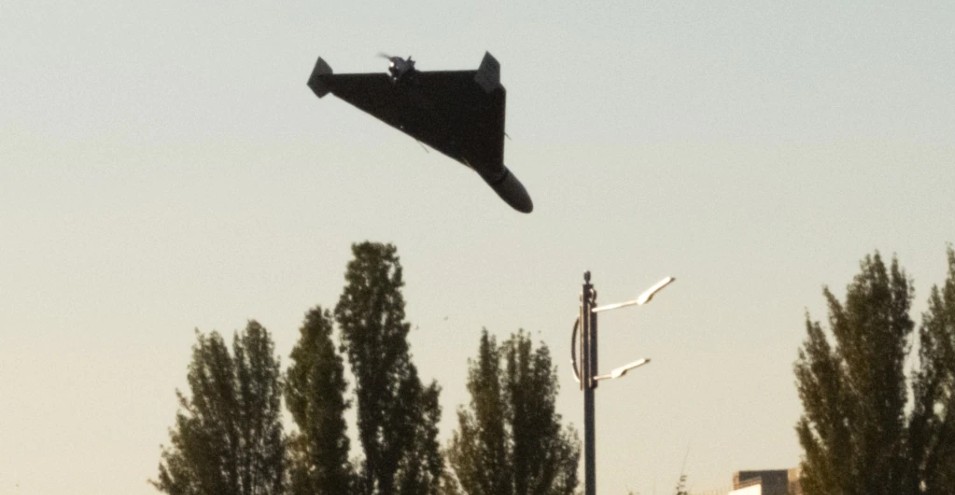
Following Monday's Russian drone attacks on Kiev, an adviser to Ukrainian President Volodymyr Zelensky accused Iran of being "responsible for the deaths of the Ukrainian people." At the same time, the country's foreign minister called for sanctions on Iran.
Ukrainian officials have repeatedly stated in recent weeks that the Russian military is using Iranian Shahed-136 drones in its attacks, including attacks on civilian areas and infrastructure. The Islamic Republic government has denied sending the drones to Russia, and Russia has not yet commented on the matter.
Mykhailo Podoliak, an advisor to the Ukrainian president, wrote on his Twitter page on Monday, October 15: "Iran is responsible for the deaths of Ukrainian citizens. A government that represses its own citizens is giving Russia terrible weapons to kill people in the heart of Europe. This is the result of giving concessions to an autocratic regime and shows that the current sanctions are not enough."
The Ukrainian Foreign Minister also called for the European Union to sanction Iran in a Twitter message for sending attack drones to Russia.
Dmitry Kolba said in his message that he "demanded more air defense and ammunition reserves (and) asked the European Union to impose sanctions on Iran for sending drones to Russia."
Andriy Yermak, the head of the Ukrainian presidential administration, wrote in a Telegram message on Monday that the Russian military used Iranian drones in its attack on the city of Kiev on Monday morning.
Meanwhile, the European Union on Monday approved a plan to train thousands of Ukrainian soldiers in European countries and provide Ukraine with another 500 million euros in aid for the purchase of weapons.
The military training project, which is scheduled to last at least two years, has a budget of around 107 million euros and will be implemented under the supervision of a French Navy admiral.
The EU said in a statement that the training program aims to "assist Ukrainian military personnel in defending the country's territorial integrity based on international borders, actively defending the country's independence and protecting civilians."
Under this program, the EU will provide "individual, collective and specialized training" to personnel of the Ukrainian Armed Forces, and non-EU countries can participate in the project.
In the first phase of this program, which is scheduled to be implemented from mid-November, about 15,000 Ukrainian soldiers will be trained in Poland and Germany.
Several NATO and EU members have been training Ukrainian soldiers for months as part of bilateral cooperation. "By integrating all the capabilities of the armies of EU member states, we can provide a better training program," EU foreign policy chief Josep Borrell said on Monday.
NATO began training Ukrainian armed forces personnel in 2014, following Russia's annexation of Crimea. The alliance believes that training Ukrainian officers and instructors is the best and most effective way to help Ukraine, as it eliminates the need for Ukrainian military personnel to travel to other countries for training.
The European Union is providing Ukraine with another €500 million from its Peace Fund to purchase weapons. This is the sixth package of EU cash assistance to Ukraine for the purchase of weapons.
The bulk of this amount will be allocated to the purchase of lethal weapons and ammunition, with around €10 million allocated to personal protective equipment, first aid and fuel.
Including this figure, the total amount of EU cash assistance for Ukraine's arms purchases reaches over $3 billion. Some EU member states have also provided Ukraine with additional cash and arms assistance separately.
Source: Radio Farda