"Iran is the first country to sell the Corona vaccine to its people"
The statements of some officials and the announcement by the Iranian Red Crescent that the coronavirus vaccine will be made available to those who have the money to buy it have been met with a sharp reaction. Critics say that "Iran should not be the first country to sell the vaccine to its own people."
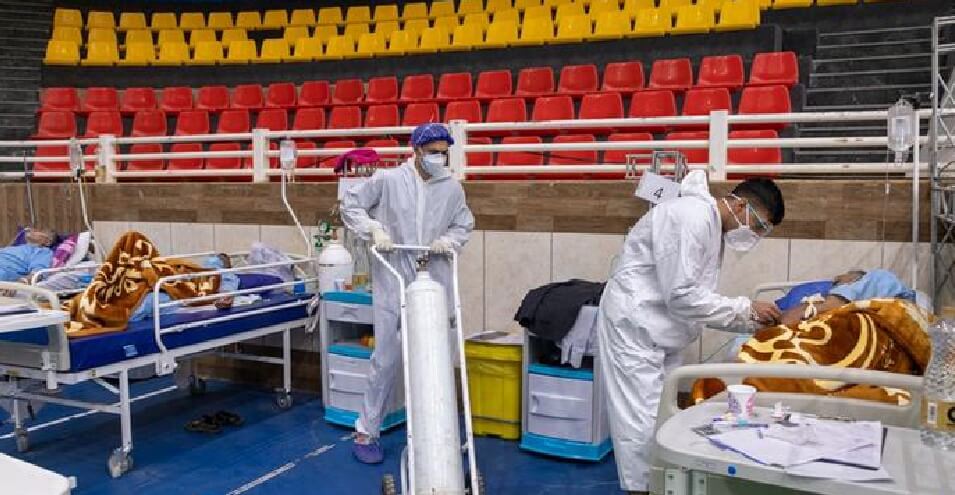
The situation in many provinces of Iran is red, and some, like Tehran, are even "black." Many hospitals have no space for non-corona patients. Medical staff are exhausted, and the people are defenseless and angry. The government is confused and ineffective in providing timely and sufficient vaccines.
In this situation, news also emerged that some “private” companies would be given half a million rials to import vaccines, which would not be free. Bahar newspaper reported on April 19th, citing a statement from the Red Crescent: “This group will import coronavirus vaccines in the coming days, but these vaccines will not be free.”
Those who are in a hurry and have money
Mizan News Agency quoted Alireza Raisi, spokesman for the National Headquarters for Combating Corona, as saying that "some people are in a hurry" and that "the National Headquarters for Combating Corona has authorized individuals or companies to import vaccines with the Nimai currency so that people who cannot wait to receive the vaccine according to the National Vaccination Document can use the vaccines imported by these individuals and pay for it."
He added, "According to the announced policies, all people will be vaccinated for free until the end of the year, but if an individual's turn to receive the vaccine in the National Vaccination Document is, for example, December, they can receive the vaccine earlier by paying a fee."
This is despite Raisi saying the previous day: "It is predicted that the number of coronavirus hospitalizations in this wave will reach 60,000, and we will not be able to get out of the red zone anytime soon."
Meanwhile, Kianoush Jahanpour, the director of public relations for the Ministry of Health, reacted to the news about the vaccine being paid for and stated: "The Ministry of Health denies any parallel policy or circumvention of this national program, under any title, including paying for the vaccine, which violates the national vaccination program."
Jahanpour said the Ministry of Health "denies any parallel policy or circumvention of this national program under any pretext, including paying for vaccines that violate the national vaccination program," and emphasized that "any authorized vaccine imported from anywhere into the country will be purchased by the Ministry of Health and distributed and inoculated free of charge within the framework of the national vaccination program against COVID-19."
Has the vaccine also become a vehicle for profiteering ?
The coronavirus vaccine is, at least officially, free in all countries. This is a point that some officials have also pointed out. The Farahkhitegan newspaper quoted Alireza Naji, a member of the scientific committee of the National Headquarters for Combating Coronavirus and a member of the National Coronavirus Vaccine Committee, as saying: “As far as I know, no country sells the vaccine to its own people. We are the first country to make such a decision. This does not look good.”
He criticized that "if we can import the vaccine, why doesn't the government take it and do it?" Was "our problem to charge people for the vaccine? That is, if people pay, we can import the vaccine?"
According to a member of the scientific committee of the National Headquarters for Combating Corona, this policy prioritizes people who can afford the vaccine and not people who are at serious risk and "even at risk of death."
He called the policy "completely ignorant" of the public, saying "the rich get vaccinated and those who don't have money have to wait in line."
"Even capitalist economies do not engage in such discriminatory practices."
In addition to the long wait for the vaccine to arrive and save people from this situation, Iranian media pointed to the government's poor performance. Bahar newspaper called Raisi and Jahanpour's remarks "another clear symbol of the officials' confusion, lack of planning, and contradictory statements in dealing with the coronavirus crisis and, of course, vaccination."
The newspaper wrote that even "capitalist economies like the US and the UK, where it is said that money can buy anything, do not engage in such discriminatory practices when it comes to health and purchasing vaccines in such circumstances."
Bahar also said that such a policy "raises the question of whether, after the foreign exchange and stock markets, the government has found a new market to generate income from the people?"
Meanwhile, some have linked the cost of the vaccine to the "special" type of nation, which has left the government with no choice by creating "false pressure." Mohammad Hossein Yazdi, head of the Vaccine Research Center at Tehran University of Medical Sciences, said that the problem with the Iranian people is that "we are our own nation. Some people are putting pressure on the health system to import vaccines. In order to moderate this pressure, we have to provide them for free for those who are in a hurry. It is not true, but there is no other choice."
Not-so-Chinese vaccines
A large portion of the vaccines imported to Iran come from China and Russia. According to the Bahar newspaper, the Chinese have stated that the vaccines made in this country "are not very effective, and unfortunately, the statistics from Chile also confirm this issue in a way."
The newspaper pointed to the high death rate in Chile, which "was among the best countries in the field of vaccination, with the difference that it used Chinese Sinopharm in the vaccination," and is now facing nine thousand daily infections compared to the previous peak (seven thousand).
Russian vaccines are also "faced with many ifs and buts," and according to Minoo Mahrez, a member of the National Headquarters to Combat Corona, "Russians themselves do not trust them in their own country; even when Putin is asked about the type of vaccine he has received, he says that only I and my doctor know about it."
How much vaccine has been purchased?
IRNA news agency quoted Haider Mohammadi, Director General of Drugs and Controlled Substances Affairs of the Food and Drug Administration, as saying that the amount of imported vaccines and the Ministry of Health's conditions for importing the coronavirus vaccine from the private sector and with foreign currency have been announced.
According to Heidar Mohammadi: So far, 520,000 doses of Sputnik, 650,000 doses of the Chinese vaccine, 700,000 doses of the AstraZeneca vaccine, and 125,000 doses of the Bharat vaccine from India have entered Iran, and about 500,000 doses of the Corona vaccine have been injected into the people so far.
Based on these statements, COVAX was supposed to provide 16.8 million doses of the vaccine to Iran, but has only provided 700,000 so far. India was supposed to provide 2.5 million doses of the vaccine under the contract, but has only provided 125,000, and Russia has finalized two million doses of the Sputnik vaccine from a contract of 10 million, of which it has provided 520,000 doses to Iran so far.
Vaccines that we "officially announce ourselves" are available for purchase
Regarding the sale of vaccines to the public, he also said: "Currently, the Ministry of Health is only providing vaccinations through health centers and for free. Therefore, if someone says that they are selling the coronavirus vaccine, people can be sure that the vaccine is fake, unless we ourselves officially announce that such and such a place is offering the vaccine." In other words, Haidar Mohammadi did not say that vaccines are not for sale, but only emphasized that you should buy vaccines that "we ourselves officially announce."
The Director General of Drugs and Controlled Substances Affairs of the Food and Drug Administration also said about the import of vaccines by the private sector and with foreign currency: "We had been informing this since July of last year that the private sector could participate in the import of the coronavirus vaccine, but it was not very well received, and some who announced their readiness were unable to import the vaccine. Currently, however, many companies have announced their readiness to import the vaccine."
Regarding the import of vaccines by the private sector, he said that the only thing that is important is that "the importing company, on behalf of the foreign company that produces the vaccine, has a representation document that is approved by the Chamber of Commerce of that country and our embassy in that country."
In other words, international trading companies, “so-called international wholesalers,” must declare that they have a “valid vaccine approved” by the Iranian government. In that case, “the company obtains a letter of representation or company introduction from the international wholesaler and submits it to the embassy for approval, and obtains a letter from the intermediary and submits it to the Food and Drug Administration. Private companies can obtain a license from the Food and Drug Administration to import the coronavirus vaccine through these two methods.”
According to the same report, so far, three private sector companies have received permission to import the coronavirus vaccine from the Food and Drug Administration.
"Blessing" vaccine
Mostafa Ghanei, Secretary of the Biotechnology Development Headquarters, told ISNA news agency on April 20 that the Barkat Company vaccine will be mass-produced and launched in late June. The Svid-19 vaccine will also be produced in late October. According to him, Iran has three joint vaccines, one of which is shared by Cuba and the Pasteur Institute, and the second is the Gamaleya vaccine shared by Iran and Russia.
Have Iranian-made vaccines been approved by the World Health Organization? Kianoush Jahanpour stated during the testing of the Iranian vaccine, "Vaccines do not receive approval from international organizations unless there is an intention to export them, in which case we need to do this."
Referring to these remarks, Bahar newspaper wrote: "Unfortunately, Iran has not clarified whether it will approve Iranian vaccines for the World Health Organization or not, and many see this as a failure to approve these vaccines by the World Health Organization before nationwide vaccination."
According to Bahar, among all Iranian vaccines, only the Barakat vaccine is in phase three and has somehow passed it. The rest of the vaccines are still in phase two or on the verge of phase three, which indicates the long road ahead for the production of these vaccines.
Coronavirus infection statistics and number of vaccines administered
According to statistics from the Public Relations and Information Center of the Iranian Ministry of Health, 416,084 people have received the first dose of the coronavirus vaccine and 134,047 people have received the second dose. The total number of vaccines administered in the country has reached 550,131 doses.
Since yesterday, 24,346 new COVID-19 cases have been identified in Iran. The total number of confirmed cases in Iran has reached 2,261,435, and 398 people have died in the same period. The total number of deaths from the disease in Iran, according to official statistics, the accuracy of which is seriously questioned by independent experts, has reached 67,130.
Source: DW