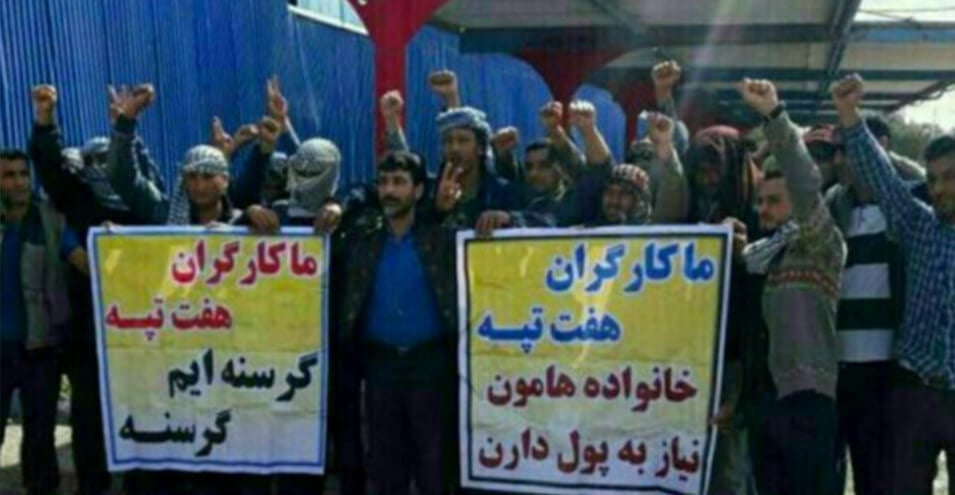
The people are dying and the well officials are dying.
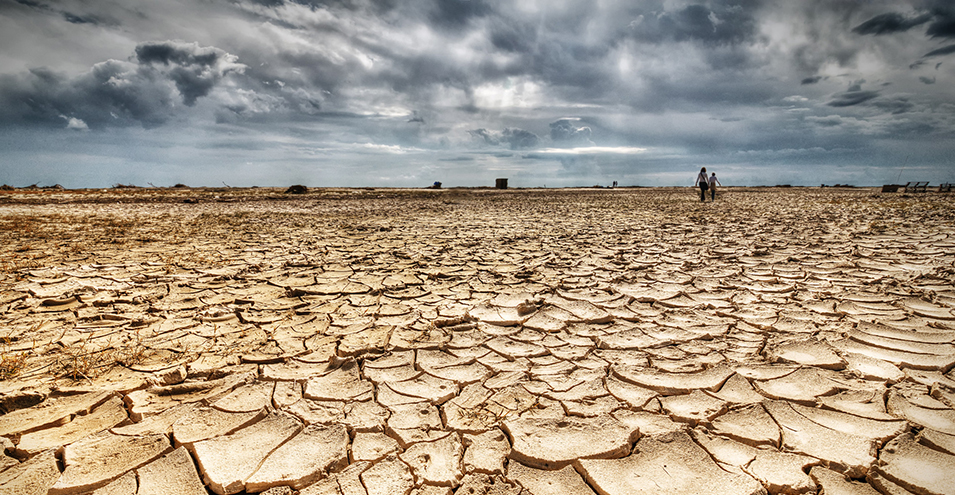
The impact of drought on increasing insecurity in the country
The investigation of crime indicators in the country has been the focus of judicial and security authorities for several years. However, the functional results of this attention are limited to the extent that we only see the announcement of statistics and warnings every week by the judiciary and the police force.
In other words, it seems that these declarations are just a tool to throw the ball into someone else's court. And this is a trend that has become common in Iran over the past four decades and continues to victimize people.
This year, these indicators were routinely studied and measured, and shocking statistics were announced.
Statistics indicate that the prevalence of all types of crime and misdemeanors in the country is unacceptable and unworthy of Iran.
NAJA reports, the increase in the number of prisoners, and the exponential growth in cases entering the judicial system are among the indicators that indicate alarming conditions in Iran.
Reducing the age of criminals
According to Zulqadr, the deputy director of strategy for the judiciary, we are among the top 10 countries in terms of the number of prisoners. This judicial official issued this warning during this year's Judiciary Week.
According to Tasnim, based on available statistics, we currently have nearly three times the capacity of the country's prisons, and the age group between 26 and 32 years old has the highest number of prisoners.
The statistics of cases entering the judicial system also indicate the growth of crime in the country.
According to the Iranian Broadcasting Corporation (IBC) and according to Mostafa Pour Mohammadi, head of the judiciary, the number of cases received by the judiciary in 2015 was more than 14 million.
Of this number, according to Hamid Shahriari, head of the Judiciary's Center for Statistics and Technology, about 32,000 cases have been filed with the criminal court.
While, according to him, the same statistics in 2014 included 20,000 incoming cases.
Shahriari emphasized in the same statement that this statistic has increased by 17 percent compared to the same period in 2013, and 50 percent of the charges in the country, which accounted for the highest statistics, were theft punishable by imprisonment, intentional assault, insulting ordinary persons, causing unintentional bodily harm, threats, destruction, fraud, breach of trust, and possession and possession of narcotics.
The rise of rape
According to IRNA, the representative of the Strategic Deputy of the Judiciary last year reported a sudden increase of 200 to 300 rape cases since 2000, and announced that in 2014, about 1,313 rape cases were reported.
Of course, given the seriousness of the situation, the authorities have remained silent about the statistical changes in this crime in 2015.
And they prefer to resort to the method of erasing the problem rather than trying to reduce crime.
While Qanbarnejad announced last year that the number of 72,000 cases of harassment against women and girls in 2008 had increased to 142,933 cases in 2014, an increase of 98 percent.
He also emphasized that assault, insult, threats, and destruction were among the top 10 charges in the country in the last 5 years.
Inability of officials to control the crisis
These statistics are a corner of the realities that prove that Iran and Iranians are living in critical conditions and that our country is seriously exposed to irreparable damage.
In other words, the authorities have become unable to control the uncontrolled growth of insecurity and crime in the country and have reached a dead end.
There is no doubt that in such circumstances, the growth of marginalization and irregular migration exacerbates this vulnerability.
This is what has happened and is progressing due to the drought and the inattention of government managers and officials to the need for optimal water consumption management.
Abandonment of villages
The depopulation of a large part of the villages of Kerman and Sistan and Baluchestan is one of the problems that the country's inefficient managers have created for the nation.
The drying up of the Hirmand River, Jazmorian and Hamoon swamps, which caused fine dust and intensified sandstorms in these provinces, brought this situation to the people.
While in the past, the people of this part of our country struggled with such problems in the second half of the year, now the crisis has progressed to the point where even cities in the eastern provinces are in crisis and are insecure.
The abandonment of more than 16 villages in Regan County is part of this disaster. Evidence suggests that about 50 other villages are also at risk of being abandoned. This is despite the fact that this county is covered by a support plan called the Jeff International Plan. It was expected that this plan would restore the destroyed lands and protect the county in critical situations, such as sandstorms.
Residents of the south of the country, including Ahvaz, have also been threatened.
The problems in this part of the country began with the construction of the Gotvand Dam on the Karun River in southwestern Iran.
The location of this dam on the Gachsaran salt domes caused the salinity of the water behind this dam to reach a level higher than that of the oceans, and one hundred hectares of the high-quality and fertile lands of the Aghili Plain were destroyed.
In addition, residents of the south of the country face serious problems even with access to drinking water.
According to the Javan newspaper, the water flow in the Gorgan Rud River has now decreased by about 49 percent compared to the previous year. This situation has caused serious problems for the residents of Gonbad, Minudasht, and Galikesh.
These are just a handful of examples.
The pandemic of indifference
The frequency of this news in Iranian media in recent decades has been to the point where it has created a kind of indifference, and officials in particular prefer to remain silent about its consequences.
People who have nowhere to go find a solution in migrating to other cities or provinces, while the destination provinces have no capacity to accept these immigrants and are not responsive to their economic, social, and health needs.
There is no doubt that ignoring this issue will lead to an uncontrollable growth in the unemployment rate, followed by the spread of social harm and crime.
While government managers and officials could have prevented the worsening of drought-related effects in the country in recent decades by implementing various plans.
Disregard for cultivation patterns and the application of incentives to increase motivation among farmers and gardeners to follow these patterns, along with the inability to deal with unauthorized well drilling and illegal extraction of resources, is another part of the problem called the lack of optimal management of water resources in the country.
This management weakness is to the point that no effective efforts were made to encourage farmers and gardeners to embrace pressurized irrigation schemes, and a large portion of the country's groundwater was wasted due to traditional irrigation methods.
And today we have reached a point where the consequences of drought have directly made it impossible to live in many rural areas of the country.
There is no doubt that, given the alarming statistics in the areas of water management, drought, and crime in Iran, preventing the spread of these hazards should be considered an essential matter. And officials should accept that violent and punitive approaches alone will not work.
Meanwhile, it is not clear which institution or organization is responsible for preventing crime in the country. In this way, everyone announces statistics and warns, but no official is held accountable for the escalation of the danger caused by this situation and the victimization of people. People who have unintentionally become involved in circumstances that lead to them committing crimes.
The severity of this situation becomes clearer with the statistics indicating a decrease in the age of criminals in the country. It also threatens the future of Iran.
In other words, the incompetence of managers and their profiteering and self-centeredness have plunged our country into a quagmire that, with the people's futile efforts, is getting closer to destruction and more vulnerable day by day.
Sarah Kh, FCNN reporter