Tajzadeh: Domestic extremists give in, Trump makes a splash
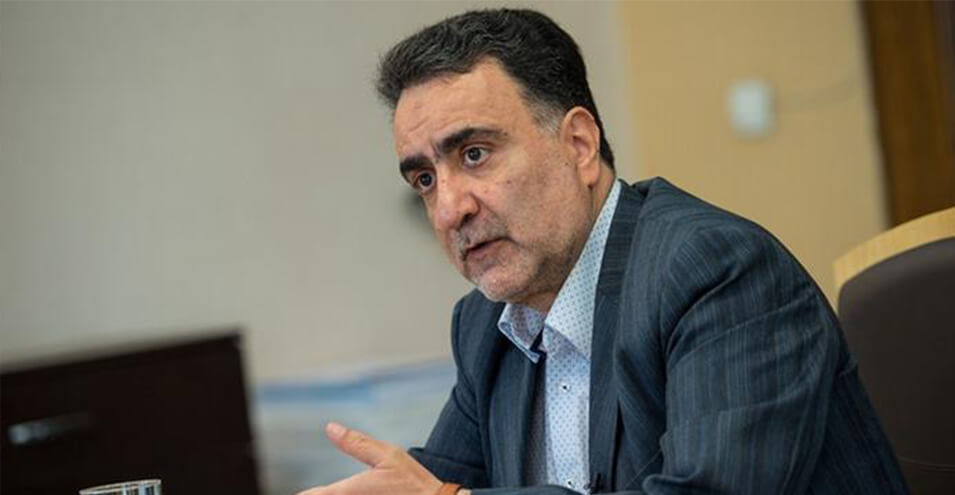
Mostafa Tajzadeh says that the role of the hidden government in creating problems in the country is no less than that of the legal government. He believes that changing Iran's regional policy and negotiating with the United States to lift sanctions is necessary.
Mostafa Tajzadeh, a prominent reformist figure in Iran, has defended the strategies and performance of the "reform" movement in the past and present in a detailed interview with the Iranian Students News Agency (ISNA).
In this interview, he first responded to criticism from some conservative MPs about the meeting between members of the Omid parliamentary faction and Mohammad Khatami in the last days of March. One of the conservative MPs criticized the faction's meeting with the former president and said, "Khatami has shed blood."
Defending Khatami and the reformists
Tajzadeh, who is currently one of Mohammad Khatami's advisors, says, "Mr. Khatami's victory in the 2nd Khordad (1937) elections ruled out a US military attack on Iran and prevented Iran from falling into the vicious cycle of war and poverty. The world recognizes him as the standard-bearer of the dialogue between civilizations."
Tajzadeh considers "another honor" of Khatami to be that he did not allow Iran's nuclear file to be sent to the Security Council and Iran to be subject to international sanctions, because when a country's file is referred to that council, it means that that country must either surrender or endure war.
In his opinion, the few representatives who rioted in the parliament in response to the Omid faction's meeting with Khatami "are those who do not agree with the situation in society returning to normal and the country's affairs moving forward through dialogue and free elections. They want the state of emergency and security to remain so that a small minority can rule the fate of the country."
Tajzadeh adds, "They know that they can only show off in extraordinary and chaotic circumstances; as soon as society calms down, people will demand plans and programs from politicians for governing the country, interacting with the world, and developing Iran, and the extremists have nothing to say in these areas."
Defending the Reformists' Vote for Rouhani
In his interview with ISNA, Tajzadeh defends the reformists' support for Hassan Rouhani in the 2017 presidential election and explains the current policy of the reform movement against the Rouhani government.
He says that if the reformists had not seriously supported Hassan Rouhani, he would not have won the vote, “because the hidden government had come to the fore with all its might to seize and consolidate sovereignty and advance its goals.”
Tajzadeh adds: "If Mr. Rouhani did not vote, we would be condemned by the people both today and in the future. In that case, they would have told us that you left Rouhani alone because of your desire for participation and totalitarianism, and he lost, and they would have held us responsible for this defeat. They would have said that once, with the large number of candidates and the lack of consensus in the 2005 elections, you trapped the country in cultural narrow-mindedness, political obstruction, sanctions, and systematic economic corruption."
According to the political activist, reformists had no reason not to support such a candidate. "If we had not supported Rouhani in the 2017 presidential election, we would have become the eternal accusers of history; totalitarians or anti-time purists who took away a historic opportunity from the people."
Reformists' position on Ebrahim Raisi
Regarding the appointment of Ebrahim Raisi as head of the judiciary, people affiliated with the reformist movement in Iran took different positions. Some supported him, but others, including Tajzadeh himself, did not consider him suitable for the position. However, in an interview with ISNA, Tajzadeh presented a new summary of his approach towards the new head of the judiciary.
Mr. Tajzadeh says: "Despite my criticisms of Mr. Raisi and my lack of consideration for him as a worthy choice for the head of the judiciary, because I am a reformist, I consider correcting processes and procedures to be more important than individuals in order to improve the affairs of the country and its people."
This political activist adds: "If this same Mr. Raisi strives to reform the judiciary, changes its factional composition and functioning, ensures the independence of the judiciary from the intelligence and security sectors, fights corruption within the transparent branch, and improves the affairs of the courts and prisons, I will support him despite my criticisms. Especially if he takes fundamental steps to ensure citizen rights. Reforms and popularizes juries, removes restrictions on the selection of lawyers for political defendants, and accepts that we have political prisoners and does not label them as security prisoners so that their rights are not violated."
The role of the “hidden sabotage government”
Tajzadeh says not all problems are caused by the government's actions. He adds, "Yes, there is inflation, but the role of the hidden government in creating it has been no less than that of the legal government."
In his opinion, "the legitimate government (Rouhani's government) could have prevented the sanctions, but it could not due to the sabotage of the secret government and, of course, the American warlords. Therefore, we do not think it is ethical to just criticize the government for why a kilo of meat has become 100,000 tomans."
He adds: "In fact, extremists and patriotic warmongers are giving in, while Trump is making a fuss. So, while criticizing the government, we are addressing the causes and roots of the problems that others are creating for the government and the nation, and at the same time, we are also criticizing the cleric's mistakes."
He says, "I do not deny the government's weaknesses. I also agree with criticizing the government, but I warn that the hidden government wants to overthrow the legitimate government by abusing the people's dissatisfaction with their rights, and then by creating exceptional conditions, it will practically pave the way for political obstruction and inefficiency, corruption, and embezzlement, and turn Iran into a paradise for war profiteers and sanctions."
The need to correct regional policies
Continuing his conversation with ISNA, Tajzadeh considers reforming Iran's regional policies and negotiating with the United States essential to bring the United States back to the JCPOA.
He says: "I predict a very difficult year for the country in the economic sphere, especially if the sanctions are not broken and continue, the economic conditions will become more complicated and difficult."
According to Tajzadeh, the Rouhani government's maneuvering power in the context of sanctions is not very great unless it disrupts the sanctions game and, instead of chanting "we will bypass the sanctions," finds a way to break the sanctions and negotiates with the United States using all of Iran's regional and global capabilities.
He adds: "For example, by correcting regional policies, we can bring the United States back to the JCPOA and lift sanctions."
In his opinion, the Rouhani government "should pressure Trump to return to the JCPOA by simultaneously establishing contact with anti-Trump government officials, intellectuals, peace activists, the academic community, and public opinion in the United States, the majority of whom are against war. The government should explain to the world that canceling the JCPOA means taking a step towards war."
He says, "The one who propagates that all problems are from the government does not intend to replace Rouhani with Amir Kabir or Mossadegh, Khatami, and Mousavi. He wants Rouhani to be absent so that the government can be unified and the situation becomes more secure. He will once again align Europe with America and give the White House the votes of Russia and China."
Source: DW