The Islamic Republic, Brain Drain and Denial of Facts

The brain drain from the Islamic Republic of Iran is intensifying every year. The flight of educated people and specialists is making Iran's future in terms of a productive workforce even darker.
The brain drain from the Islamic Republic of Iran is becoming more severe every year. The responsible institutions in the Islamic Republic, helpless to solve this problem, have made sociological studies of the issue difficult by providing contradictory and often incorrect statistics and information. The flight of educated people and specialists makes the future of Iran in terms of a productive workforce ever darker.
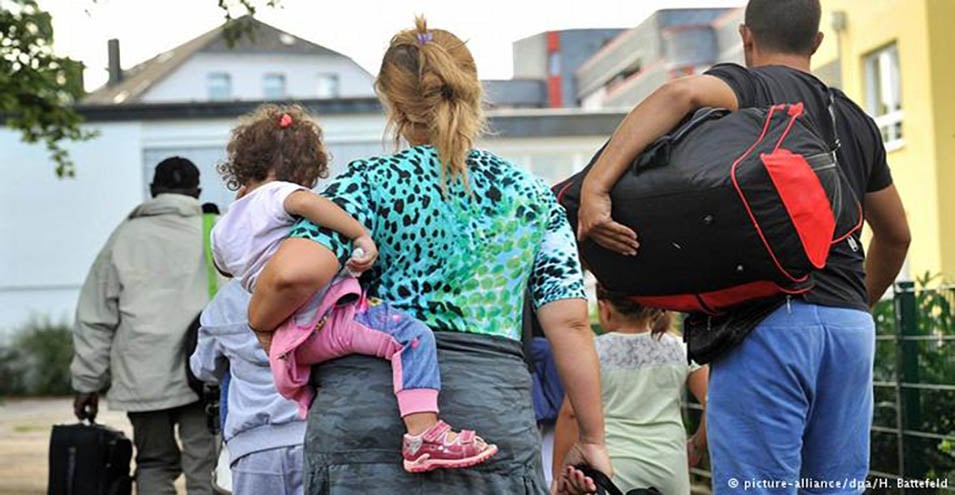
The German Federal Office for Migration and Refugees announced in its latest report on the educational status of refugees in the country that in 2018, more than 47 percent of Iranian refugees identified themselves as having a university education. Nearly 40 percent of Iranian refugees also had a high school diploma.
According to this report, only 9 percent of Iranians had a high school diploma, and not a single person among the thousands of Iranian refugees was illiterate.
The release of this information has once again brought the issue of brain drain from Iran, which has been the focus of much discussion in Iranian academic and scientific circles for years, into the spotlight. On Saturday, August 17, The Independent quoted Bahram Salavati, a faculty member at the Iranian Institute of Demographic Studies, as saying: “30 percent of the Iranian population is inclined to emigrate.”
Elsewhere, Salavati has stated, without citing a source, that there are currently 260 million immigrants in the world, 16 million of whom are Iranian.
These statistics, even if they are not 100% researched and definitive, still reveal only a small part of the brain drain problem in Iran, which experts have been warning about for years about its undesirable consequences for Iran's economy and development today and tomorrow.
Regarding the statistics of educated Iranian asylum seekers in Germany, it should be said that only a very small portion of Iranian graduates who cannot find a way to legally immigrate to other countries enter European countries as asylum seekers, while the queue of immigration applicants in front of the embassies of Canada, the United States, Australia, and some countries in need of specialized workers inside Iran and neighboring countries is getting longer every day.
On August 12, 2010, Baqer Larijani, the president of the 11th Scientific Olympiad of Medical Students of the Islamic Republic of Iran, announced at the meeting of the Olympiad that 150 to 180 thousand educated specialists emigrate from the country every year and a serious plan must be developed to utilize this large capacity within the country.
But after about eleven years since this issue was raised, the government has still not formulated or announced any plans to create facilities that could reduce the surge in immigration.
Many government officials and experts close to the government denied the statistics provided by Baqir Larijani, which were based on international statistics, while, for example, at the same time, the Research Center of the Islamic Consultative Assembly also announced that in 2010, among the people who preferred to emigrate rather than stay in Iran, 60,000 were elites, many of whom held valuable positions in international science Olympiads.
Khomeini and the priority of believers over experts
The brain drain from Iran actually began at the very beginning of the Islamic Republic. Ayatollah Khomeini, the founder of the Islamic Republic, always emphasized that religious faith is above expertise. This view led to cases where, for example, a simple employee became the head of a hospital where dozens of specialist doctors served the people. Most of these doctors left the country in the early years of the Islamic Republic's rule. The migration of specialists in other fields has also never stopped in the past four decades.
The migration trend peaked once again after the suppression of the Green Movement in 2009. In 2010, the International Monetary Fund announced in a report that Iran ranks first in terms of elite migration among 91 developing or underdeveloped countries in the world. However, the Islamic Republic’s officials again called these statistics exaggerated and downplayed the issue of migration.
Bahram Salavati, a faculty member at the Iranian Institute of Demographic Studies, was one of these officials. On January 29, 2018, he denied international statistics and said, “Contrary to popular belief, Iran does not have the highest brain drain rate in the world, but rather ranks fourth in this regard after India, the Philippines, the United States, and Canada.”
An Iranian academic claimed that even the two most immigrant-receiving countries, Canada and the United States, suffer more from brain drain than Iran. He did not even mention the ratio of the US population of 320 million to Iran’s 85 million. The academic’s statement a year ago contradicts what he was recently quoted as saying.
In 2018, the Islamic Republic News Agency quoted Salavati as saying: "In 2018, the number of immigrant students from Iran was 12,700, and currently Iranian students are ranked twelfth among foreign students in the United States."
Even if this information is accurate, the emigration of educated people still has a devastating impact on Iran's future. The experience of the past forty years has shown that due to the lack of job opportunities, low wages, and unfavorable cultural and social conditions, the vast majority of Iranian students and professionals who emigrate abroad to complete their education do not return to Iran, except for short trips and visits to relatives.
Vice President's denial
There are many deniers of the brain drain problem among Iranian government officials. Surena Sattari, Vice President for Science and Technology and Head of the National Foundation for Elites, told Quds Online on August 10, 2019, while denying international statistics published in Western media, “Iran is not currently among the top countries in terms of student and elite migration.”
In a situation where Iranian immigrants are lining up in the embassies and representative offices of European countries, the United States, Canada, and Australia in neighboring countries, the Vice President added: "The trend of emigration of elites and academics has been reversed, and the return of elites to the country to work in knowledge-based companies and startups has increased."
At the same time as the Vice President for Science, Hossein Salarieh, Deputy Director of the National Foundation for Elites, also rejected international statistics regarding the annual departure of 120,000 to 180,000 students and graduates from Iranian universities, arguing that "the presenters of these statistics do not clarify what they mean by elite? Should every university graduate or any person who leaves the country for the purpose of working or continuing their studies be considered an elite?"
"The latest international reports show that Iran is not only not among the countries with high immigration rates, but the number of Iranian immigrants is lower than the global average," Salarieh said, without citing a source.
He accused "some media and circles" of spreading despair in society by presenting false statistics, making people think that every valuable person who could potentially do something for the country is emigrating from Iran.
The same official, however, then clarified that in the ten years between 2008 and 2018, 25 to 30 percent of the country's students and professionals left Iran.
11 billion Tomans for the education of every Iranian
According to estimates from international sources, graduate migration costs the Iranian people billions of dollars each year.
On March 1, 2018, economic expert Amir Vaezi Ashtiani announced in an interview with the state-run Islamic Republic News Agency that educating each person from elementary school to a doctorate costs the Iranian people about 11 billion tomans.
He said, "The productivity of European and American scientific centers like NASA from Iranian experts is undoubtedly the result of the incompetence of the country's senior officials in the field of scientific and economic policymaking."
From the perspective of this economic expert: "It is clear that developed countries attract educated elites from developing countries."
In other words, what the Iranian government and families spend over the years on the scientific and cultural education of their children ends up in the pockets of countries that have provided favorable conditions for attracting talent when they emigrate.
In 2018, the International Monetary Fund identified unemployment, low income levels of elites, financial and administrative inefficiencies, lack of scientific facilities, and political and social instability as the most important reasons for the brain drain from Iran.
Elite migration has intensified since a year ago following the US withdrawal from the JCPOA and the resumption of sanctions against the Islamic Republic.
According to reports from Iran, volunteer migration specialists are now filling foreign language schools. Since English language tests are very strict in Iran, many people, after learning the language, are forced to travel to neighboring countries, including the Republic of Azerbaijan, at great expense to take the test.
The Islamic Republic of Iran, embroiled in crises that are often self-inflicted, is unable to solve the problem of elite migration. A country that has enjoyed a prominent position among most neighboring countries in terms of the number of universities, students, undergraduates, and university graduates, provides its best scientific fruits for free to the very countries it sometimes considers its enemies.
Source: DW