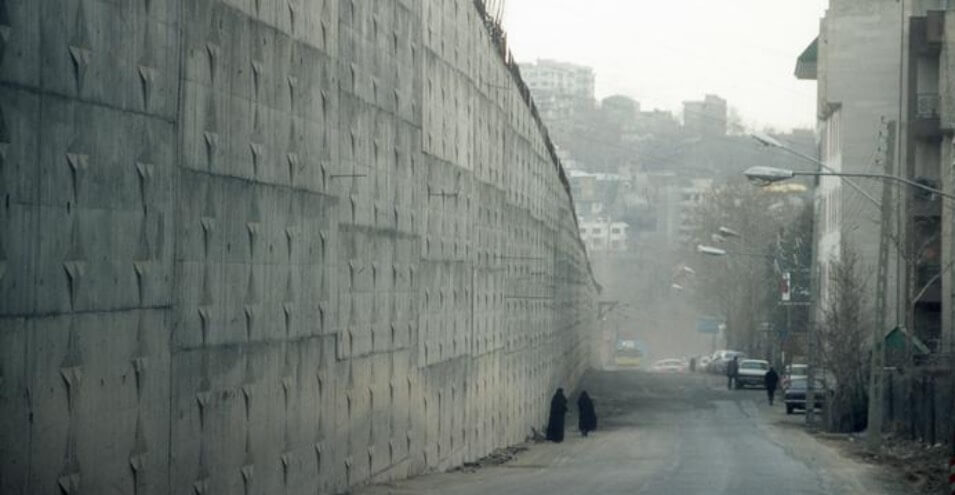
Families of the executed: Denying the regime's leaders' responsibility in the 1967 massacre is a deception of public opinion
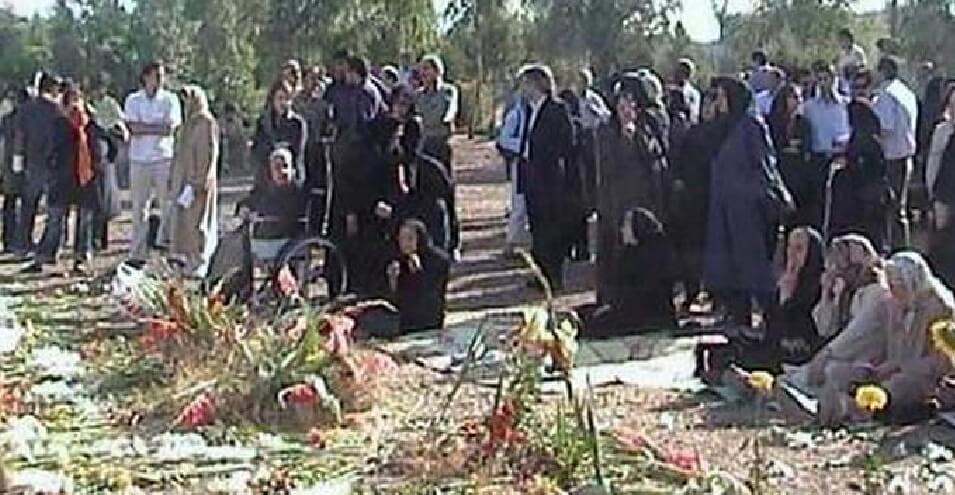
A group of families of those executed in the 1960s have written a letter protesting the “distortion of reality” of the killings of that decade. The group’s protest is about a statement by 60 political activists in support of Mir Hossein Mousavi and criticism of Amnesty International’s performance.
A large group of families of those executed in 1988 and the 1960s, a number of families of those killed in street protests from 2009 to 2019, and a number of civil and political activists have signed a letter protesting the "distortion of the undeniable reality of these crimes by a number of relatives or close friends of Mir Hossein Mousavi who have attacked Amnesty International's efforts to uncover the truth."
The authors of the letter wrote: "We believe that these attacks were carried out deliberately and purposefully to remove the responsibility for accountability from parts of the government, including Mir Hossein Mousavi and members of his government."
The signatories of the letter, naming the then leaders of the Islamic Republic, from Khomeini and Khamenei to Mir Hossein Mousavi and Abdullah Nouri, have accused all of them of being involved in this crime.
The authors of the letter also criticized Ayatollah Montazeri, "despite his bold opposition to the killing of political prisoners," and asked why, despite being aware of the 1988 executions and writing letters to members of the "death committee," he did not inform the prisoners' families of this crime and why he did not go directly to Tehran to meet with Khomeini.
The authors of this letter also considered current officials of the Islamic Republic, including Hassan Rouhani and Mohammad Javad Zarif, to be complicit in this crime because of “distorting, covering up, and even continuing this crime through the destruction of individual and mass graves” and “helping to harass and harm families,” “because the summer 2018 massacre is a serial crime.”
The signatories have raised several questions, including: “Why and how were political prisoners who were serving prison sentences or whose sentences had expired massacred and buried in mass graves in the summer of 2018, behind closed doors, without the knowledge of the political prisoners and their families, and without a public, fair, and secret trial?”
They also asked: "Why do Mir Hossein Mousavi and all those affiliated with the Islamic regime of Iran, who have themselves been harassed and persecuted by the government and have not been immune from the harm of human rights violations in Iran, not make all their information and knowledge about the summer 1988 massacre available to their families and society, and constantly distort and cover it up?"
The signatories of this letter finally invited all those who have been persecuted by the Iranian government for the past 41 years to join their collective protest "to clarify the truth about the crimes of the 1960s, the summer 1988 massacre, and all the state crimes committed up to now."
Protest against the statement of 60 political activists
The focus of the authors of this letter's protest is a statement that a group of political activists issued in response to Amnesty International's actions regarding the 1967 massacres.
In this statement, Amnesty International was criticized for publishing a report titled "Blood-Drenched Secrets" and accused of "blatant distortion of the truth."
Amnesty International's report published a document indicating that the Islamic Republic's authorities were aware of the executions in 2018. A film of an Austrian journalist's interview with then-Prime Minister Mir Hossein Mousavi was also released, in which Mousavi refers to Operation Mersad and calls the "suppression" of the opposition a response to this operation.
The authors of this statement say that since the reporter's question is not in the film and it is not at all clear what question Mousavi is responding to with this statement, it cannot be concluded that Mousavi was talking about executions.
They asked: "Where is the original version of the video? How did you come to these accusations based on a vague, audio-distorted video and assume it was proven? And what does this insistence and all this publicity around it indicate?"
The authors of the protest statement accused the officials of Amnesty International's Iran section of focusing too much on the person of Mir Hossein Mousavi, writing: "The officials of Amnesty International's Iran section... in their interviews and writings on social media, have somehow let go of the perpetrators and perpetrators of that crime and the members of the death squad, and have continuously targeted Mir Hossein Mousavi, the Prime Minister of Iran in the 1960s and a leader of the Iranian Green Movement, who is himself under house arrest for the crime of demanding justice and standing with the people and has no way to defend himself."
In a speech in 2010, Mir Hossein Mousavi said about the 1967 executions: "We were completely unaware, and when we found out, we tried to prevent those executions. The fact that I had a role is untrue, and we were not allowed to enter into this matter at all. However, this is a crime that occurred, and the reality is that no one is yet aware of its true dimensions, and perhaps in the future we will be able to address this event and its dimensions more comprehensively."
In a statement protesting Amnesty International's actions, the authors criticized the organization's method, emphasizing that "following up on the crimes of 1988 is a national and moral imperative," and said: "The manner in which Amnesty International's Iran section officials have been communicating about that report reinforces the suspicion that they are pursuing other goals rather than being eager to discover the truth."
Some families of those executed in the 1960s, who are mostly inside Iran, have also accused Amnesty International of being politically biased and criticized it on social media for "abusing the killing of prisoners."
Among them is Zohreh Tonekaboni, who herself was a political prisoner in the 1960s, who wrote in a comment on Facebook that she considers Amnesty International to be "a tool of the political orientations of powerful governments."
The families of political prisoners also mentioned this issue in a letter they published, writing: "They [the authors of the statement of protest to Amnesty International] are even willing to create discord between families who have stood together for years to clarify the truth and seek justice, in order to achieve their goal."
The letter from the families of political prisoners states: "We, the signatories of this letter, declare that any individual or movement that tries to deny or cover up the responsibility and role of the leaders of the Islamic Republic of Iran and its important and influential figures in these crimes, in various ways, is invalid and we consider it to be serving the interests and political games of those directly and indirectly related to power and for the purpose of deceiving public opinion. We will strongly oppose this approach that serves the violation of human rights and the continuation of crimes in Iran."
In addition to the families of those executed in the 1960s, some families of those killed in protests in recent years have also signed this letter, including Shahnaz Akmali and Mohammad and Maryam Karimbeigi, the mother, father, and sister of Mustafa Karimbeigi, who was killed by direct fire from security forces in January 2009.
Akbar Masoombeigi, Anwar Mirstari, Shadi Sadr, and Shadi Amin are among the other civil and political activists who have signed this letter.
In the summer of 1988, about five thousand political prisoners, all of whom had been tried and were serving their sentences, were executed on the direct orders of Ayatollah Khomeini, in trials lasting only a few minutes.
So far, no official government official in Iran has specifically spoken about these executions, how they were carried out, or the reason for the secret and mass burial of the executed. The officials who have commented on the matter see it as a response to Operation Mersad (Eternal Illumination) by the MEK and its attack on Iranian soil, while the executed individuals were all in prison at the time of this operation.
Source: DW