How serious is the danger of "Iranian nuclear submarines"?
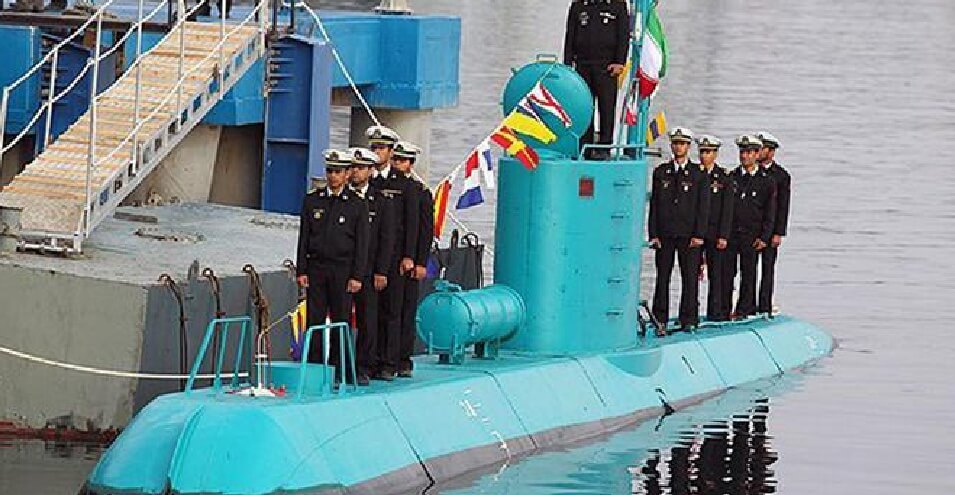
A German newspaper, citing Western intelligence agencies, says Iran has stepped up efforts to build nuclear submarines. About a decade ago, Islamic Republic officials said they were in the “early stages of building nuclear submarines.”
Yesterday, Saturday, April 5, the German-language newspaper "Die Welt", referring to statements made a year ago by the commander of the Islamic Republic's Navy and citing Western intelligence sources, raised the question of how serious the danger of Iran's program to produce nuclear submarines is.
On April 18, 2020, the Young Journalists Club wrote, citing Admiral Hossein Khanzadi, that the Islamic Republic is "thinking" about building nuclear submarines.
The commander of the Navy had said: "When you are not resilient and prepared for defense, peace will not be consolidated and established, and it will not come into being at all. This is why the armed forces of countries are present to ensure that this peace remains sustainable."
Noting that heavy vessels equipped with nuclear propulsion can remain at sea for much longer periods of time, he said: "Who can prevent us from having this capability to defend our security and establish peace?"
Citing a report from Western intelligence agencies provided to the newspaper, Die Welt says that Iran has recently significantly increased its efforts to produce nuclear submarines.
Is the nuclear submarine part of the nuclear program?
The publication adds that detailed information from these institutions shows that the nuclear submarine production project is precisely within the framework of the same plans that Iran had in place to obtain an atomic bomb until a few years ago.
Despite some evidence, Islamic Republic officials have always denied attempting to build a nuclear bomb and have stated that the goal of their programs is the peaceful use of nuclear energy.
Apparently, efforts to produce a nuclear submarine are centered at the Defense Advanced Research Organization (Sapand), affiliated with the Ministry of Defense, whose head, Mohsen Fakhrizadeh, was killed on December 27, 2020, in an operation attributed to Israel near the Damavand Strait.
According to Die Welt, work on building a nuclear submarine could actually lead to results that could also be used in building an atomic bomb.
According to this report, according to data from Western intelligence agencies, a unit for the nuclear submarine production program has recently been established at the Mozhdeh site belonging to "Sapand".
The Mozhdeh site is located near the Ministry of Defense's Malek Ashtar University in Tehran, and Mohsen Fakhrizadeh's office was also located in the same facility.
The German publication, citing Western intelligence sources, says that to advance the nuclear submarine production program and prepare its construction plans, a company called "Mersad" has been established, headed by a person named Mohammad Hossein Ababaf Behbahani.
Possible collaboration between researchers at the University of Science and Technology
The newspaper "Die Welt" says that it is unable to fully confirm the information from Western intelligence sources, but it has presented them to experts and investigated them to the extent that journalistic possibilities allow, and has found, among other things, that there is a person named Ababaf Behbahani who is engaged in research at the Iran University of Science and Technology. At the same time, the research published by Behbahani in international sources has no direct connection to the production of nuclear submarines.
The University of Science and Technology is said to have signed contracts with the Ministry of Defense for research work. The university's website lists "design and construction of a heavy diesel engine control system" and "design of giant electric motors" as among the achievements of its researchers.
David Albright, a physicist at the American think tank the Institute for Science and International Security in Washington, who has been following Iran's nuclear program for years, tells Die Welt that one does not have to be a nuclear scientist to be able to come up with structures that are useful in this program.
He says that "Sapand" has always collaborated with various universities and appointed researchers to head companies that are established to advance the organization's programs.
According to David Albright, the information from Western intelligence agencies is credible in this regard, although he cannot confirm or deny its accuracy. He added that a company named Mersad with the specifications mentioned in this information cannot be found in official Iranian sources, but this is not unusual for companies working with the Islamic Republic's defense and nuclear programs.
Possible dangers of Iran's nuclear submarine
At the same time, this physicist is confident about the possible risks arising from the production of nuclear submarines by the Islamic Republic, and points to some of them.
One important issue in this regard is the difference between the nuclear reactors required on a submarine and nuclear reactors used to generate electricity. Due to the limited space on a submarine, its propulsion reactors must be very small yet powerful, and operate with very highly enriched uranium.
While nuclear power plants often use uranium with an enrichment of between three and five percent to provide energy, submarine reactors typically operate with uranium with an enrichment of between 80 and 90 percent.
Uranium enriched above 80% is also used in the warhead of atomic bombs. Also, the production of nuclear submarine propulsion can have steps similar to the construction of plutonium reactors, which are also used in the construction of a type of atomic bomb.
The Die Welt analyst believes that strategically, the possible construction of a nuclear submarine by the Islamic Republic could decisively change the security situation in the Middle East and Europe.
A nuclear submarine can travel underwater for weeks or months and deliver the Islamic Republic's disputed ballistic missiles to very distant targets. Albright says that's why Iran's nuclear submarine could pose a threat to the United States, Europe and Israel.
However, it is still unclear whether the Islamic Republic is capable of building a nuclear submarine. The American physicist believes that this would be very time-consuming and costly, while Iran's financial resources are very limited, including due to the pressure of sanctions.
Old promises, vague vision
Evidence also shows that talk of building a nuclear submarine in the Islamic Republic dates back at least a decade, but so far no reliable news of practical action in this direction has been published.
In June 2012, Fars News Agency quoted Admiral Abbas Zamini, the technical deputy of the Navy of the Islamic Republic of Iran, as saying: "We are currently in the initial stages of building nuclear submarines."
This news, which was quickly covered by many domestic and foreign media outlets, was apparently removed from the Fars News Agency's website after an hour.
Admiral Abbas Zamini had said that when we possess peaceful nuclear technologies, we can also put the construction of a nuclear submarine propulsion system on the agenda. Referring to the Navy's ability to design and build light and semi-heavy submarines and repair and maintain heavy submarines, he claimed that the force has begun planning to acquire super-heavy nuclear submarines.
The Islamic Republic has produced several light and semi-heavy submarines so far, but the country is far from producing super-heavy submarines in which the use of a nuclear reactor can be justified.
Last year, two days after Admiral Khanzadi's remarks about building a nuclear submarine, the Russian news agency Sputnik wrote: "Currently, the level of technology demonstrated [in Iran] lags far behind that of many other countries, and a nuclear submarine for Iran cannot be predicted anytime soon."
Sputnik quoted Anatoly Sitnov, the former chief of armaments for the Russian Armed Forces, as saying that his assessment was that Iran could develop "the potential to create nuclear submarines" within 10 to 15 years.
Source: DW