What is the reason for the crisis and flooding in the cities of Khuzestan province after the recent rainfall?
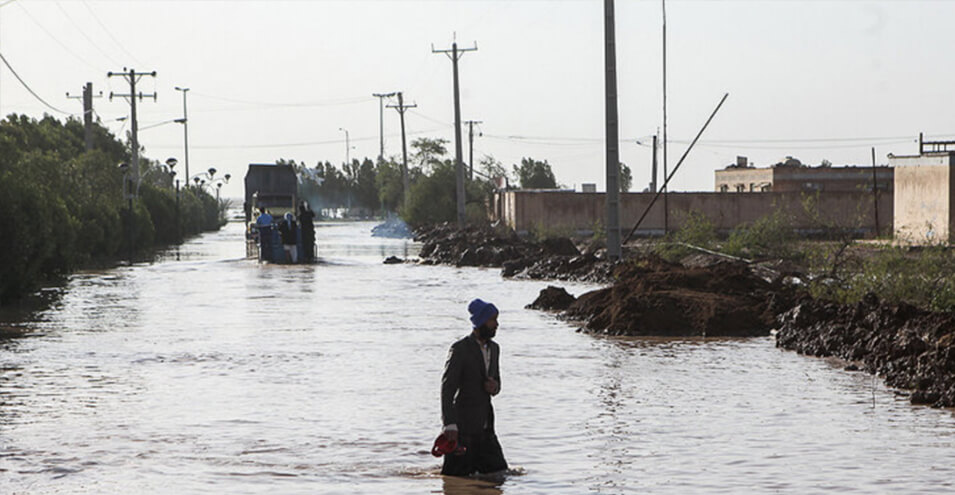
Heavy rainfall in recent days in various provinces of Iran, including Khuzestan Province, has caused flooding in various cities and villages, causing extensive damage to homes, agricultural lands, and commercial buildings.
These rainfalls have caused the dam to break, and the border town of "Rafi'e" with 1006 households adjacent to the Hur al-Azim wetland has lost its defensive shield and is exposed to flooding.
On the other hand, the Khuzestan governorate has announced that the city of Rafi must be evacuated; although most people are unwilling to leave the city and it is reported that more than half of Rafi's residents are still in their homes.
ISNA news agency reported that people who refused to leave their homes said, "We cannot vacate our homes. We have nowhere to go, we have to stay at home."
According to the report, people in the area said that since last night, when the Rafi dam broke, water has entered the city, making conditions very difficult.
The images show that people have been repairing the Sher Rafi dam with their bare hands and the most basic tools, and although the dam broke last night, the necessary machinery and facilities have not yet arrived in the city.
IRNA also reported that efforts to repair flood dams in the districts and villages of Shuaibiyeh, Bamdej, and Daghaghleh Safak in Bavi County are continuing, while residents have been evacuated from some villages after widespread flooding.
However, the flooding has also submerged agricultural lands in the Azadegan Plain in Khuzestan, causing great damage to farmers.
Although Hossein Mormozi, head of the Azadegan Plain Agriculture and Natural Resources Association, in an interview with ILNA News Agency, considered the main cause of these damages to be the "result of inefficiency" and "negligence" of the Khuzestan Water and Electricity Organization, saying that "if they had bothered to strengthen the flood barriers and dredged the Karkheh outlets to the Hor-al-Azim wetland, the disaster would not have happened these days."
Some images published in the media inside Iran also show people standing in front of the flood to save agricultural land in Khuzestan.
Previously, in 2016, most of the flood dams in Khuzestan Province were damaged due to flooding, and now two years have passed since this incident.
This is despite the fact that, according to the Director General of Khuzestan Province, "the flood barriers that were destroyed in most areas in 2016 have only been repaired in the last 30 to 40 days." However, it is not clear to what extent these flood barriers have been repaired, as many cities and villages in this province have been so affected by these rainfalls and flooding.
But it seems that the floods caused by the rainfall will also affect the southern and western provinces of Iran in the coming days. Iranian media, citing officials from Khuzestan province, have announced that the Dez and Karkheh rivers are in a critical condition and that villages in six counties - Dasht-e-Azadegan, Hoveyzeh, Dezful, Shushtar, Ahvaz and Shush - are under threat of flooding.
Recent floods in the shadow of environmental and water crises in Iran
The recent flood occurred at a time when Iran has been facing an environmental crisis and water shortage in recent years, and the inefficiency of the Islamic Republic of Iran government in dealing with these crises has caused many problems for the people.
Earlier in May of this year, US Secretary of State Mike Pompeo, while announcing support for the Iranian people, said, "We are witnessing financial and environmental crises in Iran. Corruption has engulfed the country. The regime is stealing from its own people. The violent men of the Iranian regime are afraid of women and their protests."
Israeli Prime Minister Benjamin Netanyahu also recently released a video referring to the water shortage crisis, expressing his readiness to help the people of the country and saying that Israel would share its knowledge in the field of water with the people of Iran.
Mr. Netanyahu had said, "The Iranian people are victims of a cruel and authoritarian regime that even deprives them of the water they need."
Source: Voice of America