Coronavirus economic recession in Iran's Eid market
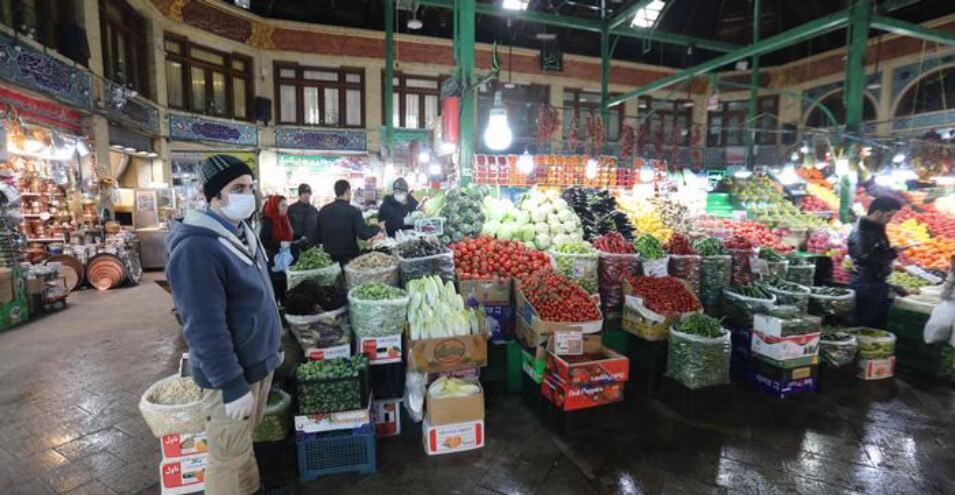
Iranian media described the worst days of the Eid bazaar as the days of market stagnation as a result of the coronavirus outbreak. Market activists demanded exemption from taxes and municipal fees. Several experts have said that the coronavirus recession has not yet reached Iran.
It's hard to believe, but it happened. The coronavirus surged from Wuhan, China, and airlines were grounded thousands of miles away. Stock markets plummeted. Tourists stayed home and hotels were in shambles. Employees began working remotely, and the global economy faltered, like the Eid markets for Iranians.
The economic damage caused by the spread of the coronavirus has not only affected the Chinese economy but also the global economic chain. Iran's economy, which is also part of this chain, will become more turbulent with the spread of the coronavirus, in addition to sanctions and being placed on the FATF blacklist.
“The worst days of the Eid market”
The state-run newspaper "Iran" reflected some of the concerns of the Eid night market in a field report, writing that with the peak of the coronavirus outbreak, many businesses have faced challenges and stagnation, and after months of waiting to achieve a thriving business on Eid night, they are now more worried than ever.
The coronavirus outbreak has forced most people to stay home instead of strolling the always-busy sidewalks and streets and shopping in the various markets on Eid night. The continuation of this situation, according to “Iran,” has caused market activists to “bring the worst days to the night.”
In a conversation with this newspaper's reporter, activists from various businesses asked the government to exempt them from paying taxes and municipal fees in March, due to the market downturn, and instead allow them to use bank facilities.
In a statement yesterday, the Central Bank's public relations department announced the conditions for receiving bank facilities, while also pointing out that business owners who have experienced a decrease in income and financial difficulties due to the coronavirus outbreak, as well as bank debtors, have until the end of September 2020 at the latest to pay their debts in cash.
Sleeping customers, a broken market and plenty of taxis
In similar reports on the slump in the Eid night market, Iranian media outlets point to self-employed businesses, some of whom have rented shops but, with a sharp drop in income, are unable to cover rent, utilities, and other expenses.
IRNA considered the continuation of this situation to be a crisis and a cause for "an increase in bankruptcies," and wrote that the coronavirus has put pressure on the entire market. From hairdressers, florists, street vendors to seasonal workers and online businesses, everyone is involved in the market downturn.
These days, online taxis are searching for customers on quiet, low-traffic streets. In years past, it was customers who had to wait in line to catch regular and online taxis.
An online food sales operator said that due to the spread of the coronavirus in the last few days, he has experienced the lowest number of food orders.
He added that due to people's concerns about contracting the coronavirus, the number of orders has decreased, and now he and his other colleagues don't know what the solution is.
Cancellation of tourist tours
During the days of the coronavirus outbreak, domestic media outlets, somewhat openly and without mentioning the responsibility of governments in times of crisis, have written that the scope of closures has extended from movie theaters, concerts, and theaters, and the bankruptcy of the hotel and tourism industry to the closure of restaurants, halls, agencies, and coffee shops, and that their customers have also decreased sharply.
This is a chain that ends in the tourism industry. On March 26, the Ministry of Cultural Heritage, Handicrafts and Tourism issued a circular announcing “trip cancellation and special conditions” and ordering travel agencies to refund money received from tourists and travelers who have canceled Nowruz trips “without charging any fines.”
Previously, Harmatollah Rafiei, chairman of the board of directors of the Iranian Travel and Airline Service Offices Association, had reported an increase in the number of cancellations of train and plane travel and registrations for tours and hotels.
The Hamshahri newspaper also wrote about the lack of hotels in Qom and Mashhad. A similar situation is now being observed in many northern and southern cities of the country that are destinations for domestic tourists, as the Airline Association said that the responsibility for paying compensation for flight cancellations due to the coronavirus outbreak lies with the airlines.
Coronavirus economic crisis on the way to Iran
Concerns about the spread of the coronavirus have led many neighboring and non-neighboring countries to close their borders to Iranian travelers and to prevent their own citizens from traveling to Iran. These countries include Turkey, Afghanistan, Iraq, Pakistan, and Armenia. Earlier, Ali Rabiei, a government spokesman, said that closing Iran's borders with its neighbors would cause irreparable damage to the country's economy.
Closing borders and imposing restrictions on imports and exports will affect the Iranian market at both micro and macro levels, an issue that experts are warning about.
Hamid Mirmoeini, an economist, told IRNA that in the crisis caused by the coronavirus, businesses, mainly in the service sector, are suffering the most, and businesses such as retail, home appliances, hospitality, and even clothing are suffering from recession due to a sharp drop in demand.
Mr. Mirmoeini, noting that the economic consequences of the economic crises have not yet reached Iran, said that this "recession will reach other economic sectors and the entire national economy with a delay."
IRNA also quoted Zahra Karimi, an economist, as saying that the outbreak of the coronavirus crisis will increase the share of informal employment in the Iranian economy, and that the Iranian government “does not have much maneuvering power” to deal with the negative effects of the crisis. Ms. Karimi is referring to the maneuvering power of governments such as China and Japan, which can partially compensate for the damage done to businesses. However, the Iranian government is struggling to meet the country’s current expenses due to financial constraints resulting from sanctions restrictions and being placed on the FATF blacklist.
Source: DW