"A leader should be prosecuted, not become the head of the judiciary"
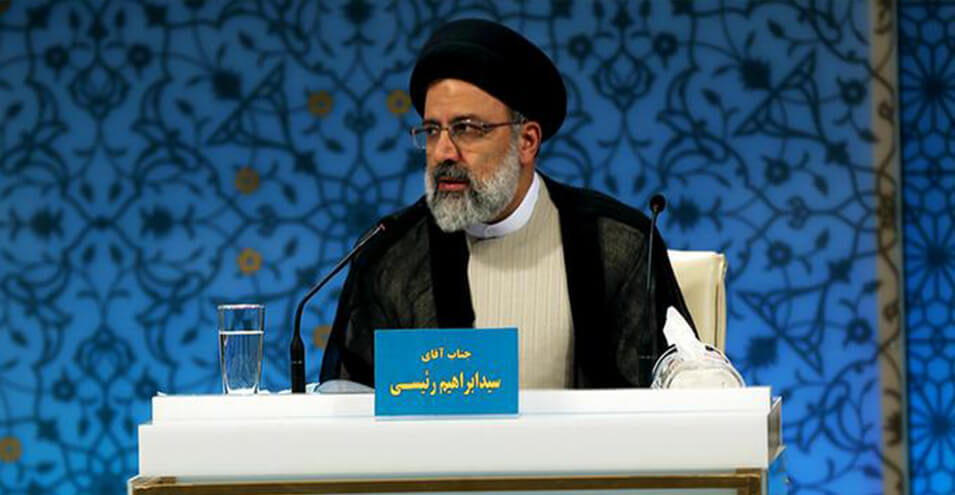
The International Campaign for Human Rights in Iran (ICHRI) has described Ebrahim Raisi’s potential appointment as a sign that “the rule of law has no meaning in Iran.” The campaign’s director has described the potential appointment as a “reward” rather than a punishment.
The International Campaign for Human Rights in Iran has reacted to the news of the possible appointment of Ebrahim Raisi as head of the Iranian judiciary. The human rights organization issued a statement calling the appointment “a sign of denial of the rule of law” and a reward for those “who are involved in human rights crimes.”
Ebrahim Raisi was a member of a panel formed in 1988 by order of Ayatollah Khomeini to complete the “task” of political prisoners. This panel would issue death sentences or release sentences in trials lasting a few minutes, asking only one or two questions of the prisoners. During these trials, thousands of political prisoners from various backgrounds, all of whom were serving their sentences, were executed.
Last week, the spokesman for the Islamic Consultative Assembly's Legal and Judicial Commission announced that Ebrahim Raisi is set to replace Sadegh Amoli Larijani as head of the judiciary. This news has not yet been officially announced.
Hadi Ghaemi, director of the Human Rights Campaign in Iran, said: "A president should be prosecuted, not elected as the head of the country's judiciary."
He added: "If Raisi is elected as head of the judiciary, it will send a clear message to the people: the rule of law has no meaning in Iran, and those who were involved in the 1988 massacre will receive rewards from the government instead of being prosecuted."
Many survivors of the 1988 executions have been seeking justice for years, and the cause of these executions and the burial places of the executed have been clarified. A symbolic trial called the “Iran Tribunal” was held in this regard, with the participation of survivors and international lawyers.
The International Human Rights Campaign wrote in its statement: "If a leader is appointed as head of the judiciary, given his political history and role in the mass executions of 1988 to silence political opponents, this branch will be further weakened because someone who played a prominent role in one of the most widespread violations of citizens' rights and in the execution of thousands of people will take the helm of this branch."
The head of the judiciary is appointed by the Supreme Leader of the Islamic Republic and is therefore accountable only to the Supreme Leader. The Human Rights Campaign has expressed concern that a head of the judiciary could even interfere in the selection of lawyers in security cases, thereby further denying political and security defendants the opportunity to have a fair trial.
Ebrahim Raisi was a presidential candidate in the 2013 elections, losing to Hassan Rouhani. He served as the Prosecutor General of Tehran from 1989 to 1994, the First Deputy of the Judiciary from 2004 to 2015, and the Attorney General of the country from 2014 to 2015. He is currently the custodian of the Astan Quds Razavi.
Source: DW