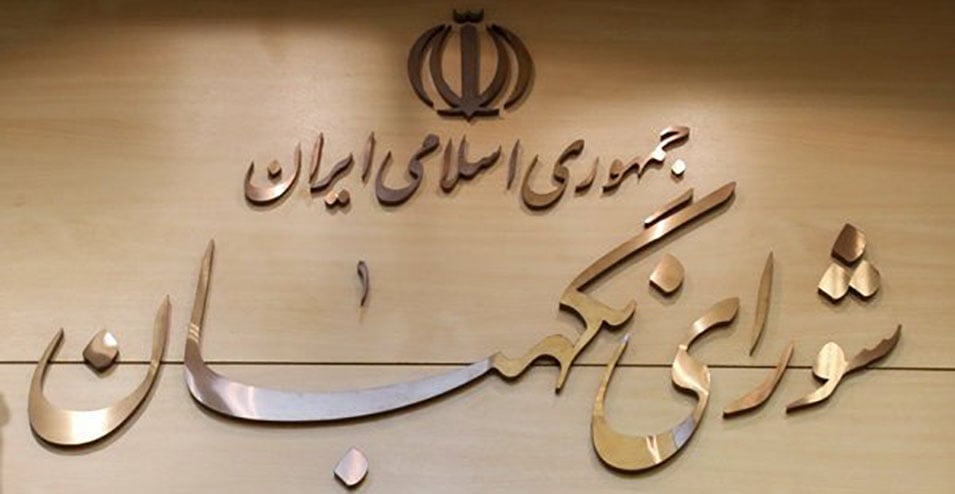
The Guardian Council of the Constitution has approved the law passed by the Iranian Parliament on political crimes.
The Guardian Council had previously considered one item in the parliament's resolution ambiguous.
According to the Guardian Council, Articles 2 and 3 of the parliament’s resolution were ambiguous. Article 3 stated that “unlawful deprivation of individual liberty” was not a political crime, but Article 2 considered “violation of the legitimate freedoms of others” to be a political crime under certain conditions.
The Islamic Consultative Assembly removed the section on "illegal deprivation of liberty of individuals" and sent its resolution back to the Guardian Council, which this time approved the resolution.
The Iranian constitution stipulates that political charges should be tried in open courts with a jury, but over the past three decades, because a political crime lacked a clear definition, political defendants were mostly tried in closed courts without a jury.
According to the new political crime law, crimes committed with the motive of criticizing the functioning of the government or gaining or maintaining power are considered political crimes, provided that the perpetrator does not intend to undermine the fundamental principles and frameworks of the Islamic Republic of Iran.
The note to Article 1 of the Political Crimes Law states that “the official religion and sect of the country, the system’s reliance on the absolute authority of the jurist, Islam, and republicanism” are considered fundamental principles and frameworks against which committing criminal acts does not fall within the definition of a political crime.
Political prisoners in Iran are generally tried on security charges. Iranian officials say no one is imprisoned in the country for their beliefs. Foreign Minister Mohammad Javad Zarif, for example, said last year: “We do not imprison people for their beliefs.”