The Attorney General and a number of Ahvaz residents file a complaint against the Minister of Communications
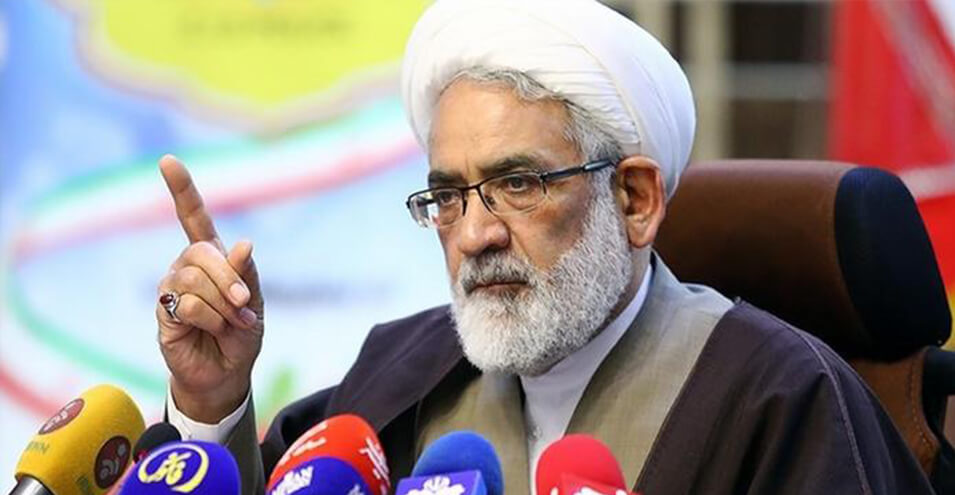
The Attorney General of the country, citing the increase in cybercrime and the “shameful atmosphere in society,” held the Minister of Communications responsible for violating the resolutions of the Supreme Council for Cyberspace. Mohammad Jafar Montazeri and a number of people from Ahvaz filed a complaint against the Minister of Communications.
On Sunday, February 24, Mohammad Jafar Montazeri, the country's Attorney General, strongly criticized the Interior Minister, calling him responsible for the "shameful atmosphere in cyberspace."
Montazeri pointed to the sharp increase in cyberspace and computer crimes and said that the Minister of Communications is not providing the necessary cooperation in cleaning up cyberspace.
Montazeri directly addressed the Minister of Communications: "He has not and will not cooperate in cleaning up cyberspace, and he violates the resolutions of the Supreme Council for Cyberspace. We also say that when there is no will, they somehow escape."
Regarding the rapid spread of cybercrime, the judicial official said that society's officials know "what a shameful atmosphere has been created in society." Montazeri warned officials about the "horrific statistics of the growth of crime and sin" in society: "Today, cyberspace has become a shameful platform for the commission of moral and financial crimes. People are trapped. Who is responsible?"
According to Montazeri, cybercrime and computer crimes have increased by 140 percent compared to last year, and computer fraud, with a 300 percent increase, is the highest type of computer crime in the country.
It is not clear from the Attorney General's remarks what measures should be taken to "clean up cyberspace" and what area of the internet he wants to restrict, but it seems that Instagram filtering is what the Attorney General is considering.
The Internet and social media in Iran face extensive filtering. International NGOs also call the Iranian government one of the “enemies of the Internet.”
After the nationwide protests of January 2017, social media filtering entered a new phase, including the blocking of Telegram. Facebook and Twitter have also been filtered in Iran for a long time. Instagram is currently the only popular unfiltered social media network in Iran.
Iranian President Hassan Rouhani has repeatedly spoken about the failure and ineffectiveness of the filtering policy in the country.
“Betrayal behind the barricades of management”
The Attorney General said in his speech: "One of our objections, words, and complaints to cultural officials and those who are at the forefront of managing cyberspace today is why should our Islamic society be so free that we witness so many crimes and sins in society?"
Montazeri warned against “failing to clean up cyberspace,” noting that “the use of cyberspace has a great impact on life today, but this space must be cleaned of pollution.” The judicial official emphasized that “part of the responsibility lies with me, but the tools lie with someone else.” He called on “those who can clean up this space” to take decisive action, saying, “If even 50 percent of cyberspace is cleaned up, the situation will improve.”
In his speech, the Attorney General also referred to the economic situation of the people and the state of corruption in the country. He said, "I want to say that corruption is widespread, but in the Islamic system, this amount of corruption is very high. The authorities must create the conditions to eliminate corruption."
He said that some managers “are entrenched behind the scenes of their management in a way that no one notices and are looking for betrayal.” He complained about the country’s economic situation and the increase in corruption in society, blaming it on the managers responsible.
Montazeri added: "If all managers were justice-seekers, we would see the effects of justice in every corner of society." He called for the firm implementation of "leadership orders" and "approvals of the Supreme Cyberspace Council."
The Attorney General and the people of Ahvaz complain to the Minister of Communications
On Sunday, February 24, Javad Javidnia, Deputy for Cyberspace Affairs at the Attorney General's Office, announced that two thousand people from Ahvaz and the Attorney General have filed a complaint against the Minister of Communications. He said that the case against the Minister of Communications is pending at the Tehran Prosecutor's Office and that the Prosecutor's Office is waiting for the legal process to be completed.
The Deputy Prosecutor General for Cyberspace Affairs stated in an interview with ISNA: "Numerous reminders were given to the Minister of Communications regarding the necessity of implementing the laws and approvals of the Working Group for Determining Examples of Criminal Content and implementing judicial orders. Despite the implementation of the law, judicial orders and approvals of the Supreme Council for Cyberspace, they are obligatory and necessary for every official, but unfortunately, the Minister of Communications did not heed any of these reminders."
Javidnia stated that a complaint has been filed against the Minister of Communications at the Tehran Prosecutor's Office by both the Attorney General and two thousand people from Ahvaz.
The Deputy Attorney General for Cyberspace Affairs said about the reason for the complaint from the people of Ahvaz: "The people of Ahvaz complained to the Minister of Communications for not creating a safe and necessary environment for cyberspace in the country, and this complaint is also because a number of young people were recruited by Takfiri groups and ultimately the terrorist incident at the Armed Forces Parade occurred and their loved ones were martyred; of course, the people of Ahvaz filed a complaint against both the Minister of Communications and the administrators of Instagram and Telegram."
According to Javidnia, the complaints are about "failure to implement laws and regulations, failure to implement judicial orders, and creating a platform for enemies' computer espionage of people's big data."
The Deputy Attorney General for Cyberspace Affairs called making such secret data available to foreigners “computer espionage,” which is a crime under the country’s computer crime law. He said: “Foreigners can disrupt the order and security of the country by analyzing data and espionage, as well as by obtaining information from this information to use in unrest, and these cases are precise examples of computer espionage.”
Source: DW