Figaro: Zam was arrested during his trip to Iraq, and France did not prevent his travel
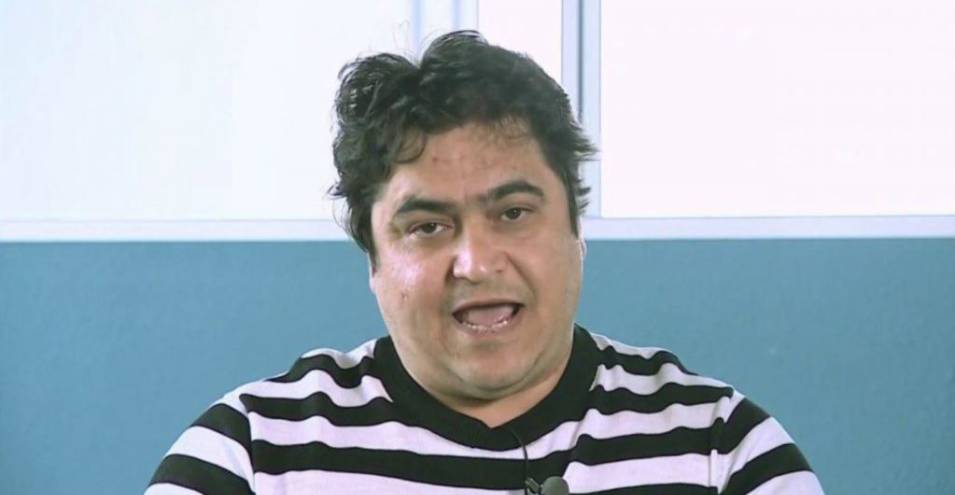
The Paris-based newspaper Le Figaro, providing details on how Ruhollah Zam, the manager of the Telegram channel "Amadnews", was arrested, quoted its sources as saying that Zam was arrested while traveling to Iraq and that French intelligence services facilitated his arrest by not preventing the trip.
In its Tuesday, October 13th issue, the newspaper, in an article titled "Espionage: How Iran Arrested a Dissident Living in France," described the story of Ruhollah Zam's arrest as worthy of a "spy novel."
According to Le Figaro, the IRGC intelligence forces began their work by sending a young woman to Paris.
This young woman convinced Ruhollah Zam to travel to Iraq to meet with Ayatollah Ali Sistani, the leader of the Iraqi Shiites and Ayatollah Khamenei's number one rival.
Figaro writes that it was probably in the religious city of Najaf that the Islamic Republic dissident was arrested by the Revolutionary Guards and transferred to Iran. The Revolutionary Guards' intelligence forces had identified Ruhollah Zam through his mobile phone and laptop.
Emphasizing that Zam’s arrest is not “the normal neutralization of an enemy,” the Figaro reporter continues: “This issue has political aspects. Officially, the Revolutionary Guards have accused Ruhollah Zam of being “guided” by French intelligence services. It is clear that this son of a cleric close to the reformists was collaborating with French intelligence services against his country.”
Figaro adds, citing the French Interior Ministry, that "this political refugee was receiving police protection."
The French Ministry of the Interior also confirmed Ruhollah Zam's trip to Iraq in an interview with this newspaper.
Although Le Figaro is the first media outlet to raise the hypothesis of Ruhollah Zam's arrest during his trip to Iraq, relying on its sources in the French Interior Ministry, this hypothesis had previously been raised by some political and media activists in cyberspace.
For example, media activist Ali Javanmardi, hours after the news of Mr. Zam's arrest was announced, put forward the hypothesis that he had been persuaded to travel to Iraq by a female colleague of Amadnews, who, according to Mr. Javanmardi, was an "influencer" in the Islamic Republic's security apparatus.
Mr. Javanmardi, without citing his sources in this regard, said that this woman, for some reason, had a "great influence" on Ruhollah Zam and was completely trusted by him.
In this hypothesis, the issue of Ruhollah Zam's promise to meet with Ayatollah Sistani in Najaf and the possibility of financial assistance from this influential Shiite cleric to him has also been raised.
Mr. Javanmardi, of course, again mentioned, without referring to his sources, that the French police had warned him about the danger of Ruhollah Zam's trip to Iraq.
Iranian sources have not yet explained how Mr. Zam was arrested, and the Revolutionary Guards' statement on Monday only referred to a "professional, intelligent, and sophisticated operation" to "lead Ruhollah Zam into the country and arrest him."
The statement did not provide details about where he was arrested or how he was detained.
A few hours after the announcement of Ruhollah Zam's arrest, a short video was broadcast on the 20:30 program of the Islamic Republic of Iran Television, in which the former director of the "Amadnews" channel said that his trust in the French state, which was supposed to protect him, was a mistake.
"France's failure to prevent Zam from going to Iraq"
The newspaper "Figaro" continues its report by writing: "In fact, France was able to facilitate his arrest by the Revolutionary Guards by not preventing him [Zam] from going to Najaf, as promised by the woman."
The newspaper, citing one of its sources, said the reason for France's move was "the release of two French people imprisoned in Iran since June," a case that has tied the hands of the Elysee, which has been able to play a mediating role in reducing tensions between the United States and Iran.
According to Le Figaro, in addition to Fariba Adelkhah, an Iranian-French researcher, IRGC forces have also arrested Roland Marchal, her French friend and academic.
Le Figaro writes that Adelkhah is being held in a Revolutionary Guards detention center and France does not have consular access to him. But a source close to him told Le Figaro that Mr. Marshall has been transferred to a regular prison and has been able to meet with French diplomats in Tehran.
Figaro also writes, citing one of its sources familiar with French-Iranian relations: "The arrest of Mr. Zam, coupled with a certain degree of cooperation from French intelligence services, could set in motion negotiations for the release of Fariba Adelkhah and her friend."
Le Figaro adds that before that, Tehran may ask France to reverse the decision to extradite a detained Iranian engineer to the United States.
Le Figaro had previously written on the occasion of the 100th day of Fariba Adelkhah's detention that one of the possible reasons for Fariba Adelkhah's detention is that the Islamic Republic authorities intend to exchange her for an Iranian prisoner in France.
Jalal Ruhollahnejad was arrested in France about eight months ago and is accused of violating US sanctions against Tehran. The French judiciary has agreed to the US request to extradite him to Washington.
In another part of its report on the arrest of Ruhollah Zam, Le Figaro also spoke to two people close to him. One of them, who was not named, said that “his [Zam’s] arrest is a routine procedure of the Iranian intelligence services.” Another said: “I was sure that the Iranian authorities would catch him one day.”
Source: Radio Farda