"Iranian company executives use fake passports to circumvent sanctions"
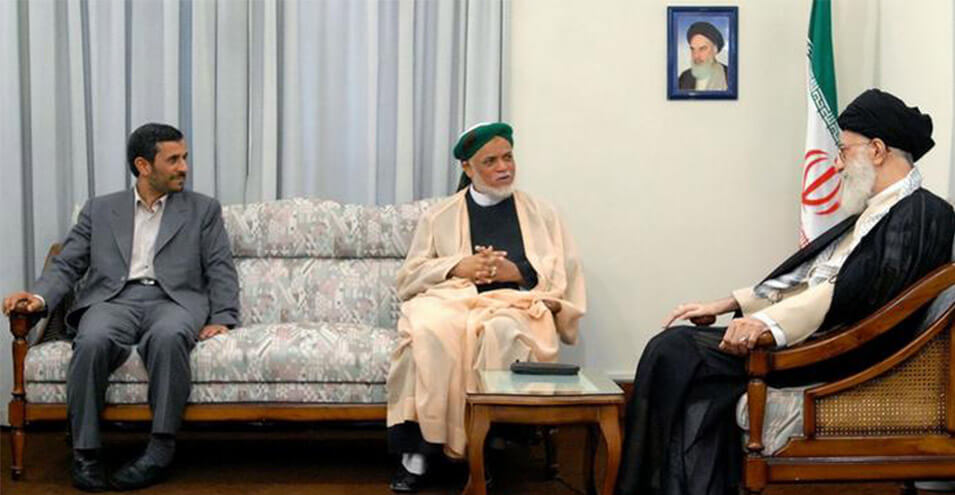
According to a Reuters report, the President of Comoros, who had studied at the Qom seminary and was called the "Ayatollah of Comoros," issued 300 passports to managers of Iranian companies during Ahmadinejad's term to circumvent international sanctions.
The African country of Comoros in January 2018 revoked a large number of passports purchased by foreigners. The archipelago, located on the southeastern edge of the African continent, did not specify the reason for the revocation, only stating that they had been issued without following the rules.
However, Reuters has obtained a reliable list of all Comorian passport recipients, but it has revealed that the scale of the problem is much greater than the authorities in the small African country are admitting.
According to Reuters, more than 100 of the 155 passports revoked in January belonged to Iranian nationals.
Among these individuals are executives of companies active in shipping, oil and gas, foreign exchange and precious metals trading, all of which have been targeted by international sanctions. Some of these individuals had purchased more than one Comorian passport.
Diplomats and security officials in Comoros and Western countries are concerned that some of these Iranians may have used the passports to circumvent international sanctions.
The report adds that although none of these individuals or companies have been targeted by sanctions, a second passport could have been a great help given the restrictions imposed on Iran.
Comoros passport holders can travel visa-free to a number of countries in the Middle East and Far East Asia. These passports could have allowed Iranians to open bank accounts and register companies in foreign countries.
The Iranian government does not allow its citizens to hold foreign passports, but an Iranian source familiar with the sale of these passports told Reuters that the Islamic Republic's Ministry of Intelligence and Security had given the green light for a number of senior Iranian executives to obtain foreign passports to enable them to travel, conduct business and make financial transactions.
Kenneth Katzman, a Middle East expert at the Congressional Research Service, said in this regard that Comoros is just one of the African countries where Iran has attempted to continue its global trade through diplomatic influence.
Cutsman adds that with a Comorian passport, one can do things that will not be identified as being done by an Iranian.
In a confidential list of all Comorian passport recipients, obtained by Reuters, more than 1,000 of those who purchased passports between 2008 and 2017 were born in Iran.
Most of these passports were purchased between 2011 and 2013, which is precisely when international sanctions against Iran were tightened, especially in the oil and gas sectors and banking activities.
Other people who have purchased Comorian passports include citizens of Syria, Afghanistan, Iraq, China, and a number of Western countries.
Iranians among the personal bodyguards of the President of Comoros
The Comoros, a country of 800,000 people, began its passport sales program in 2008 because the country needed cash.
At that time, Comoros reached an agreement with the United Arab Emirates and Kuwait to provide identity documents to the Bedouins of these two Arab countries, who were deprived of nationality and local citizenship rights. The governments of these two countries were to buy Comoros passports and distribute them among the Bedouins.
In return, the Comorian government was to receive several hundred million dollars in exchange for issuing the passports to strengthen its economic system. This figure amounted to $600 million per year.
At the same time, the Comorian government established closer relations with the Islamic Republic of Iran. Ahmed Abdallah Mohamed Sambi served as President of Comoros from 2006 to 2011. Mohamed Sambi had studied for years at the Qom Seminary in Iran.
According to interviews with locals in Comoros, Reuters reported that a number of Mohamed Sambi's bodyguards were Iranian. Research by the Chatham House think tank shows that Mohamed Sambi was known in Comoros as the "Ayatollah of Comoros."
Sambi visited Iran in 2008, at a time when Mahmoud Ahmadinejad was trying to expand the Islamic Republic's relations with African and Latin American countries. The following year, Ahmadinejad traveled to the Comoros.
It was at this time that, on Sambi's orders, more than 300 Comorian passports were sold to Iranians.
Mohamed Sambi has not yet responded to questions from the Comoros Judicial Investigation Board regarding the passports issued.
Source: DW