An example of how subsidies were financed during the Ahmadinejad era
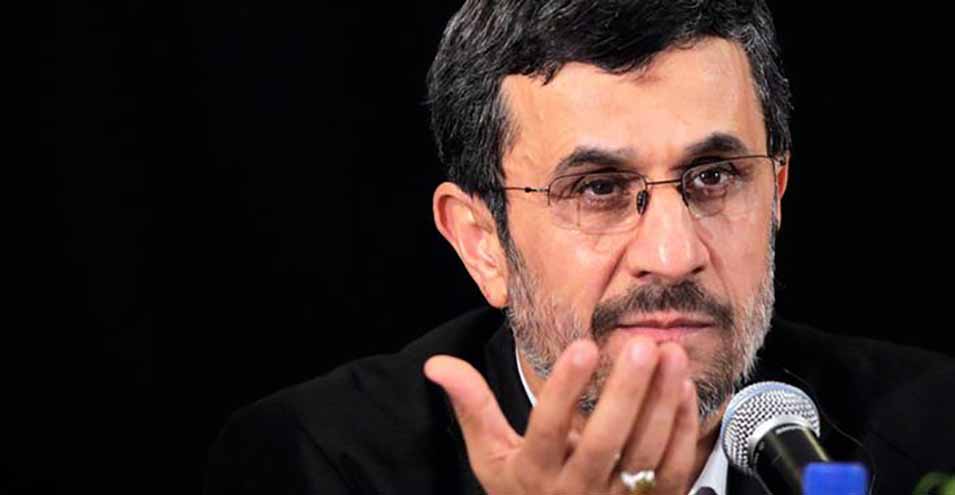
The method of financing the cash subsidies has faced much ambiguity and criticism since the beginning of the implementation of this plan. The Ahmadinejad government is accused of taking illegal measures with destructive consequences to pay the subsidies.
According to Article 7 of the Subsidies Targeting Law, the government is allowed to pay a maximum of 50 percent of the net income from the implementation of this law to citizens in the form of cash and non-cash subsidies.
The revenues foreseen in this law were to be obtained from the elimination of energy subsidies and other subsidies, including water, sewage, and some basic foodstuffs.
Since the final days of the fall of 2008, when the Mahmoud Ahmadinejad government began implementing the Subsidy Targeting Law, the total revenue generated by this law has never been sufficient to pay for subsidies.
This is despite the fact that half of the income from this plan should have been allocated to health, supporting domestic production and job creation, improving public transportation infrastructure, and social protection programs.
Subsidy payment with money from Hormozgan Steel sales
Mehdi Karbasian, Deputy Minister of Industry, Mines and Trade and Chairman of the Executive Board of the Iranian Mines and Mineral Industries Development and Renovation Organization (IMIDRO), in an interview with Shargh newspaper, describes an example of financial indiscipline in the previous government, the adverse impact of which on the situation of industries and banks is still evident.
He says that in 2008, Hormozgan Steel was sold to Mobarakeh Steel for 1.3 trillion tomans, but 800 billion tomans of it were withdrawn from the account introduced by IMIDRO "by phone, order, and pressure" and went elsewhere.
Karbasian said that this pressure came from the then Minister of Industry and Mines (Ali Akbar Mehrabian) and his superiors (Mahmoud Ahmadinejad), who ordered that this 800 billion tomans be deposited into the government's account to compensate for the budget deficit in cash subsidies.
The Deputy Minister of Industry noted that the money from the sale of Hormozgan Steel was originally supposed to be spent on seven steel projects and other projects, but apart from the money that was deposited into the government's account, the remaining 570 billion tomans was given to a committee in the Ministry of Industry, Mines and Trade instead of investing in IMIDRO projects.
Dividing money among specific people
According to Karbasian, this committee, which was under the supervision of the then Minister of Industry, was supposed to distribute the amount it had received through the National Bank in the form of production support among various manufacturing companies across the country.
In principle, support for domestic producers should have been provided from the revenues of the Subsidies Targeting Law, but the government did this with IMIDRO money and in a loss-making manner.
On Thursday, October 1, the Sharq newspaper quoted the Deputy Minister of Industry as saying: "In my opinion, distributing facilities with a zero percent interest rate means that a considerable rent has been created for a number of specific individuals, and there was certainly corruption behind it."
These facilities were supposed to be withdrawn within a year and returned to IMIDRO's account, and the National Bank was responsible for distributing these funds.
Karbasian says that with the efforts of IMIDRO and the help of the management of Bank Melli and its branches, 170 billion tomans of this money has been returned over the past two years, but the fate of 400 billion tomans is still unclear.
Hit to banks and domestic production
The former government's seizure of IMIDRO's financial resources to pay subsidies took place during Mahmoud Reza Khavari's tenure at Bank Melli.
Khavari is one of the defendants in the embezzlement case of three trillion tomans. In October 2011, he resigned from his position and fled to Canada, citing "neurological problems and chronic illness."
The names of a number of senior managers of Mahmoud Ahmadinejad's government were also mentioned in this case, but the true extent of the government members' involvement in it has not yet been fully disclosed.
According to Sharq newspaper, another illegal measure taken by the 10th government to cover the budget deficit for subsidies is the "nightly withdrawal from bank accounts" by the Central Bank, which was carried out on the direct orders of Ahmadinejad.
According to the report, these withdrawals and "the blockades that occurred in the country's banking system and on the orders of the authorities of the ninth and tenth governments" are among the most important causes of the increase in bank arrears and the lack of liquidity in banks, which has made them face difficulties in disbursing facilities to production units.
Source: DW