“Judicial and security institutions are hindering respect for human rights in Iran”
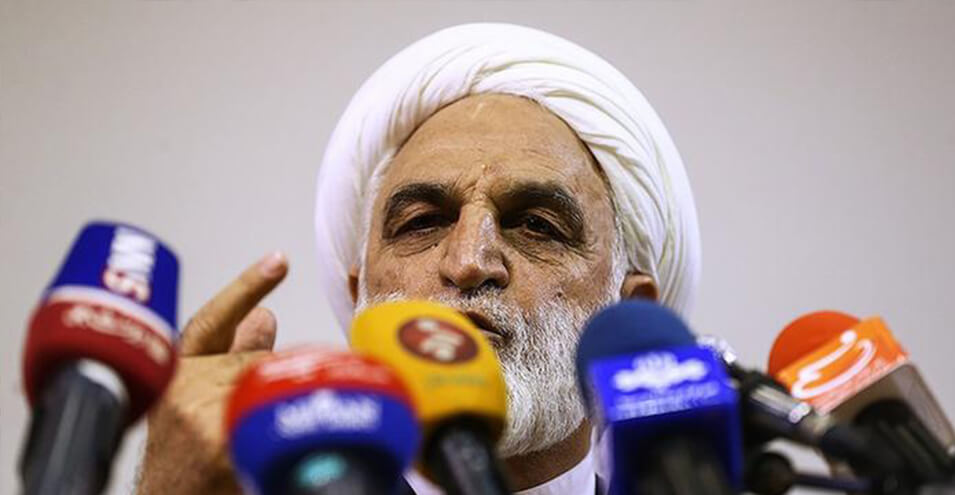
In a report published on the state of human rights around the world in 2018, Human Rights Watch accused the Iranian government of arbitrary and mass arrests and increasing pressure on peaceful activities.
Human Rights Watch wrote in its annual report on the state of human rights in the world in 2018: “Iranian authorities resorted to mass arbitrary arrests in 2018 in response to nationwide protests against deteriorating economic conditions, public perceptions of corruption, and a lack of political and social freedoms.”
According to this human rights organization, the Islamic Republic's authorities have increased pressure on peaceful activities by arresting lawyers, human rights defenders, and women's rights activists.
The organization referred to the arrest of environmental activists who have been in prison for a year, and according to the report, four of them face charges of corruption on earth, which could lead to the death penalty.
The report also referred to the death of Kavos Seyed-Emami and stated: "Authorities claimed that he committed suicide but did not conduct an independent investigation."
“Iranian leaders blame the world for their problems, but they don’t look in the mirror to see how their own systematic repression is fueling Iranian discontent,” said Sarah Lee Whitson, Middle East and North Africa director at Human Rights Watch.
According to him, “Iran’s security apparatus and its repressive and unaccountable judiciary are serious obstacles to respecting and protecting human rights.”
Detention of foreign nationals and dual nationals
Human Rights Watch has reported that since 2014, the IRGC Intelligence Agency has arrested at least 14 foreign nationals and dual nationals on charges of having ties to Western academic, economic, and cultural institutions. All of these individuals are accused of “collaborating with a hostile state.”
Nazanin Zaghari, Maymant Hosseini Chavoshi, Baqer and Siamak Namazi are among the dual nationals who have been in prison for a long time.
At least 30 people killed during protests
According to Human Rights Watch, at least 30 people were killed during the street protests in January 2017, and so far, Iranian authorities have not conducted any investigation into the cause of their deaths.
Street protests in January of last year first began in Mashhad in protest against inflation and the economic policies of the Rouhani government, but they immediately spread to many other cities in Iran, and the slogans shifted from inflation to harsh political slogans against the Islamic Republic.
During these protests, many were arrested and some were killed and injured.
Protests against compulsory hijab
Human Rights Watch also referred to the girls who took off their headscarves in the streets to protest the mandatory hijab, becoming known as the “Girls of Revolution Street,” in its report, writing: “Security officers have cracked down on peaceful protests against unjust hijab laws. They arrested prominent human rights lawyer Nasrin Sotoudeh, her husband Reza Khandan, and Farhad Meysami, another human rights defender.”
Nasrin Sotoudeh has been in prison since June. Her husband Reza Khandan was also in prison for several months. Civil activist Farhad Meysami has also been in prison for about five months.
Human Rights Watch has also welcomed the halt to executions of drug traffickers but has condemned the execution of at least five defendants who committed crimes when they were under the age of 18.
The situation in the world has improved.
The annual report of Human Rights Watch states that due to the prevalence of hate speech and the spread of intolerance in the world, nuclei of resistance against it have formed and become stronger.
This human rights organization has considered the spread of "resistance against autocrats and populists" in most countries as the message of the past year.
"Populists who spread hatred and name-calling are creating a resistance that will ultimately win the battle," said Kenneth Roth, executive director of Human Rights Watch.
He continued: "Victory is not guaranteed, but the successful experience of past years shows that the abuse of authoritarian power leads to the emergence of a human counter-resistance."
In its 29-page annual report, Human Rights Watch examined the human rights situation in more than 100 countries. The study concluded that the human rights situation has not changed for the better everywhere and that autocrats have continued to try to undermine democracy.
According to the report, authoritarian governments have tried to weaken the tools of democratic control, including an independent judiciary, a free media, and strong civil society institutions.
Source: DW