A "spiritual awakening" is taking place in Iran as a popular uprising against the regime
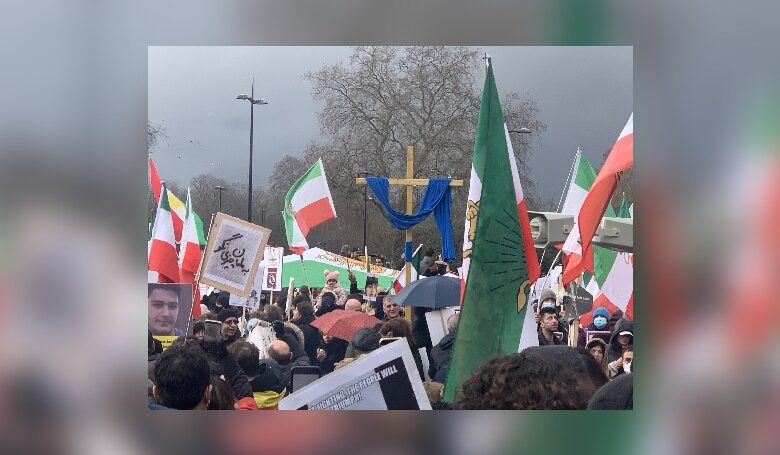
The unprecedented growth of Christianity and house churches in Iran is a sign of an identity crisis and spiritual transformation in Iranian society.
While the people of Iran have risen up against the Islamic Republic, at the same time, a profound transformation has also occurred in the spiritual dimension, which observers refer to as a "spiritual awakening," a widespread and hidden movement behind the government's repression that has led not only to political protest but also to a change in spiritual beliefs.
In recent years, especially after the widespread protests in 2019 and 2023, a wave of dissatisfaction with the structure of the Islamic Republic has emerged; protests that, beyond economic and social demands, have led to a fundamental challenge to the ideological legitimacy of the government.
Many protesters are calling for the complete end of the Islamic Republic and the power structure dependent on the ruling clergy, a complete rejection of a government that claims divine legitimacy, but this time the protests have taken on a different form and color.
One of the most notable phenomena during this period is the dramatic increase in the number of Christians in Iran and the growth of house churches. This movement has been steadily expanding underground in Iranian society in recent years, despite the government's intense efforts to prevent it.
Research by independent groups indicates that the number of Christians of Muslim-born background in Iran may now range from 300,000 to more than one million, and some sources even report growth beyond these estimates.
Due to the ban on official activity for Christians, this community has mainly taken the form of house churches, homes that have become centers of faith and gatherings, often held in secret. Unfortunately, the growth of this number of believers has been accompanied by a sharp increase in government pressure, from arrests to long years in prison and the imposition of harsh penalties for those who attend these churches.
Several important factors can be observed in the context of this spiritual change in society:
- Disillusionment with the official religious structure: Many younger and even middle-aged Iranians have become disillusioned with the ideological connection of religion with government power and corruption, creating a widespread spirit of skepticism and a search for new meaning.
- Severe restrictions on religious freedom: From banning the publication of Persian-language texts to arresting religious activists, the government has attempted to curb the spread of Christianity, but this pressure has sometimes contributed to its latent growth.
- Access to new spiritual resources: Digital media, Persian-language satellite television, and online publication of spiritual resources have made it possible for people to become familiar with Christian teachings, even if this familiarity comes with serious risks.
This transformation in religious beliefs and the growth of Christianity in Iran against the backdrop of popular uprisings is not just a religious phenomenon, but could also be a reflection of the identity and spiritual crisis of society, where the ruling system, with its theological promises, has failed to meet the real needs of the people.
Some analysts believe that this phenomenon is a sign of the failure of the Islamic Republic's religious legitimacy base, as the regime's most powerful tool (claims of divine legitimacy and spiritual control) is now being replaced by the growth of beliefs that challenge the government's ideological authority.
In the face of this development, the Islamic Republic has not only used security repression tools, but also attempted to portray this phenomenon as a security threat, which shows that the government is more afraid of the consequences of this spiritual awakening than anything else.
Ultimately, what is happening in Iran is more than a political and social protest; it is a profound effort to redefine the meaning of faith and freedom in the individual and collective lives of millions of people; a transformation that will shape the spiritual and cultural future of this country for decades.