Iran's Economy Minister: 55% of exported foreign currency has not returned to the country
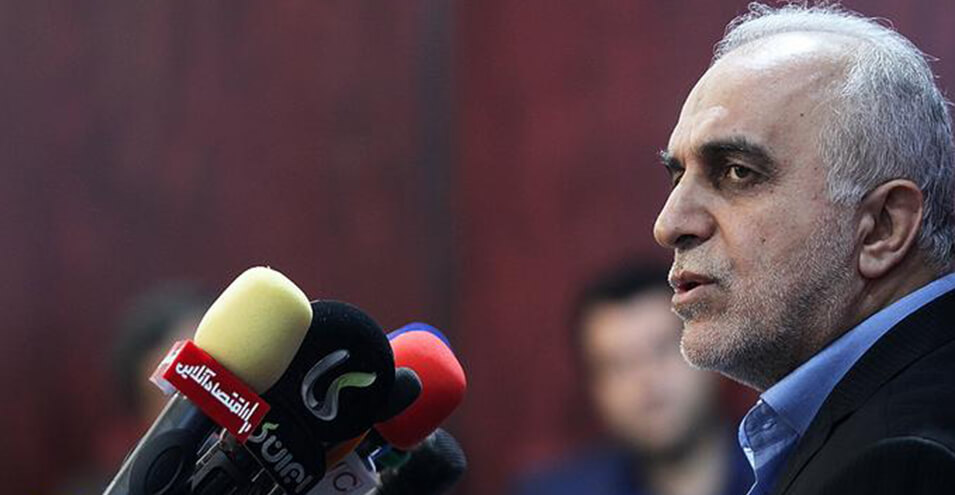
Iran's Minister of Economic Affairs and Finance announced that 55 percent of the foreign exchange earned from non-oil exports has not returned to the country. Farhad Dejpasand also estimated the amount of tax evasion recorded in Iran to be "between 30 and 40 trillion tomans."
Farhad Dejpasand, Iran's Minister of Economic Affairs and Finance, stated that "we have had about $61 billion in non-oil exports" in the past year and a half, but said that of this amount, only "$27 billion" has returned to the country and more than half of it has not yet returned.
Speaking on the sidelines of the "Government-Private Sector Dialogue Council" on Monday evening, Iran's Economy Minister stated: "Based on estimates, we have had approximately $61 billion in non-oil exports in the past 18 months, of which 45 percent of the foreign exchange has returned to the country."
According to ISNA, Dejpasand added: "There is no doubt for us that Iran's established exporters have made every effort to return this currency to the country, but follow-ups must definitely be made to return the remaining amount, and we are confident that if 55 percent of the remaining currency is returned, many of the country's needs will be met."
The return of foreign exchange from non-oil exports to the Iranian economy has been a controversial issue, and one of the sources of disagreements between the government and exporters in recent months. For example, Hassan Mirshojaian, advisor to the Iranian Minister of Economic Affairs, said last May that the statements made by some exporters regarding the return of foreign exchange from exports were not true and that $30 billion of the total $40 billion in foreign exchange from exports had not entered the country, either in the form of goods or in any other form. He called this an example of “capital flight.”
According to Iranian media reports, with the significant increase in the price of the currency in the past two years, in most cases, the foreign exchange earned from non-oil exports has not returned to the country, which has increased the government's problems in meeting its foreign exchange needs. Part of the failure to return exported foreign exchange to the country is attributed to the significant difference in the price of the state and free foreign exchange, which reduces the willingness of exporters to bring dollars from their exports into the country.
Some experts see the failure of the government and the Central Bank to return exported foreign currency to the country as due to the lack of transparency in the economic environment and the rent-seeking of "scrupulous companies."
30 to 40 trillion tomans of tax evasion
In another part of his speech, the Iranian Minister of Economic Affairs and Finance also stated that the amount of tax evasion recorded in the country was "between 30 and 40 trillion tomans" and announced that the issue of "tax exemption for exporters" would be examined in the coming weeks by the Central Bank and the Tax Affairs Organization.
Farhad Dejpasand said: "Before the sanctions, exporters had 30 days to receive tax exemptions stipulated in the law by returning the foreign exchange earned from their exports. In recent months, and due to the problems resulting from the sanctions, this time was increased to four months, but given the private sector's request to help exporters in the field of taxes, we are conducting the necessary investigations so that exporters can receive tax facilities after four months if they submit the necessary documents."
Omid Ali Parsa, head of the Iranian Taxation Organization, recently estimated the volume of tax evasion in the Iranian economy at 40 trillion tomans. Informal and unregulated activities, also known as the “underground economy” or “hidden economy,” are cited as a major factor in tax evasion. Experts believe that the “hidden economy” accounts for at least 30 percent of the Iranian economy.
Although the Iranian Parliament, in its 2019 budget law, required institutions such as the Astan Quds Razavi Shrine, economic enterprises of the Iranian Armed Forces, and the Executive Command of the Imam's Decree, which are subordinate institutions of the Office of the Supreme Leader of the Islamic Republic, to pay taxes, it also made exceptions for them in cases where "the explicit permission of the Supreme Leader" is involved and exempted them from paying taxes in such cases.
Source: DW