Four Seasons of Crisis: Iran's Environment in 2017
The year 2017 ended with a number of environmental activists behind bars. Environmental problems, the biggest challenge facing Iranian leaders, turned into a security crisis last year.
The head of Iran’s Environmental Organization says he has no precise information about the detained environmental activists. Issa Kalantari said in his last press conference in 2017: “Unfortunately, our side has power and is not willing to talk.” This side is likely the Revolutionary Guards Intelligence Organization, which has arrested a number of environmental activists. The accusation of these individuals “providing the country’s water information” to the United States is mentioned.
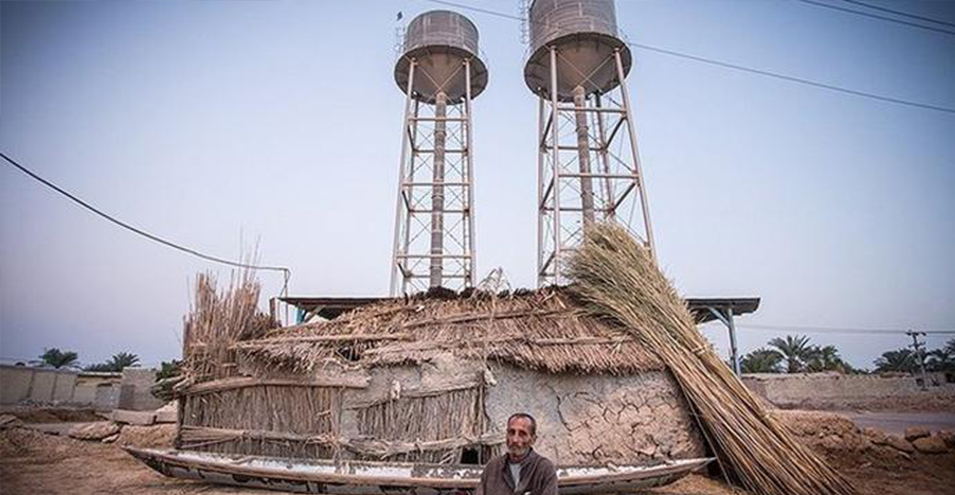
The water situation in Iran has been critical in the past year. Not only has an unprecedented drought caused by very little rain and snow in the fall and winter of 2017, but also the implementation of large-scale projects without scientific support, including by companies affiliated with the Revolutionary Guard, has put Iran on the brink of an environmental disaster. One of these projects is the massive Gotvand Dam, built by the “Sepasand” company affiliated with the Revolutionary Guard.
The Gotvand Dam on the Karun River is the tallest earthen dam in Iran, and the lake is the second largest artificial lake in Iran after Karkheh. The shell of the natural walls of this dam has layers of salt, which makes the water of the lake behind the dam salty.
As a result, the water flowing from this lake towards the Persian Gulf leaves behind a salt marsh where no trace of greenery or development remains, and even the palm trees in its path have dried up. According to Asad Pourmohammad, one of the officials of the Khuzestan Agricultural Jihad, the salinity of Gotund water, which is five times the salinity of the Persian Gulf, threatens the life of Khuzestan.
97 percent of the country is affected by drought
The environmental situation in Khuzestan Province, an oil-rich province whose underground reserves provide a large portion of the country's national budget, was also deplorable last year. Excessive extraction of the province's water resources, the decline in the Karun River, and the drying up of the Hur-al-Azim Wetland have led to a dust crisis in the province, with dust concentrations reaching 60 times the permissible limit in the winter.
Not only Khuzestan, but 97 percent of Iran's area is facing a serious water shortage. Isfahan with the waterless Zayandeh River, Azerbaijan with the gradual death of Lake Urmia, Sistan-Baluchestan with the dried-up Hamun Lake, and Khorasan Province with farmers' cracked lands from lack of water are all examples of the lack of water management in Iran.
Hassan Rouhani, who had called addressing the environmental situation one of the priorities of the 11th government of the Islamic Republic, began 2017 at a time when two major European foundations had warned that large areas of Iran would become uninhabitable due to drought.
The Heinrich Böll Foundation in Germany and the Small Media Foundation in the UK published a 160-page report on the eve of 2017, warning that the water crisis is making more and more areas of Iran uninhabitable. The report examined the roots of Iran's environmental crisis, its future consequences, and the strategy needed to deal with it.
Inviting NGOs to cooperate with the government
The Rouhani government, which had launched a broad effort to attract international cooperation in the field of the environment after the nuclear agreement with six major world powers, began 2017 with the hope of increasing the participation of non-governmental organizations in environmental protection programs. Hassan Rouhani introduced ten axes in his election campaign for the 12th government, of which “environmental and sustainable development programs” was one.
During his election campaign, he repeatedly emphasized: "The 11th government has considered the people to be an active and constructive force in all areas, including the environment, and has had the most positive approach towards organizing popular organizations and NGOs in the environmental field." Hassan Rouhani emphasized that the 80 percent increase in environmental organizations is one of the great achievements of his first term as president.
Active participation in environmental meetings, including the Bonn Climate Conference, had given many hope that the Rouhani government would harness all available capacities to contain Iran’s environmental crises. Majid Shafipour, head of the National Institute for Climate Change and Environment at the University of Tehran, who had participated in the Bonn Climate Conference, emphasized the importance of international cooperation for Iran in the field of the environment in an interview with Deutsche Welle, saying: “Public opinion in Iran is completely in favor of a positive plan to combat climate change because people feel the adverse effects of these changes in their daily lives.”
A hard blow to environmental activists
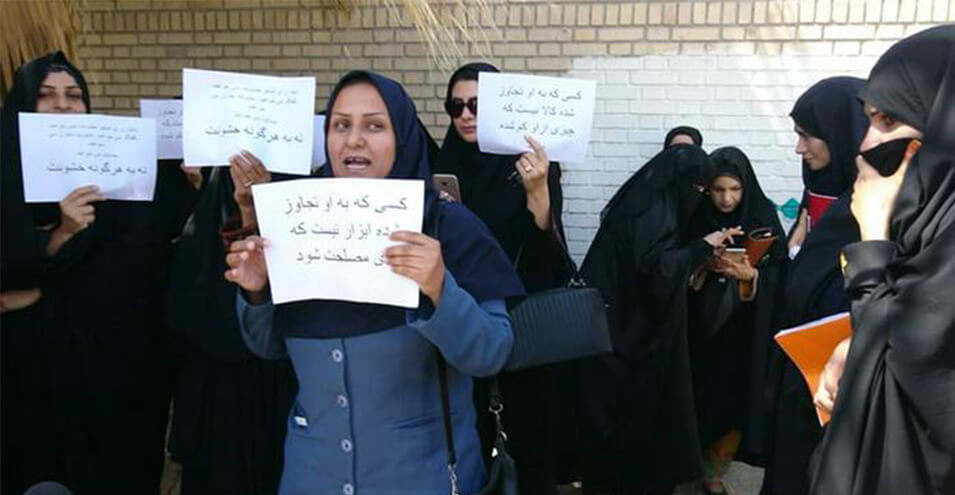
The cooperation of Iranian environmental organizations with international environmental organizations, however, turned into a security crisis just a few months after the victory of Hassan Rouhani’s government in the presidential election. The arrest of Kavous Seyed Emami, a sociology professor and CEO of the Persian Heritage Wildlife Institute, and his suspicious death in prison in February dealt a fatal blow to the fragile foundation of public trust. Accusing Kavous Seyed Emami of espionage and raising the question of why he was concerned with protecting the Iranian cheetah and not the Mazandaran tiger—a feline that went extinct 60 years ago—shocked environmental activists.
The arrest and possible interrogation of Kaveh Madani, the deputy head of the Environmental Organization's education department, has raised speculation that the IRGC is seeking to settle scores with this institution and the Rouhani government due to the Environmental Organization's opposition to the IRGC's plans to transfer water and build a power plant.
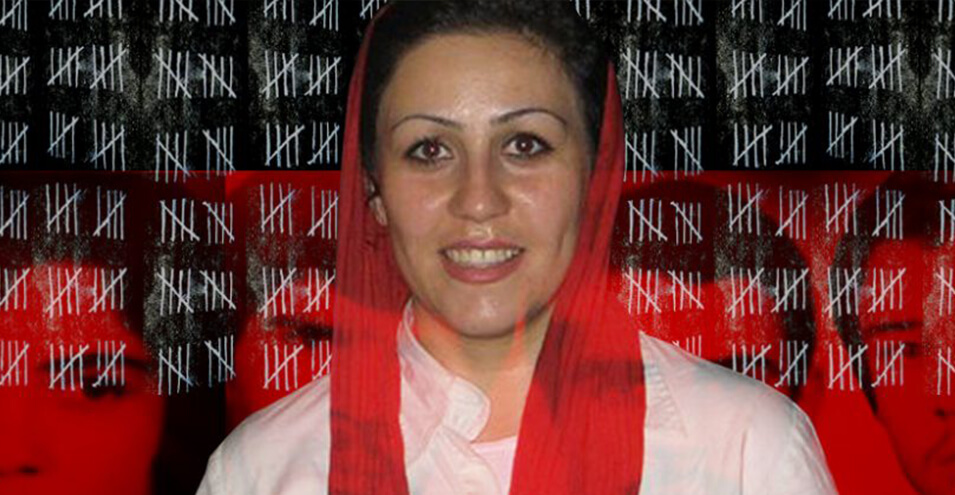
The death of a group of environmental activists who had traveled to Tehran to talk to members of parliament and follow up on the status of detained activists following the crash of a Tehran-Yasuj plane was another shock for environmental activists. The ban on Maryam Mombini, the wife of Kavous Seyyed Emami, leaving the country and the echoes of her words to her children, “Leave this terrible place and never return,” in international media cast another heavy shadow over Iran’s agenda and its government’s environmental policy.
The environmental crisis is one of the biggest, and perhaps the biggest, challenges facing Hassan Rouhani. The unprecedented protest by Isfahan farmers against the way resources are distributed in Iran in the last days of the year and their slogans against the authorities during Friday prayers were only a small eruption of the volcano of anger dormant in Iran's feverish society.
Despite this deplorable situation, the share of environmental affairs in the government's general budget next year is projected to be about 2/10 of a percent. 2/10 of a percent.
Source: DW