"Earth Day", Creation's Call for Justice and the Wound Left on Iran's Body
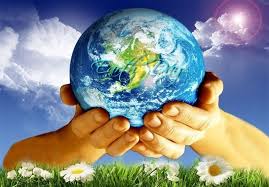
The origins of the name "Earth Day" date back to the late 1960s, when concerns about the fate of God's creation and environmental crises were growing. Among them, John McConnell, a peace activist and Pentecostal Christian, was one of the first to propose the idea of dedicating a day to Earth. In 1969, at a UNESCO-affiliated meeting, he proposed a global day for the protection of the Earth, peace, and humanity's shared responsibility for creation. This idea eventually led to a ceremony on March 21, 1970, coinciding with the vernal equinox, an approach that emphasized spiritual aspects, human unity, and care for creation.
At the same time, US Senator Gaylord Nelson, with a different but similar vision, tried to draw public attention to environmental crises. On his initiative, the first Earth Day was held on April 22, 1970, an event that attracted widespread public participation and quickly became a global movement.
Thus, Earth Day was formed from two movements: one with a spiritual and peace-oriented root, and the other with a social and environmental approach. What is celebrated around the world today is a reflection of both perspectives: a call to both the awakening of human conscience and responsible action to preserve the earth that God has entrusted to us.
Now, every year on this day, millions of people around the world celebrate Earth Day, a day dedicated to remembering the shared responsibility of humans to protect the planet that is our common home. The name “Earth” is intended to draw the world’s attention to the planet itself as a place of life, a creation, and a divine trust—an earth that is not only the source of life but also a sign of God’s wisdom and power.
In the Christian view, the earth is a sacred gift from God to man. In the first book of the Bible, Genesis, 2:15, it is stated: “The Lord God took the man and put him in the garden of Eden to work it and to keep it.” This verse clearly shows that man is not the absolute owner, but the guardian and trustee of creation.
However, while many countries are trying to respond to this responsibility on this day by planting trees, reducing pollution, and increasing public awareness, the reality in Iran has a different and worrying face.
Iran today faces profound environmental crises, from the drying up of lakes and rivers to severe air pollution and the destruction of natural resources. One of the most painful manifestations of this crisis is the widespread and frequent fires in forests and pastures, which destroy a large part of the country's vegetation every year. This is while in many cases, not only is there no effective prevention, but there is also no legal investigation and transparent accountability.
On the other hand, in some provinces of Iran, people are still deprived of access to clean water and sanitation, rights that are considered among the most basic human needs. These deprivations not only question human dignity, but also indicate a deep gap in social and managerial justice.
Psalm 24:1 also states: “The earth is the Lord’s, and everything in it.” This truth reminds us that the destruction of the earth is not just an environmental crisis, but also a disregard for God’s trust and an injustice to future generations.
Earth Day is an opportunity for reflection, not only for nations taking steps towards environmental protection, but also for countries like Iran that, more than ever, need change, accountability, and a restoration of a responsible relationship with nature.
Ultimately, perhaps the main message of this day can be summed up in this question: "Have we, as humans, been good stewards of the earth that God has entrusted to us?"