Establishing justice; global demand for confiscation of assets of Islamic Republic affiliates
The global call for the confiscation of assets of those affiliated with the Islamic Republic government has come at a time when Christian activists are calling for practical action by the West to confront the economic immunity of those responsible for repression.
The Christian Activists for a Free Iran organization has issued a statement calling on Western governments to take practical measures to identify and confiscate assets of the Islamic Republic’s security agencies and individuals affiliated with the Revolutionary Guard Corps abroad. This request is made in order to support victims whose property has been confiscated by the government inside Iran due to their political, civic, or religious activities.
The statement, which was sent to the foreign ministries of several European countries, including Germany, France, Denmark, and Austria, warned of the expanding process of confiscating opposition assets and described the international community's silence on this process as "unjustifiable."
The statement reads in part: “For years, the Islamic Republic has used the confiscation of the property of opponents, political activists, journalists, and the families of critics as a tool of repression and intimidation.” The remarks reflect growing concern about the systematic use of economic pressure as a tool to silence critical voices.
This organization, which is made up of church leaders, pastors, and Christian activists from various countries, has called on the governments of the United States, Britain, Canada, and other countries committed to human rights principles to accurately identify, monitor, and restrict financial networks, accounts, and companies linked to Iranian security institutions.
According to the proposal, in cases where the connection of these assets to human rights violations or the financing of violent activities is proven, legal procedures should be followed to confiscate them and the resulting resources should be provided as compensation to individuals who have suffered property confiscation inside Iran.
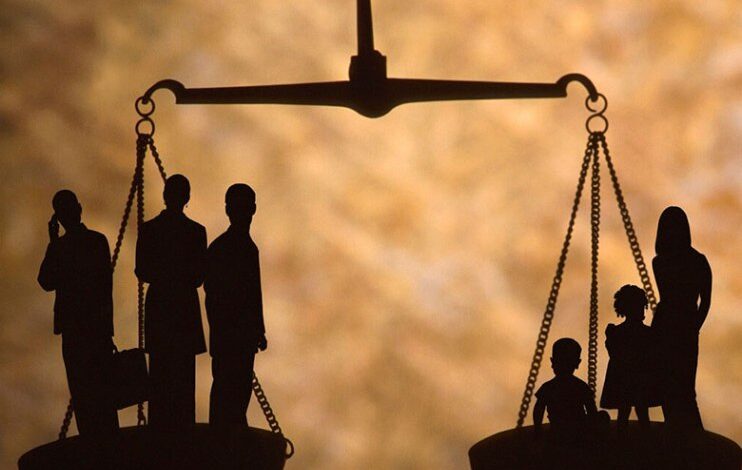
The statement continued by pointing out the clear contrast between the situation of victims and perpetrators of repression. It emphasized: “It is unacceptable that victims lose their homes and property, while those who benefit from the structure of repression keep their capital in complete safety in free countries.”
Christian activists believe that the continuation of this situation reinforces a kind of structural injustice, in which perpetrators of human rights violations enjoy the benefits of free economic systems, while victims are deprived of their most basic economic rights.
They also stressed that no government should be able to simultaneously restrict its citizens’ access to their property while benefiting from the benefits of free markets and democratic legal systems to protect the assets of its dependents. “If confiscation becomes a tool of repression, the international community must demonstrate that the oppressors and their financiers will not enjoy economic immunity,” the statement added.
The final section of the statement is dedicated to the issue of designating the IRGC as a terrorist organization. The authors, citing the actions of some European countries in this regard and the ongoing discussions in the United Kingdom to adopt a similar decision, call for transparency and acceleration in the implementation of these policies.
They have emphasized that merely announcing political positions is not enough and that governments must take concrete steps to freeze assets, pursue legal action, and hold perpetrators of human rights violations accountable.
The statement concludes with a thought-provoking sentence: "As long as only the victims pay the price of repression, talking about justice is meaningless."
In recent years, numerous reports from international human rights organizations have also pointed to the widespread use of economic instruments to pressure opponents in Iran. As a result of these numerous reports, it can be said that increased international coordination to counter this trend could play a decisive role in reducing the costs of repression and supporting victims.