Continued repression of religious freedoms in Iran; details of the prison sentences for eight Baha'i citizens
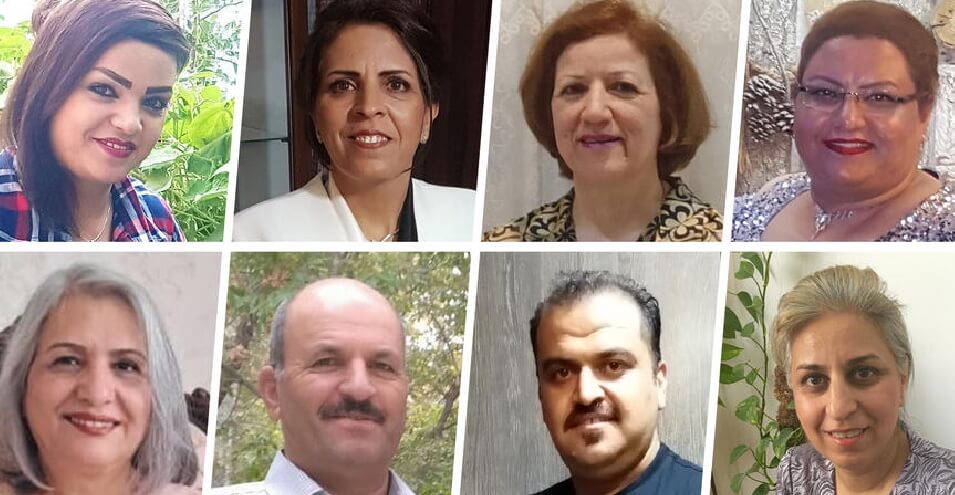
Eight Baha'i citizens living in Birjand, who were sentenced to a total of tens of years in prison by the South Khorasan Province Court of Appeal in mid-September of this year, were summoned to Birjand Prison in recent days to serve their sentences.
A source close to these Baha'i citizens told VOA about the details of this case that the hearing of these citizens' cases was held on May 2, without the presence of a defense attorney, in the Second Branch of the Islamic Revolutionary Court of Birjand, presided over by Judge Ramezani, during which each of these citizens, residents of Birjand, was sentenced to 6 years in prison on charges of being Baha'is, disrupting security, and "propaganda in favor of Baha'iism and against the system."
According to available information, on October 19, 2017, security forces raided a Baha'i home in Birjand city and arrested 18 people after searching the homes and seizing some personal belongings, including mobile phones and computer memory. Nine of these individuals, Khalil Malaki, Bijan Ahmadi, Saghar Mohammadi, Bahman Salehi, Sohrab Malaki, Shaida Abedi, Maryam Mokhtari, Firuz Ahmadi, and Simin Mohammadi, were temporarily released on bail after a month of detention and were ultimately sentenced by the court without the presence of a lawyer to a total of 28 years and 6 months in prison and are currently serving their sentences.
The second group of these individuals were recently sentenced to years in prison. A source close to these Baha’i citizens, who did not wish to be named for security reasons, said about the details of the second group’s conviction: “The hearing of the case of these citizens was held on May 1, without the presence of a defense attorney, in the second branch of the Islamic Revolutionary Court of Birjand, and was presided over by Judge Hojjat Nabavi, during which each of these citizens, residents of Birjand, was sentenced to 6 years in prison on charges of being Baha’is, disrupting security, and “propaganda in favor of Baha’iism and against the system.”
The names of these individuals are Arezo Mohammadi, Atiyeh Salehi, Nasrin Ghadiri, Banafsheh Mokhtari, Farzaneh Deimi, Roya Malaki, Ataollah Malaki, Rahmatollah Deimi, and Saeed Malaki, with the exception of Rahmatollah Deimi, who was sentenced to three years in prison.
This informed source said about what he called the “hypocritical treatment of Judge Hojjat Nabavi” in the primary court: “The judge’s treatment of these Baha’i citizens in the court session was good and they thought they would be acquitted of the charges; while the judge’s words contradicted the verdict he issued, and just one day later, on May 3, these citizens were sentenced to prison and served with prison sentences. Eight of these individuals were sentenced to six years in prison each.”
He said that after the initial court issued a prison sentence, the eight Baha'i citizens appealed the sentence by hiring two lawyers. According to him, their appeal court hearing was held on September 25.
Speaking to VOA, this informed source called the verdict unfair and said that the behavior of Judge Ebrahim Ramezani, the head of the Court of Appeals, was inappropriate and that these citizens were treated with disrespect during the Court of Appeals session. According to him, the judge cited the charges against these eight Baha'i citizens as "participating in banquets" and "membership in Baha'i organizations."
The Court of Appeals’ verdict was delivered to them on September 8. According to the verdict issued by the Fourth Branch of the Court of Appeals of South Khorasan Province, Ataullah Malaki and Saeed Malaki were sentenced to 24 months in prison, Arzoo Mohammadi, Atiyeh Salehi, and Roya Malaki to 18 months in prison, and Nasrin Ghadiri, Banafsheh Mokhtari, and Farzaneh Deimi to 15 months in prison. The Court of Appeals overturned the three-year prison sentence for Rahmatullah Deimi due to Mr. Deimi’s advanced age.
According to this informed person, the prison sentences of these eight Baha'i citizens have currently been implemented, and according to a summons issued to these citizens on Monday, October 27, by Branch 2 of the Execution of Sentences, they must report to Birjand Prison within 10 days to execute their sentences.
The informed source told VOA that in recent days, some of these Baha'i citizens and their lawyers have approached the enforcement authorities to request a delay in the execution of their sentences. They have even asked the authorities to allow them to serve their sentences outside prison with electronic monitoring instead of going to prison due to the coronavirus outbreak and its spread in Iranian prisons, but their request has been rejected.
This is not the first time that Baha'i citizens in Birjand have been arrested or sentenced to prison. Previously, Voice of America had announced in a report that Farid Zirgi Moghadam, a Baha'i citizen living in Birjand, was sentenced to six years in prison by Branch 1 of the Birjand Revolutionary Court, presided over by Judge Jafar Islamkhah, on charges such as "membership in a Baha'i organization" and "propaganda against the system," and to one year in prison by Branch 102 of the Birjand Two-County Criminal Court on charges of "insulting sacred places."
It is said that one of his accusations was sending his opinion regarding religious minorities in the form of an audio file to the Voice of America.
Sam Brownback, the US ambassador for international religious freedom, said at a special press conference in Washington on May 15: “Baha’is in Iran, and unfortunately in some other countries around the world, are facing severe persecution.”
The United States Commission on International Religious Freedom also expressed concern in its annual report in early May about the state of religious freedom in Iran; part of the report states that the Islamic Republic has increasingly targeted Muslim minorities, especially Sunnis and Dervishes, as well as followers of other religions and denominations, including Baha'is and Christians.