Iran accuses IAEA of "politicizing" and adopting unilateral positions
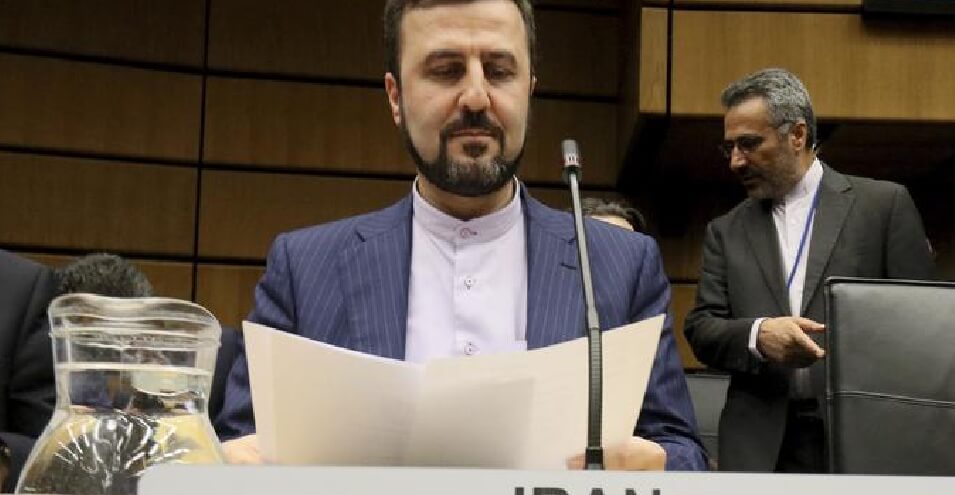
In response to the IAEA Director General's remarks about Tehran's "lack of accountability to the IAEA," Iran accused the organization of "politicizing" and adopting unilateral positions. The United States has warned that Iran could build a nuclear weapon within weeks.
Kazem Gharibabadi, Iran's ambassador to international organizations based in Vienna, protested the remarks of Grossi, Director General of the International Atomic Energy Agency, calling the recent positions of the Director General of the International Atomic Energy Agency a "unilateral approach."
He stressed that the IAEA ignores the level of cooperation with Iran and that this issue could become "an obstacle to future interactions between the two sides."
Rafael Grossi, Director General of the International Atomic Energy Agency, said on Monday, June 7, at a meeting of the UN agency's Board of Governors that he was "deeply" concerned that the Islamic Republic was hiding nuclear material.
Grossi emphasized that Iran has consistently refused to provide the necessary explanations about the particles of nuclear material found at the three sites, and this action prevents the Agency from confirming that Iran's nuclear program is peaceful.
In response to Grossi's remarks, Kazem Gharibabadi said the agency's report was "not credible or convincing" and "not based on reliable sources."
While accusing the agency of politicizing it, Gharibabadi emphasized that "the agency must distance itself from any political agenda."
US: Iran likely to build nuclear weapons within weeks
Rafael Grossi's report raised concerns in many countries, including the United States and Germany.
On Monday, June 7, US Secretary of State Antony Blinken told members of the House of Representatives Foreign Affairs Committee that he was not sure whether the Islamic Republic was truly willing to comply with the JCPOA agreements.
He said that no one yet knows whether the revival of the JCPOA will be possible or not.
Blinken added that the JCPOA nuclear agreement had brought the "nuclear tipping point," or the time necessary for the possible construction of a nuclear weapon, to more than a year, but Iran has reduced this time in recent months by using advanced centrifuges and enriching uranium to concentrations of 20 and 60 percent.
According to the US Secretary of State, based on published reports, this time is now at best a few months, and if this situation continues, it will be a few weeks.
German Foreign Minister Heiko Maas also called on Iran to accelerate its diplomatic efforts to revive the nuclear deal with six world powers.
"We now hope that Iran will quickly exert the necessary political will" with the aim of reaching a final agreement in the Vienna talks, Maas said.
The sixth round of negotiations to revive the JCPOA is scheduled to be held this week.
Source: DW