Iran did not participate in any international climate agreement under the pretext of sanctions.
The head of Iran's environmental organization says that implementing the Paris Agreement commitments is conditional on the lifting of all sanctions. He did not mention Iran's environmental mismanagement. Iran is the seventh largest producer of greenhouse gas emissions in the world.
While more than 40 countries are taking urgent action and investing in nature conservation and sustainable agricultural practices at the Glasgow conference, Iran has had a passive presence at the conference and is not mentioned in any of the agreements.
At this 26th International Climate Conference, the United States, China, Britain, India, the European Union, Australia, along with 40 other countries, have pledged to invest in five main areas to transition to what is called a green and sustainable economy: electricity, transportation, hydrogen, steel, and sustainable agriculture.
Ali Selajgeh, head of Iran's Environmental Protection Organization, told IRNA that Iran was among the first countries to join the Paris Convention. "Even if Iran completes the process of joining the Paris Agreement, it will not be able to implement it because sanctions are preventing international cooperation on climate," he said.
Although the Islamic Republic of Iran has joined the Paris Agreement, it has so far shied away from its obligations. Even after the conclusion of the JCPOA agreement in 2015, the release of foreign exchange resources, and the gradual lifting of sanctions, the Islamic Republic continued to ignore these obligations.
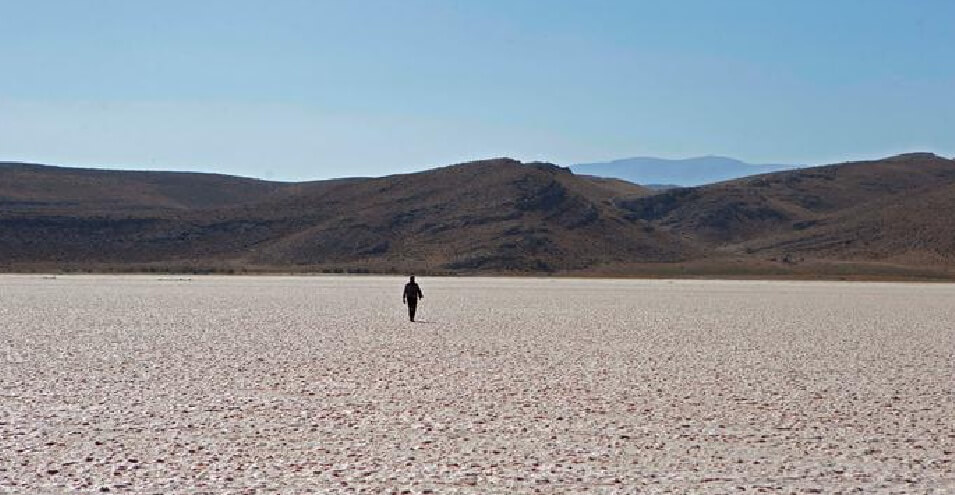
Iran is a country that is struggling with water crises, severe droughts, deforestation, devastating floods, and problems caused by climate change. At the same time, it is one of the producers of greenhouse gases, ranking seventh globally.
Today, the Islamic Republic of Iran is tying its commitments to the climate crisis to sanctions, even though a large part of the country's climate problems have resulted from mismanagement by the Iranian government.
Mismanagement in the exploitation of natural resources
In 2015, Masoumeh Ebtekar, then Vice President and Head of the Environmental Protection Agency, said regarding Iran as one of the largest polluters in the world: “Energy waste, high energy consumption intensity, and the system of subsidies for energy, energy carriers, and oil are among the most important reasons why Iran ranks seventh in the world in greenhouse gas emissions.” She added: “Unfortunately, Iran’s energy economy has not been a dynamic economy.”
According to newly released statistics from the Forestry Organization of Iran, a flood has occurred every three days in the last 20 years. This is while some provinces of the country, such as Kerman and Golestan, did not have a single flood recorded in the 1940s. However, during the last 20 years, the provinces of Fars, Golestan, Khorasan Razavi, Hormozgan, and Sistan and Baluchestan witnessed 43 percent of the country's total floods.
Over the years, the forests of the north of the country were cleared and turned into pastures and grazing grounds for domestic animals. Then, these pastures could no longer be grazed, and the lands that were once forests were converted into agricultural land. Now that these lands are not even arable or are not profitable for farmers to plant and harvest, hectares of them have fallen into the hands of profiteers to build villas that are alien to the environment, and farmers have become villa guards and construction workers.
Besides drought, another of Iran's climate problems is mismanagement of water resources.
According to Mohsen Heydari, a representative of Khuzestan in the Islamic Consultative Assembly, more important than drought, mismanagement of water resources and extraction upstream of the river, as well as excessive dam construction, play a major role in the drying up of Karkheh.
He added: "The government built dams in the upstream provinces without considering Khuzestan to solve the problems of those regions, but it did not recognize Khuzestan's rights, such that agriculture has its own water rights; also, the Great River has its water rights and people have the right to life, but these people did not understand this issue."
According to the latest official report by the "Iran Water Resources Management Company", the water reserves of the country's dams have reached less than 40% of their capacity since the beginning of the current "water year", due to a 27% decrease in water inflow compared to last year.
The report estimates the amount of water entering Iran's dam reservoirs at 1.31 billion cubic meters, while last year this amount reached 1.8 billion cubic meters.
A "water year" is a twelve-month period in which the amount of rainfall in an area is measured. The beginning of this year in Iran is calculated from the beginning of autumn, the month of Mehr, and continues until September 31 of the following year.
According to this report, the total reserves of the country's dams have reached only 18 billion cubic meters, and given its capacity of 50 billion and 500 million cubic meters, 64 percent of this capacity is empty and only 36 percent is full.
The World Bank has warned that the Middle East and North Africa are among the most important regions in the world that will be affected by climate change and rising temperatures for the next half century. This region has always been one of the driest and water-scarce regions of the world throughout history, and agriculture in this region is highly dependent on water, but climate change will exacerbate the crisis in the Middle East and North Africa.
However, throughout the millennia and centuries, the inhabitants of this region have always considered various solutions to adapt to this environmental limitation in a technical way, the most important of which is the digging of aqueducts in Iran during the past millennia, which unfortunately has been completely forgotten these days and has been replaced by the construction of dams and the accumulation of water behind earthen and concrete walls with huge investments and plans to transfer water from basin to basin in Iran.