Approval of proposed resolution against the Islamic Republic by the Agency's Board of Governors
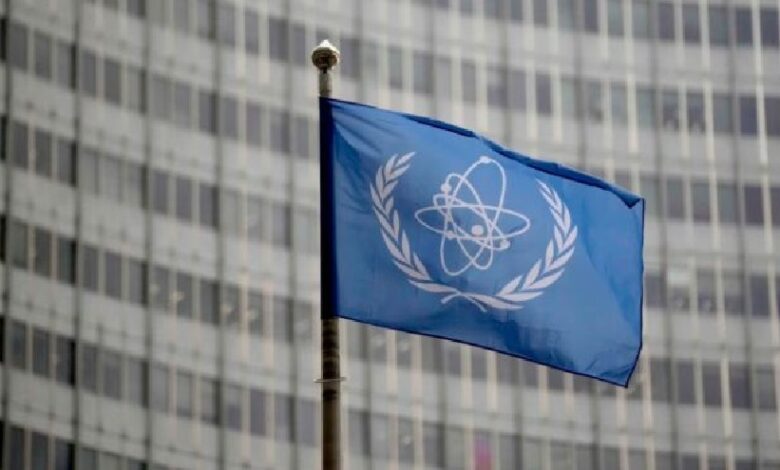
The IAEA Board of Governors approved a resolution proposed by three European countries and the United States against the Islamic Republic.
The Board of Governors of the International Atomic Energy Agency (IAEA) approved a resolution proposed by three European countries and the United States on Thursday, June 12, stating that Iran is not complying with its nuclear safeguards obligations.
According to the text of the resolution, the IAEA Board of Governors said: "Following its multiple failures since 2019 to cooperate fully and promptly with the Agency regarding undeclared nuclear materials and activities at several undeclared locations, Iran has not complied with its safeguards obligations under the agreement with the Agency, which represents a breach of its obligations."
Of the member states of the Board of Governors, 19 countries voted in favor of this resolution, Russia, China, and Burkina Faso voted against it, 11 countries abstained, and two countries did not vote. It should be noted that this is the first time in the past 20 years that a resolution against Iran has been adopted by the IAEA Board of Governors.
Under this resolution, Iran is required to respond as soon as possible to questions regarding uranium particles discovered in several locations that Tehran has not declared to the Agency as nuclear sites. Iran had also announced before the resolution was passed that if the resolution was passed, it would respond to any resolution of the Board of Governors with technical and non-technical measures.
The Director General of the International Atomic Energy Agency (IAEA) reported to the Board of Governors on June 9 that Iran was not providing a credible and acceptable technical response to the agency's questions about the particles discovered at its undeclared sites. Western officials believe that the uranium particles discovered at the Varamin, Turqoozabad, and Lavizan-Xiyan sites are evidence that Iran had a secret program to build nuclear weapons as early as 2003.
Rafael Grossi also stated: "In 2019 and 2020, the Agency found uranium particles at three undeclared Iranian sites in Varamin, Marivan, and Turqoozabad, and since then we have been seeking explanations and clarification from Tehran in this regard. Unfortunately, Iran has either not responded or has not provided valid and acceptable technical answers to the Agency's questions. It has also tried to clean up these sites, which has disrupted the Agency's verification activities."
The Foreign Ministry and the Atomic Energy Organization of Iran issued a statement immediately after the resolution was passed today, condemning the US and European countries' action in passing the resolution and calling it a further use of the IAEA Board of Governors, which they claim is based on political goals and has no technical or legal basis.
The statement reads: "In response to this political resolution, the Islamic Republic has ordered a new enrichment center in a secure location, replacing the first-generation machines at the Martyr Dr. Ali Mohammadi (Fordow) enrichment center with advanced sixth-generation machines."
The resolution was passed as the sixth round of US-Iranian nuclear talks is scheduled to take place in Oman on Sunday, June 15. Despite the planned sixth round of talks, the US State Department announced on Wednesday that it would reduce the number of non-essential staff at its embassy in Iraq due to security concerns.
According to the "safeguards commitments" that are part of the Non-Proliferation Treaty, Iran is required, in addition to declaring all of its nuclear materials and activities, to allow inspection by International Atomic Energy Agency inspectors to ensure that none of these materials and activities are diverted from peaceful purposes.
It should be noted that the Security Council also intends to hold a meeting on Iran's nuclear program.