Succession of Mojtaba Khamenei under the shadow of Khatami's denial and Trump's warning
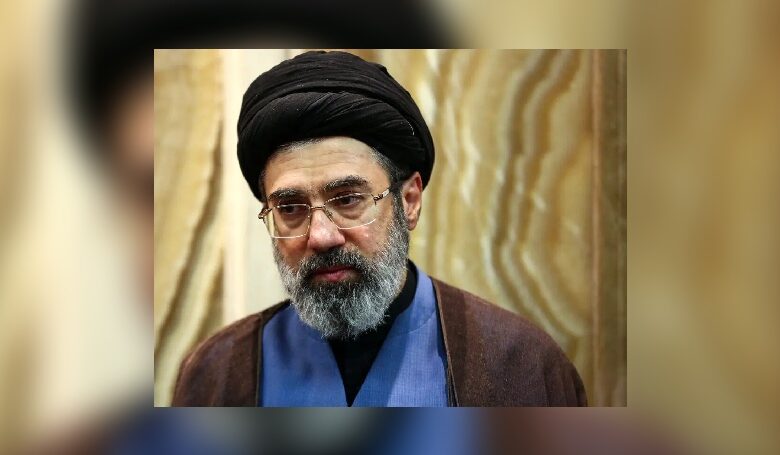
Reports suggest that Mojtaba Khamenei has been chosen as the new leader, but Ahmad Khatami has denied this, and Donald Trump has warned that the "worst case scenario" is a repeat of the "same bad" leadership of the past.
As Iran is embroiled in tensions with world powers and a domestic crisis, international media outlets have reported that the interim leadership council is set to introduce Mojtaba Khamenei, the second son of the former leader of the Islamic Republic, as the “leader of the system.” These developments are occurring at a time when the complete internet shutdown for the Iranian people and fear of attacks and war conditions have kept the selection of the leader behind closed doors and away from the eyes of ordinary citizens, which is a clear sign of the crisis of legitimacy and control in the Islamic Republic.
According to a report by the New York Times, citing unnamed sources, the interim leadership council, which includes members of the Assembly of Experts, the head of the judiciary, and the president, is expected to nominate Mojtaba Khamenei as the future leader, but the nomination may not be officially announced due to concerns that such a move would expose him to further attacks.
These events occurred after joint attacks by the United States and Israel on the facilities and institutions of the Islamic Republic; in these attacks, Ali Khamenei, the usurper leader of the Islamic Republic of Iran, was killed, and this has turned the process of determining his successor into a deep crisis.
These events are taking place in the context of the unprecedented repression of the Iranian people, who have faced severe violence, arrest, torture, and killing of thousands of innocent protesters due to widespread protests by the Islamic Republic, behaviors that human rights organizations have described as "crimes against humanity" and consider the government to lack moral and political legitimacy due to serious human rights violations, the elimination of freedom of expression, and the suppression of domestic opponents.
While the Islamic Republic's generals and security agencies have complete control over the selection of the leader, the Iranian people are deprived not only of political decision-making, but even of understanding what lies ahead for their country.
In response to foreign reports, some government figures have tried to portray the situation as calm. For example, Ahmad Khatami, a member of the Assembly of Experts, said in a telephone interview with domestic media: “We are close to concluding and a leader will be appointed as soon as possible.”
He also emphasized that the reason for the delay in choosing a leader is “the country’s warlike state.” This implicit and ambiguous response shows that there is no real confidence or consensus even among the Islamic Republic’s officials.
While the Islamic Republic is trying to move forward with the selection of a successor in a controlled manner, Israel's defense minister has warned that any leader who continues to threaten to "destroy Israel" will be a definite target for elimination, a stance that shows that Iran's crisis goes beyond domestic borders and that regional and international rivalries could set Iran on a path to more severe violence.
In a joint meeting with German Chancellor Friedrich Mertz at the White House, US President Donald Trump also said, while noting that the joint US-Israeli attacks had destroyed almost all of the Islamic Republic's naval and air capabilities and emphasizing that even potential leaders of the Islamic Republic had been killed, "The worst-case scenario for Iran would be someone as evil as Ayatollah Ali Khamenei coming to power, and we don't want that to happen." He reiterated that the Iranian government is the embodiment of absolute evil.
Ultimately, the current crisis in Iran demonstrates that the Islamic Republic has not only been a leader in persistent human rights violations, but has also become deeply discredited in its control of the process of determining the leader without genuine popular participation. The possible election of Mojtaba Khamenei as the leader of the regime in such circumstances would not only place Iran’s future under the shadow of the power of the military and the closed elite, but would also further challenge the protests and demands of the Iranian people for freedom, democracy, and human dignity.