The hijab is the "first" and one of the most key challenges of the Islamic Republic
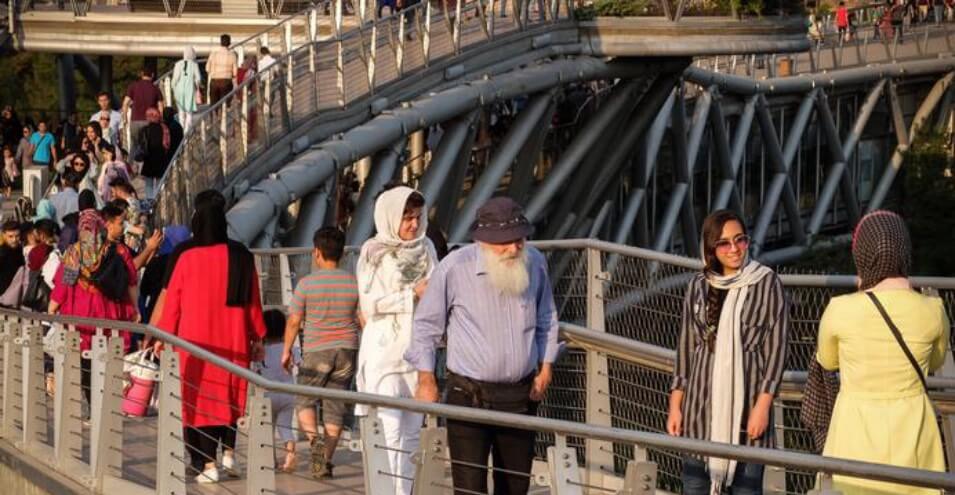
The head of the Islamic Republic's Center for Women and Family Research has called the hijab one of the "first challenges of the system" and said that if we give in to it, we must also give in to "other issues." The Iranian government has shown that it is not willing to back down in the face of women.
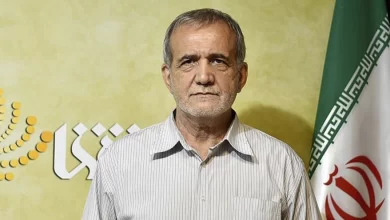
Mohammad Reza Zibainejad, head of the Center for Women and Family Research, gave a speech about the history of feminism in Iran at a session on “The Role of Feminist Activists on the Status of the Hijab in Iran” held on Saturday, May 9. Although he also touched on the pre-revolutionary era, the cleric’s remarks focused on the struggles of women activists during the four decades since the Islamic Republic was established in Iran.
She apparently follows the discussions within the feminist movement in Iran well and in her speeches she refers to many prominent figures of women's rights activists in Iran and their opinions. Of course, here and there with interpretations that ultimately distort these discussions and end up in favor of the compulsory hijab; meaning that it seems that part of the feminist movement in Iran did not oppose the compulsory hijab.
In this speech, he rightly says: “The first challenge of the Islamic Revolution after the victory was the hijab.” The challenge, which has been ongoing for 40 years, has imposed a heavy cost on the government and those opposed to the hijab, but unlike other challenges, it has not yet forced the regime’s officials to back down and correct their course.
"Something is wrong"
Mohammad Reza Zibiyanejad began his review of the history of the conflict over the hijab with Ayatollah Khomeini's historic decree and women's historic demonstrations against it: "On March 5, 1970, Imam Khomeini reminded people in Faiziyeh that women must wear the Islamic hijab to work."
The decree that sounded the first alarm bell for women and the first widespread women's demonstrations in the Islamic Republic against it took place. This movement continued for several days with ups and downs and was finally crushed by the "Hezbollah" truncheons. It took two years to impose mandatory hijab in all public places and streets. The head of the Islamic Republic's Center for Research on Women and the Family attributed and limited the demonstrations at that time to "supporters of the monarchy and a number of Marxist women." The opponents, however, were women from various groups of urban strata; they were female employees, teachers, students, etc., and of course left-wing feminists.
The speech by Ayatollah Khomeini that Ziba’nejad refers to was at the Faiziyeh School in Qom and was a protest against the “liberal” policies and behavior of the Bazargan government. In part of this speech, Ayatollah Khomeini said: “As they tell me, [the ministries] still have the same appearance as during the time of the tyrant. There should be no disobedience in an Islamic ministry. Women should not come naked in an Islamic ministry…”
As pressure, insults, and repression continued, women stopped going to university, the office, the job market, and the political arena without a headscarf, and for a time preferred the headscarf to the "tosari." However, women's protests against the mandatory hijab continued in various forms, never allowing the Islamic Republic to imagine that it had escaped the consequences of this challenge.
The head of the Center for Research on Women and Family has tried to prove in his speech that the driving force behind the protests against the hijab came from abroad and across borders. He points to movements such as the One Million Signatures Campaign, which began with a few specific demands to change anti-women laws in the Islamic Republic, and claims that the founders had no problem with mandatory hijab.
Although there has been no movement like the women's demonstration on March 8, 2018 in Iran in the last forty years, resistance to the hijab gradually took on dimensions much broader than the reach of "left feminists," "monarchist women," and "supporters of neoliberalism," and women's movement activists in general. This resistance reached the homes. It found its way into the minds of young girls from religious and traditional families; in the form of robes that were constantly getting tighter and shorter, headscarves that were getting smaller and thinner and falling on the shoulders with every movement, dyed hair, heavy makeup, and red and purple colors, etc., in a screaming purple color against the coding of the authorities.
A form of veil-freeism emerged in cities large and small, which was much more difficult for the Islamic Republic's military and mobilization forces to control than the repression of women at the beginning of the revolution. The fight against the compulsory veil had been growing within society long before it took on a symbolic form in the Girls of Revolution Street movement.
Mohammad Reza Zaeri, a journalist and a member of the conservative clerical spectrum, said in September 2014, at a meeting held to discuss his book, “Lifestyle,” “That girl who doesn’t wear a hijab is someone who was born in this system, went to kindergarten in this system, went to elementary school in this system, went to guidance, took the entrance exam, and then came to university. She didn’t come from Mars, nor was she sent by global arrogance. She has seen our own television, so it is clear that our work is failing.”
He pointed out that in Iran, even followers of other religions are forced to comply with the regulations that the Shiite government has made mandatory in Iran, saying: "If it is an Armenian, we will force her to wear a headscarf, a veil, etc. These are sensitive points. I believe that the obligation and coercion of hijab has been wrong in the country from the beginning. That is, we made it mandatory to wear a transcendent value that people had to beg for, like a parent who forces a child to eat a desired food at home." He was later banned from the pulpit and was not invited to speak on any television program. In 2018, the Fararou website quoted him as saying: "The reason is that in previous years I have said that although hijab is essential to religion and obligatory according to Sharia law, compulsory hijab has not been introduced in religion."
"Children" raised in the heart of the Islamic Republic
In the summer of 2018, Eqtesad Online wrote in a report titled “Statistics of Women Wearing Bad Hijab According to the Majlis Research Center,” “In recent months, the publication of the Presidential Strategic Studies Center’s report on the hijab has sparked a wave of news and analysis about the status of the hijab and bad hijab in the country.”
The summary of the report was that “the Majlis Research Center, after reviewing research conducted in recent years on the hijab and improper hijab in the country, has concluded that 70 percent of the population has improper hijab, and the most likely scenario that would be appropriate in the current situation is “indifference,” because other scenarios such as decriminalization or stricter regulations on hijab, both of which may lead to an increase in improper hijab.” In other words, the series of discussions and analyses concluded that the compulsory hijab policy in the Islamic Republic has failed. An important point of the Majlis Research Center’s report was that “the younger the age, the greater the improper hijab.” In other words, the more the Islamic Republic has progressed, the more it has failed.
NAJA's resistance to prevent official veiling in Iran
In early June 2013, on the eve of the presidential elections that led to the election of Hassan Rouhani, Esmail Ahmadi Moghadam, the former chief of police, said at the “National Conference of Officials and Liaisons of Ansar Hezbollah in the Country,” “If there is no stubborn resistance from the National Guard against the attacks, the hijab will become official in Iran.” He criticized the “promotion of the Western lifestyle in the national media,” in which “even religious women” appear as experts on the program and encourage this style instead of “denying the Western lifestyle.”
He divided the protesters against “bad hijab” into four groups: the first group is the political protesters of the Green Movement, the second group is “prostitutes,” the third group is “mannequins” who advertise the products of clothing manufacturers and sellers, and the fourth group, who he says are “the negligent.” In the same speech, he admits that “Naja has no other support or strength of heart other than the support of the Hezbollah community, the Supreme Leader, and some religious authorities. Even many Friday prayer leaders have changed their priorities from the issue of culture, chastity, and hijab.” He warns: “It will be almost impossible to make up for every step we have taken in this area.”
The Islamic Republic's neighbors and even allies in the region also have a different attitude towards women's hijab. Women's activists believe that if the Islamic Republic had acted in their way, perhaps the number of women in Iran who would wear the hijab would be lower.
But the head of the Center for Women and Family Research in his speech on Saturday reached a similar conclusion to the former police chief, citing the words of the Leader of the Islamic Republic: "If we refrain from wearing the hijab, our situation will be far worse than Islamic countries and Turkey, because political discussions will also be raised, and the country with the highest percentage of Shiites is the Republic of Azerbaijan, where homosexual meetings are held. If we refrain from wearing the hijab, we will also have to deal with other issues."
Source: DW