Students are vulnerable to sexual harassment in schools and college entrance exams.
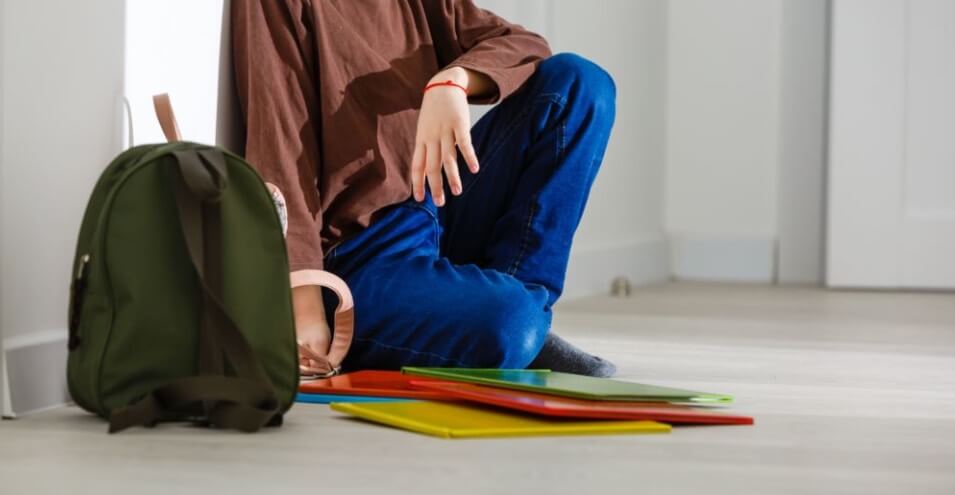
Every now and then, news comes in. Perhaps it would be better to say that news leaks out. Once it was a boys' school in Marzdaran, once it was Saeed Tusi, a Quran teacher, and now the name of another teacher has come up; a college entrance exam teacher whose name has been mentioned by a number of students on social media, accusing him of sexual assault.
Handkerchiefs, body touching, sexual jokes, requests for nude photos, and things like that.
The first students wrote that their entrance exam teacher had sexually harassed them, writing that he apparently did this to most of his students, whether in the classroom or in private lessons at home.
Soon, however, the same students deleted their writings and apologized to the teacher, in a tone that many observers said was fearful and dictated.
Regardless of what happened in the schools this time and what ways the students and their families have to prove their claims, the question is to what extent does the educational and legal system in Iran seriously pursue handling such cases?
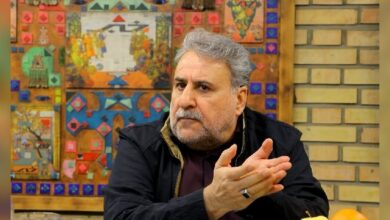
Sociologist Rasoul Nafisi says: "Even in cases where children have complained about teacher harassment, there has been no severe reaction from teachers or administrators, but if someone does not participate in the 22 Bahman march or similar rituals, there is even a possibility of expulsion."
Does this mean that students who are sexually harassed or assaulted by teachers or school personnel have no way to pursue what happened? What does the law say about this?
Hossein Raisi, a lawyer, says of the newly passed law on the protection of children's rights: "We cannot say clearly to what extent the law specifically protects students in these situations, but we cannot say that the law is silent and there is no mechanism to demand and hold accountable those who harass students in the school and educational environment. Specifically, according to the recently passed law on the protection of children, child abuse is very clearly defined. All children under the age of 18 are subject to this law. This law can be used, and any sexual abuse, even verbal abuse, and other abuse, including touching the body, is mentioned there. These are considered crimes both in terms of the Islamic Penal Code and in terms of this law on the protection of children."
The image we have of schools and teachers is often one of confidence and trust. In schools, our children are supposed to learn and progress, preparing for a healthy future. In an environment where such expectations are made, what criteria should be used to select teachers?
Rasoul Nafisi says of the mainly ideological, political and religious criteria in selecting teachers: "To select teachers, they usually ask for the opinion of three people. If it is in small towns and places, they only ask for the opinion of the local cleric. The questions that are asked are whether the person in question specifically participated in the 22 Bahman march? Has anyone seen him drinking alcohol and such issues. Ultimately, what is emphasized a lot is the practical commitment to the guardianship of the jurist. In other words, has he ever been seen to do something that is against the guardianship of the jurist or is not sufficiently obedient to the guardianship of the jurist. The process of bureaucratizing religion has turned into a system where, for example, they have a Supreme Prayer Council and a director general for evaluating the Supreme Prayer Council, and these are measured. "It's an exact imitation of the system of communist countries, except that instead of Communist Party branches, they have targeted mosques and now schools."
In addition to academic and educational criteria, shouldn't teachers' mental health and moral integrity be among the most important criteria for selecting teachers? Shouldn't these be more important than teachers' religious or political beliefs?
Mr. Nafisi responds: “We see in Iran a transition from an educational issue to a bureaucratic issue and from there to a political system whose concerns are these. Therefore, when selecting, we should not expect that, for example, this person will be psychologically selected or that there will be psychologists to see what kind of mental state this person has or whether this person is married or not? The problem is that there is no other issue at stake except the practical commitment to the guardianship of the jurist, and all other issues fall under this.”
Hossein Raisi, a lawyer, speaks of the importance of creating a safe environment for students who are very vulnerable to such behavior. He describes the educational structure in Iran as teacher-centered. Perhaps the educational structure, in addition to being teacher-centered, is also simply results-centered, an issue that becomes even more acute for college entrance exam teachers, and the most important criterion for college entrance exam teachers is often the success rate of their students in the giant exam called college entrance exam.
He says: "When the school environment is set up in such a way that the teacher can do anything or the educational structure is set up in such a way that it is very teacher-centered, this is dangerous. A teacher is praised because he is the one who gives the best passing grades in the entrance exam, families turn to him a lot, and he also becomes suspicious that he is a very important person and is not accountable to anyone. This is where selection is the first condition, and then continuous supervision.
However, past experiences with cases of sexual harassment of students by teachers, including the most high-profile case in recent years, that of Saeed Toosi, a Quran reciter, are not very promising. Not only was Mr. Toosi ultimately acquitted, but the country's judicial authorities considered those who published the news of his sexual assault accusation guilty and their prosecution an example of spreading prostitution.
Source: Radio Farda