Coronavirus infection rate in Iran: “15 people per hour”
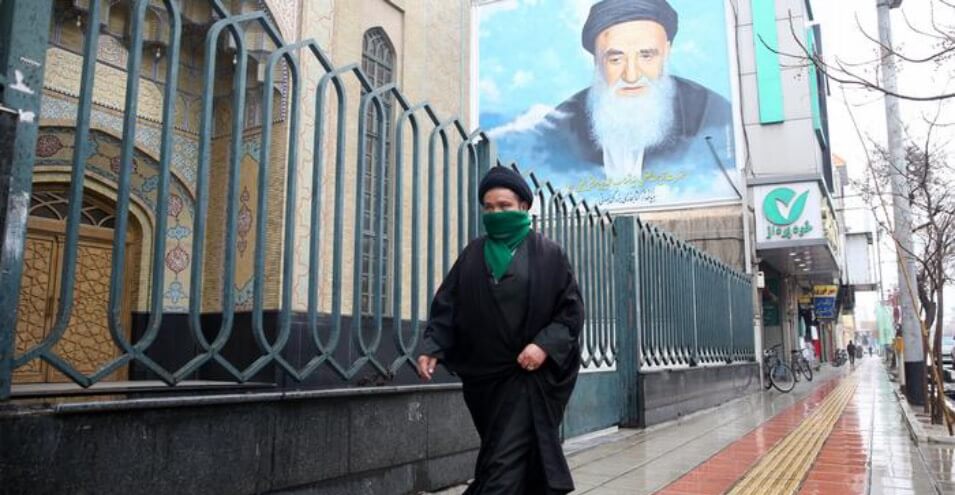
Corona has infected 9,000 people in Iran so far and killed 354. Members of parliament have asked why Qom was not quarantined from the beginning. At the same time, a statistical study showed that the rate of corona infection in Iran is 15 people per hour.
New and official statistics from the Ministry of Health show that the number of people infected with the coronavirus across the country has reached 9,000 and the number of deaths due to the virus has reached 354.
Kianoush Jahanpour, spokesman for the Ministry of Health, announced 958 new cases of the coronavirus on Wednesday evening, March 12, after the end of a meeting of the Information Committee of the Coronavirus Response Headquarters at the Ministry of Health. So far, 2,953 people have recovered.
Coronavirus infection rate: 15 people per hour
On Wednesday, March 11, the "Asr Iran" website wrote in an analytical report, citing statistics published from the first days of the coronavirus outbreak in the country, that "15 people in Iran are infected with coronavirus every hour, and one to two people lose their lives to coronavirus every hour."
The report, noting that "an hourly record of 45 infections was also recorded in the country, meaning one person infected every 2 minutes," stated that this number reflects the rapid growth of the virus in Iran, which was recorded on March 8, bringing the number of people infected with the virus to more than 1,000 in one day.
From the perspective of the Iranian Times, the meaning of these numbers is that "the government has not been able to properly handle the spread of this disease, and society has not yet believed that the virus is spreading."
Opposition to the quarantine of the city of Qom, as the epicenter of the coronavirus outbreak, on February 20, and the lack of timely and transparent information to the public about the extent of the coronavirus infection in different regions of the country caused the rate of infection with the virus in Iran to reach 45 people per hour.
Highest death toll in 40 years
Tehran, Qom, and Isfahan are currently at the top of the most polluted cities in Iran. According to Asr-e Iran, according to official statistics, until March 8, one person died from the coronavirus in Iran every 1 to 1.5 hours. The statistics report 18 to 21 deaths per day. This is while the statistics on March 8 reported 49 deaths in one day. That is, one death from the coronavirus every half hour; two people per hour.
The highest death toll was recorded on Tuesday, March 10. On that day, 54 people died from the coronavirus within 24 hours, meaning that about three people died every hour. Asr-e Iran described this as “the largest death toll in Iran in the past 40 years.”
Qom has become a city of chaos.
February 30, 2019 can be recorded in the official Iranian calendar so that everyone remembers that on this day, opposition was expressed to the quarantine of the city of Qom, as the center of the spread and transmission of the coronavirus. The Ministry of Health and part of the government did not exert pressure on the opposition. It has not yet been determined exactly where the opposition originated.
The parliamentarians ask, "For what motive" was Qom not quarantined from the beginning? Because of "demagoguery and superstition"? Who "inadvertently or intentionally" did not endanger the lives of the people?
In an interview with Etemad Online on Wednesday, MP Ali Motahari asked what institution or organization had “failed” in this work? “What factor,” “who,” and “with what motive” prevented the quarantine of Qom from the very first day? “Did the Ministry of Health fail in this regard or was there resistance based on demagoguery and superstition in the city of Qom?”
Motahari asked: “Was the guardianship of the shrine of Hazrat Masoumeh involved in the failure to quarantine Qom?” He called for the prosecution of those who “are responsible for people’s lives” and “interfered with specialized medical work.”
Ahmad Hemmati, a representative from Semnan and a member of the Parliament's Health and Treatment Commission, also said that the quarantine of Qom is overdue and "useless." He told ILNA news agency: "When the origin of the virus is a specific point (indirectly referring to Qom), it should have been quarantined there so that this would not have happened."
The spark for pursuing this issue was sparked by Gholamreza Heydari, a reformist member of parliament. Two days ago, he called on the judiciary to hold accountable clerics and religious leaders who have resisted imposing restrictions to prevent the spread of the coronavirus.
This MP criticized the failure to implement preventive restrictions and bans in the city of Qom and the entry of people into the city's pilgrimage centers, saying: "The judiciary should be asked what the ruling of the cleric and scholar who resisted and did not allow the prevention and restrictions for public places to begin sooner is."
Rouhani's complaint: No one has been idle.
The Ministry of Health has been responsible for leading the coronavirus response headquarters until now, but today it was announced that, with the approval of Ali Khamenei, the Leader of the Islamic Republic of Iran, this responsibility has been transferred to President Hassan Rouhani.
With the rise and spread of the coronavirus, social media users have been tracking Rouhani's absence from public space with the hashtag "Rouhani-where?"
According to Iranian news agencies, at a meeting of the government council on Wednesday, March 11, the president emphasized that "everyone must take the Corona problem seriously," and considered the world's single solution to combat Corona to minimize traffic within and outside the city.
The President also complained that "our government has been propagandized in such a way that, for example, the President has no responsibility, the Minister of Interior has no responsibility, only the Minister of Health is caught and the entire burden is on his shoulders," adding that the Minister of Health and all medical staff and staff have had and continue to have a heavy responsibility.
According to Rouhani, all government structures and ministers are involved in combating the coronavirus and "ensuring people's daily lives."
In another part of his speech, he emphasized that the coronavirus should not be underestimated, and did not consider it permissible to exaggerate about it "more than the reality."
Earlier, after the first meeting of the National Headquarters to Combat Coronavirus, Rouhani had said in response to demands to reduce working hours and close down some gatherings and ceremonies that "this is a conspiracy by our enemies to shut down the country by instilling fear in society."
Source: DW