A review of popular protests after the Islamic Revolution in Iran; from the fight against compulsory hijab to livelihood demands
Cyrus Aladin – Public protests are a natural occurrence all over the world, and a right recognized in the United Nations Charter of Human Rights. In any society or country, some “minority or majority” may protest or demand an issue, law, or social condition.
Sometimes these protests are accompanied by violence and destruction, and sometimes they end peacefully. But it is always the way the government deals with these protests that attracts attention. Usually in countries with dictatorial governments, public protests are severely suppressed, and in free governments, as long as the protests do not lead to the destruction of public property and violence, they are accompanied by police appeasement.
Although Article 27 of the Constitution of the Islamic Republic explicitly emphasizes the freedom to "form assemblies and marches, without carrying weapons," in practice, and looking at the history of protests in Iran, this principle has been ignored in most cases.
- Women, the first protesters after the revolution
The first popular protest in the history of the Islamic Republic was a women's protest against the mandatory hijab, which occurred 25 days after the victory of the Islamic Revolution, in Esfand 1978, coinciding with International Women's Day.
This protest began after the publication of Ayatollah Ruhollah Khomeini's speech as the first headline in the "Etlatla Newspaper" dated March 6, 1978. The article, titled "The Imam's Opinion on the Hijab," stated: "Now, the ministries, as they are telling me, still have the same form of a tyrant. Women should not come to Islamic ministries naked. Women should go, but they should wear the hijab."
The publication of this article was accompanied by scattered marches for and against the hijab. The next morning, March 7, female employees without the hijab were not allowed to enter their workplaces.
At the same time, a rally was held at the University of Tehran to mark International Women's Day, and the demonstration was extended outside the university, but was met with violence by members of the Islamic Revolutionary Committee. Men shouting "Either headscarf or head!" stormed the line of protesters against the compulsory hijab and even resorted to firing shots in the air to disperse the protesters.
On Friday, March 8, the violence was attributed to "counter-revolutionaries" and it was announced that those who harass women would be severely punished.
But the situation continued in the following days. On Saturday, the women of the "Judiciary" and "National Radio and Television" gathered, which was again accompanied by violence and airstrikes. That day, the headline of the Etelaat newspaper was related to an interview with Seyyed Mahmoud Taleghani entitled "There is no compulsion in the matter of hijab."
These protests against compulsory hijab continued in other cities in Iran. But over time, and especially after Taleghani's death, hijab became mandatory for women.
- June 1988
The June 1988 protest was initiated by the Islamic Consultative Assembly and organized by the People's Mojahedin Organization (PMOI) with the proposal of the political incompetence of then-President Abolhassan Bani Sadr.
Akbar Hashemi Rafsanjani wrote in his memoirs that “On Sunday, June 17, in order to prevent the publication of Bani Sadr’s declaration, the newspapers Enghelab Eslami, Mizan, Arman Mellat, Mardom, and Jhabeh Melli were temporarily closed by the Supreme Judicial Council. It turned out that the decision had been made not to broadcast this declaration on radio and television either… On Saturday, June 20, at 4 p.m., when Bani Sadr’s disqualification was announced, the groups of the People’s Mojahedin, Peykar, Ranjbaran, and the Fadaei minority took to the streets to create chaos and clashed militarily with the committee and the IRGC.”
Jalal Mojahedin member Jalal Mojahedin said in an interview with the BBC: "The gathering was on Vali Asr Street, the boundary between Taleghani and Enghelab, when several people were attacked with clubs in their hands..."
Fariborz Nemati, another member of the Mujahedin group, says: “When we entered Taleghani Street, it was clear that the regime was already prepared for a confrontation. The attack on the crowd began with the attack of motorcycle riders with clubs… Then several minibuses and buses brought in forces, all of whom were armed with cold and cold weapons.”
These clashes took place in various cities of Iran, such as Isfahan, Tabriz, Ahvaz, Bandar Abbas, etc., and it was announced that 50 people were killed and about 200 injured in Tehran.
The conflict of June 1988, according to many analysts, was an event that pushed political conflicts to an irreversible stage.
- The Seventies and the Beginning of Popular Movements
In the early 1970s, with the implementation of the post-war "economic adjustment" policy, and an increase in inflation to 49.4 percent, a major economic shock hit the Iranian economy. The effects of this economic shock affected the standard of living of the people and in several cases brought people to the streets.
- Mashhad
On June 22, 1992, the decision to demolish part of the neighborhood known as "Koy Talab Mashhad" by bulldozers was met with opposition from residents of "Tabarsi" Street. According to reports, during the clash, a student was shot by officers, which was the prelude to a widespread and violent protest.
The next day, IRGC forces were dispatched to the area and a bloody crackdown finally ended the standoff. Officials never released figures on the number of injured or killed in the incident.
- Qazvin
In August 1994, the plan to make Qazvin a province failed to pass a vote in the parliament, sparking public protests. The protests began with protesters blocking roads in the province, and soon escalated into violence with the intervention of the police.
Angry people damaged several cinemas and banks, and the situation spiraled out of control. This time, the Revolutionary Guards, along with the "Sayyid al-Shuhada" division, came to the scene, unleashing a massive wave of armed repression and arrests, ending the protest movement.
- Islamshahr
The people of Islamshahr, who were considered to be from the low-income strata of society, were protesting against price increases, especially the high cost of taxi fares. However, the spark of this movement began in the village of Akbar Abad in protest against water rationing and quickly spread to other villages and towns. The protesting people, who had not received a convincing response from the governorate and municipality, blocked the Saveh-Chahar Dangeh road.
After two days of confrontation between the people and the police, the IRGC’s Sarollah Brigade and the anti-riot police finally entered the square and suppressed the protest. An eyewitness to the incident told Al-Arabiya Persian: “From 7-8 pm, the area had become like a war zone. There was smoke from burning tires and blood on the ground, and the sound of machine guns. There was no sign of the street vendors. There were not even taxi drivers… This conflict lasted for three or four days, and the security forces suppressed the people from the sky and the ground.”
- University Quarter: A new chapter in the student movement
Undoubtedly, among the various incidents of the 1970s, one of the most important incidents in the field of protest movements was the "University Quay" incident.
In 1999, the Cultural Commission of the Fifth Parliament approved a bill called the “Amendment to the Press Law,” a law that some newspapers and political activists believe would cast a shadow of tyranny over newspapers. The newspaper “Salam” published a confidential document from the Ministry of Intelligence with the headline “Saeed Emami has proposed amending the Press Law.”
On July 8, newspapers announced the closure of Salam newspaper. The first rally to protest the closure of Salam newspaper took place at 9:00 PM in front of the Tehran University student dormitory and ended peacefully after a few hours.
But on the morning of July 9, "private soldiers" accompanied by some security officers attacked the university dormitory and beat and arrested a number of students.
This raid sparked several days of nationwide protests by students and the public in many cities across the country, which continued until July 13.
The scale of this movement was so widespread in the public mind that it caused Mustafa Moin, the Minister of Science, to resign from his position. A fact-finding committee was later established by the government to investigate the issue.
Even now, several years after the incident, some Islamic Republic officials are still trying to attribute the incident to a deviant trend. For example, Alireza Zakani, the current mayor of Tehran, told Tasnim news agency on the 20th anniversary of the incident: “The attack on the University Quarter was a sedition in the continuation of the chain of murders.”
As with other protest events, no official statistics were ever provided on the number of people killed, injured, and arrested in the University Quarter incidents. However, there is still no news about the fate of at least two students arrested in those protests: Fereshteh Alizadeh and Saeed Zeinali.
- Green Movement
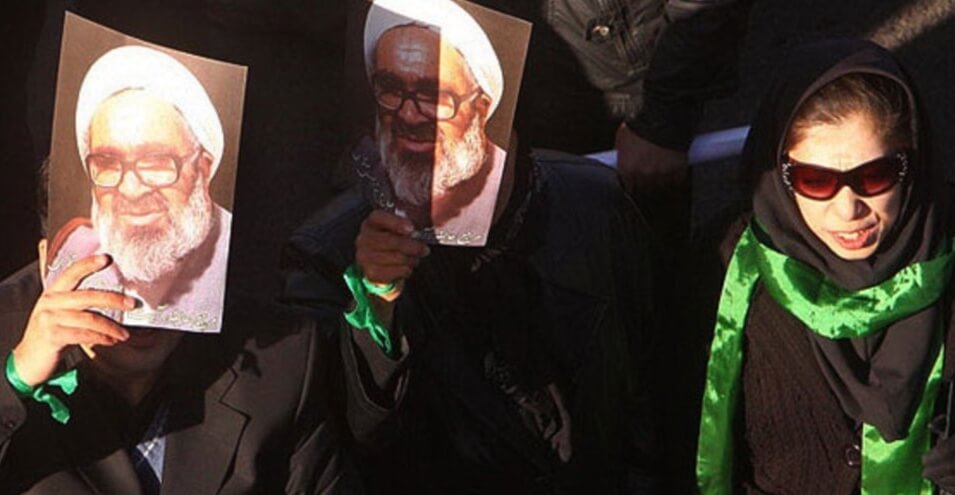
With the end of the 2009 presidential election and the announcement of Mahmoud Ahmadinejad's victory, Mir Hossein Mousavi did not accept the results of the election and three days later, on June 15, 2009, he called on supporters and protesters of the election results to participate in a large rally.
The march, which some observers described as the largest non-government demonstration since the 1979 revolution, turned violent with some Basij forces firing. Unlike other protest movements, this time, mobile phones provided an opportunity to capture the events and share them with a global audience via the internet.
The images of the death of a 27-year-old girl named Neda Agha-Soltan made her a symbol of the people's struggle at that time. The government quickly restricted the internet, and in some cases completely cut it off, and quickly expelled foreign journalists from Iran, so as not to allow the news to be published. But the scope of this protest was wider than previous ones. Protesters took advantage of every opportunity and government ceremony to be present in the streets.
From the Quds Day ceremony to the death of Hossein Ali Montazeri and even Ashura and Tasua that year, which was one of the bloodiest days of the uprising. According to official statistics, at least 12 people died in Tehran on Ashura. The scale of the repression was so extensive that Mir Hossein Mousavi explicitly mentioned “throwing innocent people off bridges and heights, shootings, running people over, and assassinations.”
The media coverage of the incident sparked an international backlash. However, the government announced the end of the protest movement by holding a march on January 29 of that year, and a ceremony is held every year on the anniversary of the event.
- Unorganized protests
The 1991s saw widespread protests. Increasing economic pressure, a narrowing of the space for criticism, and despair about the future had a significant impact on the nature of the protests in the 1990s.
- January 2017
Former MP Ali Motahari said: "The origin of these protests was within the government, but it quickly got out of control."
The protests began in Mashhad in January 2017. But they quickly spread, their nature changed, and they quickly targeted the very core of the system. One of the most famous slogans of that protest movement was “Reformist, fundamentalist! The story is over.”
Some experts called these protests, which spread rapidly across the country without any organization, “protests of the defenseless and neglected segments of society.” But these protests were also suppressed with complete violence. Once again, no statistics were published on the number of deaths and arrests, but the formation of groups such as “Bereaved Mothers” indicates that the number of deaths in this protest movement was not small.
- Bloody November
On November 14, 2019, the re-implementation of gasoline rationing, and the 200% increase in fuel prices overnight, shocked the public.
Some drivers turned off their cars in the street in a protest movement to show their protest. But with the crackdown by security forces, the November 2019 protests quickly turned into one of the bloodiest incidents since the revolution.
The Islamic Republic, which had experienced a history of international pressure following the publication of images of the violent repression of 2009, suddenly made the entire Internet inaccessible and suppressed these protests in the most severe way possible. The protests, which lasted three days, left at least 323 people dead, according to the latest figures from Amnesty International, and more than 1,500 according to Reuters. Among the dead were at least 10 women and 22 children. Reports indicate that most of the dead were killed by gunshots to the head or upper torso.
Finally, the government did not provide any statistics on the number of dead, injured, or detained.
Recently, a people's court was held in London by three human rights organizations: "Justice for Iran", "Iranian Human Rights" and "Together Against Executions" on the second anniversary of this bloody repression. Given the large volume of witnesses and documents that have not yet been published, this evidence is scheduled to be collected over the next three months. The purpose of this court is to examine the dimensions of this bloody repression and to examine the possibility of "crimes against humanity" being committed by the government of the Islamic Republic.
Source: Voice of America