Protesters in Gonbad-e-Kavos: Why is the arrestee's child abuse charge considered kidnapping?

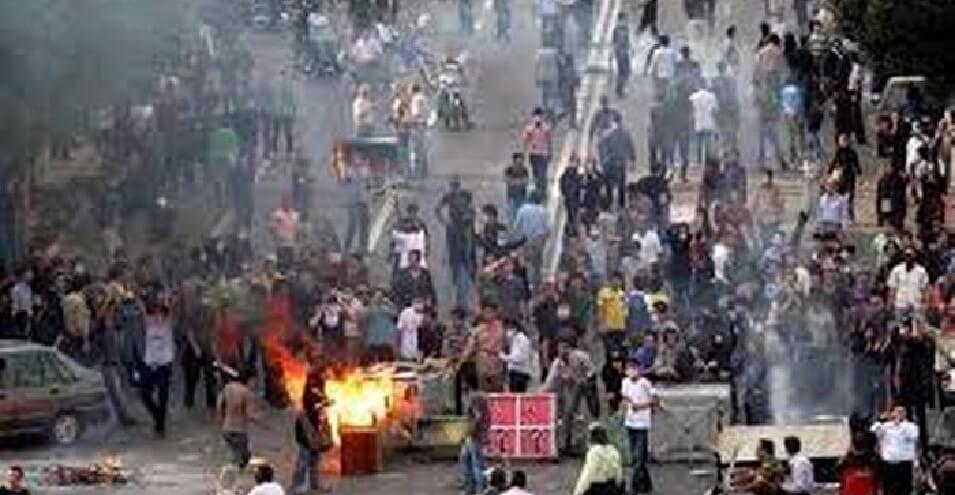
News of the sexual abuse of two children in a Turkmen village in Iran by a guard at the Golestan Dam sparked protests. Protesters set fire to the Golestan Dam guardhouse. The protests resulted in the arrest of the accused and two protesters, including the village headman.
One day after the child abuse incident, residents of the village of Arab Sorang protested the arrest of villagers by law enforcement by posting critical content on social media, calling on the authorities to immediately investigate the case and release the arrested villagers.
Arab Sereng is a village in the central district of Gonbad-Kavos County in Golestan Province.
A member of the village council, who did not want to reveal his identity, said: "During the protests, the villagers, who were unhappy with the dam guard's action, expressed their dissatisfaction by throwing stones at the police vehicles."
Although some protesters believe that the sexual harassment led to rape, the Gonbad-Kavos prosecutor, while denying the charge of “child rape,” told Iranian media: “The two children, who are seven and eight years old, were sent to the forensic medicine, and after examination, the forensic medicine ruled out rape.” He continued by saying that the defendant is currently in temporary detention on charges of “kidnapping.”
Turkmen cleric protests sexual harassment incident
Following the citizens' reaction to the sexual harassment issue, Sunni cleric and Imam of the Friday prayer of Qara-Balagh, Amjad Akhund Nazari, also condemned the act. On the night of Farvardin 1402, he called for the immediate investigation of this case by judicial and security officials in an Instagram conversation.
The Sunni cleric said in detail about the incident that two seven- and eight-year-old children had taken refuge in the Golestan Dam guardhouse while fleeing from a stray dog; however, the Golestan Dam guard took advantage of this opportunity and “stripped the two children naked, forced them to dance, and attempted to rape them, but the children managed to escape from the guardhouse.”
The director of the Qarabalagh religious school continued his speech by announcing the arrest of the village headman and a Sunni cleric who were present at the protests by the villagers, and called on security officials to assist and release these two citizens.
Reaction of Gonbad Kavous citizens: Why the kidnapping accusation?
Following the spread of protests on social media, a number of civil society activists called for a protest rally on the 23rd of Farvardin to protest the incident. Among the demands of the protesters in this call were the release of the arrested protesters and the correction of the explanation of the charges made by the judicial institutions overseeing this case.
The call by civil activists, however, was met with opposition from some politicians and clerics in the region. Aman Qalich Shadmehr, a representative of the people of Gonbad-Kavos in the Islamic Consultative Assembly, and the Friday prayer imams of the city were among those who opposed the call for the gathering.
Despite all the security and media pressure, on the afternoon of April 2nd, hundreds of protesters held a protest rally in front of the Gonbad County Courthouse. At this rally, the governor and the Friday prayer leader of Gonbad called on the protesters to remain calm, promising cooperation and the early release of two detained citizens. However, in the end, the rally, which had begun peacefully, turned violent with tear gas being thrown and protesters being beaten by law enforcement and security agencies.
At the same time, "Tohra", the organization of human rights activists for the Turkmen people of Iran, also published several videos and images on its Twitter page regarding these protests and announced the outage of mobile internet.
Hours after the protests turned violent, local media close to the Iranian government also announced the release of two protesting citizens arrested in this case.
At least six protesters have reportedly been arrested by security forces on Tuesday, March 23. There have also been reports of counter-riot forces being deployed throughout the city of Gonbad-e-Kavos.
What do child rights activists say?
Hamed Farmand, a child rights activist, says: "The incident has several aspects. One of them is the lack of a safe environment. This issue is also mentioned in the Convention on the Rights of the Child, which states that a safe environment must be provided for children to play and that they must use welfare facilities. The issue of stray dogs and children taking refuge in the Golestan Dam guardhouse shows the lack of an adult around the children's play area, which removes the child from the conditions of a safe environment, and these are a set of duties that are the responsibility of governments and regimes."
Hamed Farmand continued, emphasizing: "What we rarely see in the laws and analysis of these situations is where the government is forced to fulfill its duties, which are not reflected in the laws. Another issue is education and that children be educated about their own bodies, as contact with strangers may end in sexual abuse, although these two children have sought refuge with this person out of necessity."
This child rights activist states that the new law on the protection of children and adolescents in Iran obliges the government to provide education related to children's rights, especially in various sectors, including the Iranian Broadcasting Corporation. However, due to the taboos that exist and the government's approach to education related to sexual issues, not only is education not provided, but it also leads to the teaching of wrong teachings.
The definition of child abuse in Iran is unclear, and therefore accurate statistics are not published in this regard. Although Iranian media outlets occasionally publish statistics in some provinces, child activists believe that the statistics provided are not accurate and that many cases of child abuse go unreported.
Source: DW