Warning about water shortage problem in summer; "250 cities" in Iran face water stress
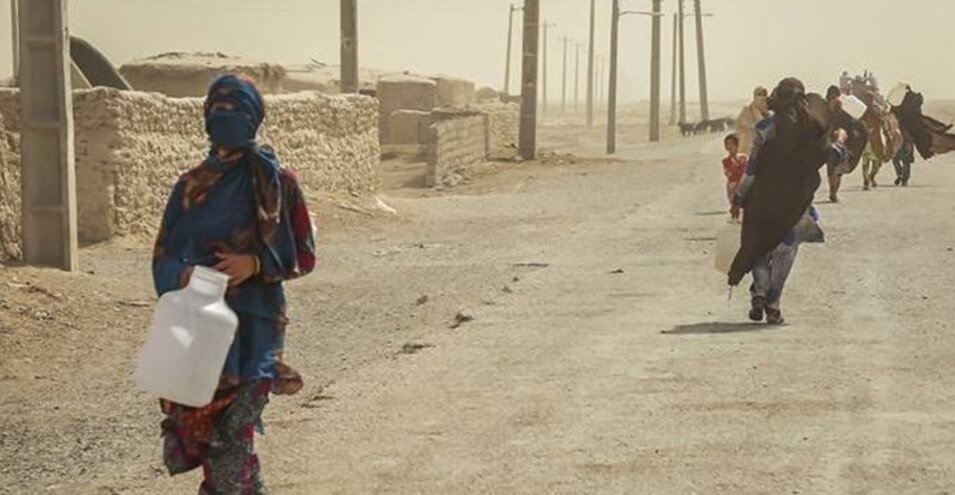
The deputy director of management and supervision of the operation of the country's Water and Wastewater Engineering Company says that due to the decrease in rainfall this year, Iran will face a water shortage problem in the summer of 1400, and accordingly, the number of cities with water stress will increase to 220 to 250 cities.
According to the latest statistics from the Ministry of Energy, the amount of rainfall in the country during the 11 months of this solar year has decreased by 38 percent compared to last year and 29 percent compared to the long-term average.
Of course, by reducing hydroelectric power production, the government has been able to somewhat prevent the discharge of water from dams; an issue that, according to statistics from the Ministry of Energy, has caused the country's hydroelectric power production to decrease by more than 28 percent between April and the end of February this year compared to the same period last year, and the country's electricity imports have also more than doubled.
According to the IRNA news agency, Hamidreza Kashfi, deputy director of management and supervision of the operation of the country's Water and Wastewater Engineering Company, said on Sunday, March 14, that last year, more than 25 percent of water was consumed without revenue, of which 13 percent was apparent waste, 11 percent was real waste, and 1.4 percent was permitted consumption without revenue.
He cited part of the reason as the "wear and tear" of the country's water network, saying that currently 24 percent of the country's water network is over 25 years old, a percentage of which is worn out: 20 percent of the network should be renovated every year, which is not happening because companies cannot charge people for the services they have used up.
According to statistics from the Ministry of Energy, the cost of producing water in Iran is almost twice the average selling price of water.
The entry of new cities into water stress comes at a time when heavy rainfall has occurred in some regions of the country in recent years and many cities and villages have been flooded, but the necessary infrastructure to control and use water does not exist.
For example, while the southern provinces of the country, including Khuzestan, where 800 villages are facing water stress according to a parliamentary report, have faced the problem of flooding and inundation of residential areas in recent years.
In December of this year, floods affected more than seven provinces in Iran, with at least seven people losing their lives in the two provinces of Bushehr and Hormozgan, and 1,200 houses in Khuzestan being submerged.
Statistics from the Ministry of Energy show that the greatest decrease in rainfall occurred in the eastern regions of the country, and the amount of rainfall has fallen to one-fifth of last year.
Mr. Kashfi also said that the outbreak of the coronavirus in the country has increased water consumption, with some areas seeing a 40 percent increase in consumption.
Source: Radio Farda