Seventeenth day of hunger strike; Nasrin Sotoudeh's physical condition is deteriorating
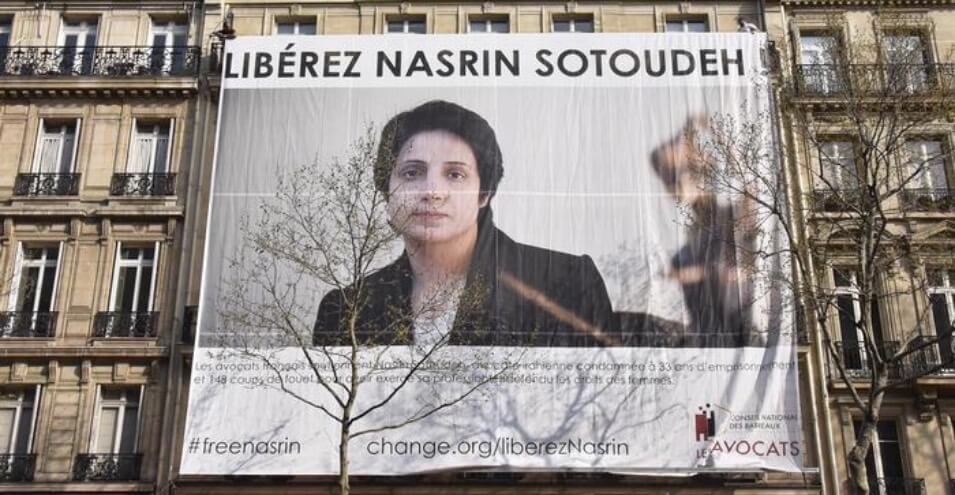
The husband of imprisoned lawyer and human rights activist Nasrin Sotoudeh reported that her physical condition has worsened on the 17th day of her hunger strike. Reza Khandan posted a message on social media announcing his wife's severe weight loss and high blood pressure fluctuations.
Reza Khandan, the husband of Nasrin Sotoudeh, says his wife, who weighed 53 kilograms before her hunger strike in prison, has lost about six kilograms in the past seventeen days. Nasrin Sotoudeh, a lawyer and human rights activist, has gone on a hunger strike to protest the “unfair” and “illegal” conditions of political prisoners in Iran.
On Thursday, September 26, Reza Khandan posted a message on social media about his high blood pressure and a sharp drop in blood sugar. Reza Khandan wrote: "The nausea does not allow him to consume enough water and sugar, which is very dangerous. Once his blood sugar dropped to 44 and a few days later to 55."
Nasrin Sotoudeh, who was sentenced to a total of 33 years in prison and 148 lashes after being charged with “gathering and colluding against national security” and “spreading lies and disturbing public opinion,” has been behind bars since June 2018. According to the Islamic Penal Code, 12 years of her prison sentence is enforceable.
Following the outbreak of the coronavirus, which is said to have infected a number of people in Evin Prison, Nasrin Sotoudeh went on a hunger strike.
Five days ago, in response to a group of lawyers' request for Nasrin Sotoudeh to end her hunger strike, Reza Khandan, referring to the arrest of their daughter Mehraveh, wrote on his Facebook page: "The issue is so shocking and inhumane that (he) cannot think of ending the hunger strike. The Air Force must respond to this inhuman attack and this heinous act of arresting the daughter of a political prisoner and creating fear and terror."
Mehraveh Khandan was arrested at home on Monday, August 17, and taken to the Evin Prison Prosecutor's Office. After several hours of questioning, she was released on bail. Her arrest was allegedly intended to put more pressure on Nasrin Sotoudeh.
However, 44 lawyers issued a statement addressed to Nasrin Sotoudeh and other political prisoners, calling on them to end their hunger strike. In a statement released last Saturday, they emphasized: “The authorities do not have ears to hear your voice demanding justice, please do not risk your health.”
In their statement, the lawyers recalled that Nasrin Sotoudeh and other political prisoners have resorted to hunger strikes as a last resort “because in the prisons of the Islamic Republic they find no other way to achieve their and the people’s lost rights.”
They noted that political prisoners, by risking “their precious lives and health,” are trying to convey their message to the people and “influence the dictatorial and extralegal behaviors of the rulers.”
Two officials from the European Parliament's human rights institutions have also issued a statement expressing concern about Nasrin Sotoudeh's physical condition.
Heidi Hautala, Vice-President for Democracy, Human Rights and Society at the Sakharov Prize, and Maria Arena, Chair of the European Parliament's Subcommittee on Human Rights, issued a statement on Tuesday, August 18, expressing their concern about the health of Sakharov Prize laureate Nasrin Sotoudeh and calling on the Iranian authorities to listen to the imprisoned human rights defender's "cry for justice."
Nasrin Sotoudeh, along with Jafar Panahi, won the Sakharov Prize in 2012. This prize, in memory of Andrei Sakharov, a Russian human rights activist and freedom fighter, is awarded annually by the European Union to those who have raised their voices in defense of the right to freedom of expression and human rights and have become victims of their protest.
Source: DW