“Prisoner of Love,” a Film About the Persecution of Christians in Iran, Reaches the Screen
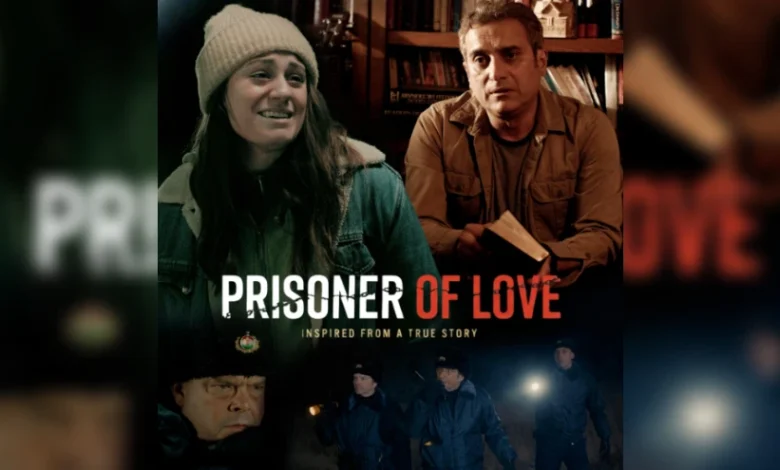
The film “Prisoner of Love,” directed by Joseph Hovsepian, an Iranian-American filmmaker, tells the story of an Iranian Christian’s escape from religious persecution and harassment. It has been released in the United States at a time when fresh international reports indicate an escalation of pressure on Christians in Iran, particularly citizens who have converted from Islam to Christianity. These circumstances have made Hovsepian’s cinematic narrative more than just a film for many Iranian Christians—it reflects a reality that continues to unfold in their lives.
“Prisoner of Love,” known internationally as “Prisoner of Love,” is a 72-minute film directed by Joseph Hovsepian that was released in the United States on September 3, 2026. The film’s story centers on “Hamid,” a Christian who is persecuted for his faith. As he flees the danger of arrest and martyrdom, he encounters a young woman named “Jessi” in a forest near Iran’s border. Through this encounter, the film explores themes of faith, fear, suffering, forgiveness, and hope.
For Joseph Hovsepian, this film is not merely an independent cinematic project. He has previously dedicated a significant portion of his artistic and media work to documenting the stories of Christians under pressure in Iran. From his teenage years, Joseph Hovsepian, son of Bishop Haik Hovsepian-Mehr, became familiar with Iran’s underground churches and the reality of persecution faced by Christians. His father, a prominent leader of Iran’s evangelical Christians, was kidnapped and murdered in 1994 after attempting to save the life of Mehdi Dibaj, a Christian citizen sentenced to execution.
Later, Hovsepian, together with his brother Andrew, produced the documentary “A Cry From Iran,” which tells the story of his father’s life. The film covers the stories of Haik Hovsepian-Mehr, Mehdi Dibaj, and other Christians who faced imprisonment, threats, and death because of their faith. This documentary received attention at various film festivals and, according to publishing sources, was intended to raise awareness about the situation of the persecuted church in Iran.
However, the significance of “Prisoner of Love” in 2026 cannot be understood apart from Iran’s current situation. The 2026 annual report by Article 18 and its partner organizations shows that pressure on Christians increased significantly in 2025. According to this report, the number of arrests related to Christian belief or activity rose from 139 cases in 2024 to 254 cases in 2025. Additionally, the total sentences handed down against Christians in 2025 reached 280 years, with at least 11 Christians facing sentences of 10 years or more.
This pressure intensified after the 12-day war between Iran and Israel. The Article 18 report documents a severe increase in Christian arrests following this conflict. The Islamic Republic’s Ministry of Intelligence reported the arrest of 53 “trained operatives,” a term that the report indicates referred to evangelical Christians. Simultaneously, state media, by raising allegations about evangelical Christians’ connections to foreign intelligence services, subjected this religious community to increased pressure and security suspicions.
The 2026 Open Doors report also states that following the Iran-Israel confrontation, at least 54 Christians in 21 Iranian cities were arrested, and state media accused them of espionage. The organization has also emphasized that Christian citizens with a Muslim background are more vulnerable to violations of religious freedom than other Christian groups.
The official British government report on the situation of Christians and converted Christians in Iran, issued in June 2026, states that individuals whom the government recognizes as Muslim-born and subsequently converted to Christianity, who attempt to openly practice their faith in Iran, face the risk of harassment and persecution that can rise to the level of “religious persecution.” The same report notes that Christian missionary activities can be met with accusations such as “propaganda against the system” and crimes related to national security.
Under such circumstances, many Christian citizens have resorted to holding worship services in homes and small groups. The British report states that Persian-speaking churches have been closed extensively in recent years, and Christian citizens unable to attend formal churches are forced to gather in homes—assemblies that themselves carry the risk of arrest and conviction.
From this perspective, “Prisoner of Love” is a cinematic narrative of an issue that remains unresolved. Joseph Hovsepian’s film follows the story of a man seeking a way to escape in order to preserve his faith and his life. However, in today’s Iran, for many Christian citizens, the issue is not merely fleeing a persecutor. The issue is the right to live, to worship, and to choose one’s faith without fear of arrest, interrogation, and imprisonment.
The history of the Hovsepian family also reveals that this issue has a personal dimension for the filmmaker. Haik Hovsepian-Mehr was killed in 1994 after defending Mehdi Dibaj and attempting to draw international attention to his plight—an event that remains one of the most well-known examples of the persecution of Christian leaders in the Islamic Republic.
Now, more than three decades after Haik Hovsepian-Mehr’s murder, his son poses the same question to international audiences through the language of cinema: What will become of a human being who is persecuted simply for his faith?
“Prisoner of Love” may be a cinematic answer to this question—a narrative of fear and persecution, but also a narrative of faith that, even under conditions of oppression, has not caused many Iranian Christians to abandon hope or faith.