Reza Pahlavi: Gasoline Price Increase Places Burden of Islamic Republic’s Inefficiency and War-mongering on People’s Shoulders
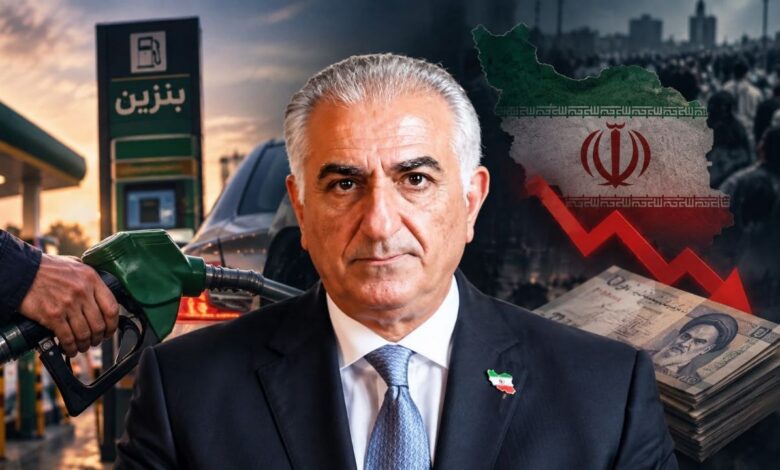
Following the announcement of a doubling of the third-tier gasoline price in Iran, Reza Pahlavi issued a statement characterizing the Islamic Republic’s new fuel policy as a sign of continued economic pressure on the people, describing it as “an act of oppression and betrayal of the Iranian nation.” The Islamic Republic government announced that the third-tier gasoline price will reach 10,000 tomans per liter as of dawn on Tuesday, Shahrivar 17; a decision made amid wartime conditions, economic sanctions, currency depreciation, and mounting pressure on household livelihoods.
While the Islamic Republic announced an increase in the third-tier gasoline price from 5,000 to 10,000 tomans per liter, Reza Pahlavi, in response to this decision, characterized it as the imposition of the government’s economic and political costs on the shoulders of the Iranian people.
According to an announcement by government spokesperson Fateme Mohajerani, the third-tier gasoline price will double as of dawn on Tuesday, Shahrivar 17, 1405. The first quota comprising 60 liters per month will continue to be supplied at the rate of 1,500 tomans, and the second quota comprising 50 liters will be supplied at 3,000 tomans. The 10,000-toman rate applies to consumption exceeding these quotas.
This decision was announced at a time when Iran’s economy faces pressures resulting from sanctions, war, and trade and currency restrictions. Published reports also indicate an exacerbation of fuel shortages and growing concerns about the country’s capacity to supply gasoline domestically. According to Reuters, the Iranian government has characterized the increase in rates for high-consumption users as part of its effort to address problems arising from wartime conditions and American sanctions.
Meanwhile, the value of the rial has sharply weakened in the free market, and rising living costs have placed double pressure on Iranian households. Today’s reports indicate the formation of queues at some fuel stations in various Iranian cities, including Tehran and Isfahan, ahead of implementation of the new rates.
In his statement, Reza Pahlavi held the Islamic Republic responsible for the current economic situation and described the fuel price increase as unjust under current circumstances. The full text of his statement is as follows:
“Fellow Iranians,
Once again, the Islamic Republic has placed the costs of its inefficiency, corruption, and war-mongering on the shoulders of the Iranian people by raising gasoline prices. As I stated in my message on Mordad 31, raising fuel prices at a time when people are under heavy economic pressure is an act of oppression and betrayal of the Iranian nation.
To the despotic regime and its lost leader, I say: the poverty and economic pressure you have imposed on the Iranian people are the direct result of your destructive policies. The nation’s resources belong to the Iranian people, not for filling the pockets of mafia networks and not for financing terrorism and war-mongering. Return the nation’s plundered wealth and cease support for terrorists.
Do not think that by killing tens of thousands of patriots you have been able to break the will of the people. The fire of people’s anger and protest has not been extinguished. A nation that has stood for freedom, prosperity, and a better future will not remain silent in the face of suppression, corruption, inefficiency, and imposed poverty.
Long live Iran, Reza Pahlavi”
This statement was also published on Reza Pahlavi’s official channel, with its main focus being the connection between fuel price increases and the Islamic Republic’s economic performance, regional policies, and war costs.
Reza Pahlavi’s response was published at a time when gasoline price increases remain a sensitive social issue in Iran. The 2019 fuel price increase also led to widespread protests and severe crackdowns, and now the government’s new decision regarding the third-tier gasoline price has once again heightened concerns about the social consequences of rising fuel costs.
The Islamic Republic government has stated the aim of the new decision is to manage consumption, maintain supply and demand balance, and increase economic resilience, and has said that revenues from this increase will be allocated to people’s livelihoods. In contrast, critics of the government view this policy, under difficult economic conditions, as a factor in further increasing transportation and commodity costs and placing double pressure on people’s lives.
Under such circumstances, the issue of fuel prices has once again become one of the sensitive points of confrontation between the government’s economic policies and public dissatisfaction in Iran.