Bishop Peter Kohlgraf Accepts Political Patronage for Mahboubeh Shabaneh
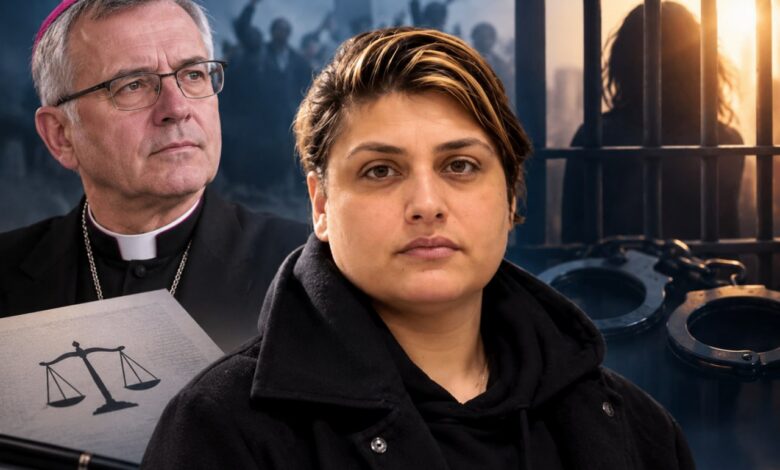
Peter Kohlgraf, Bishop of Mainz, Germany, has accepted political patronage for Mahboubeh Shabaneh, a 33-year-old political prisoner sentenced to death, and called for her immediate release. Shabaneh has been convicted on charges of “moharebeh” (enmity against God) and related charges of assisting injured protesters; a case that has once again raised concerns about judicial treatment of protesters and the use of capital punishment in Iran.
According to reports published about this action, the pursuit of political patronage for Mahboubeh Shabaneh by Bishop Kohlgraf was undertaken through the efforts of Behrouz Asadi, an Iranian human rights activist. In response to her case, Kohlgraf stated: “I cannot accept such injustice and oppression, nor can I come to terms with it. I believe that even failing to try to help is certainly the wrong path.”
Mahboubeh Shabaneh, born in Mashhad, was arrested in connection with December 2024 protests and is being held in Vakilabad Prison in Mashhad. According to Iran Wire, charges of “moharebeh” and charges of operational measures to strengthen Israel, America, and opposition groups have been attributed to her case. Reports indicate that during the December 18-19 protests, she helped injured protesters using her personal motorcycle and transported them to medical centers; an action that, according to these reports, was included among the grounds for bringing serious charges against her.
Shabaneh’s situation has become more concerning in recent months. Iran Wire reported on September 28, 2026, that she was transferred to solitary confinement through the use of force. The media outlet also reported that Shabaneh has been sentenced to death, but at the time of publication, final confirmation of the sentence by the Supreme Court or the date of execution had not been announced.
Acceptance of political patronage by a religious and social figure in Europe is a supportive measure aimed at drawing public attention and increasing international pressure for the protection of a prisoner; this action in itself does not constitute a judicial mechanism for the individual’s release. However, it can bring the voices of prisoners facing severe punishments to public forums and international bodies.
Mahboubeh Shabaneh’s case is part of broader concerns regarding the fate of those arrested during protests in Iran. Human rights organizations have warned about expedited trial procedures, restricted access to chosen counsel, reports of mistreatment of detainees, and the issuance of death sentences in cases related to protests. In such cases, judicial transparency, effective access to counsel, and the possibility of independent and fair review, especially when the accused’s life is at risk, are of vital importance.
Bishop Kohlgraf’s call for Shabaneh’s immediate release once again draws attention to the responsibility of Iranian authorities in observing the fundamental rights of detainees. Until the publication of this report, no information has been released regarding the probable date of her execution; an issue that underscores the necessity of clarifying her judicial status and ensuring her safety.