A fragile ceasefire between victorious Azerbaijan and defeated Armenia
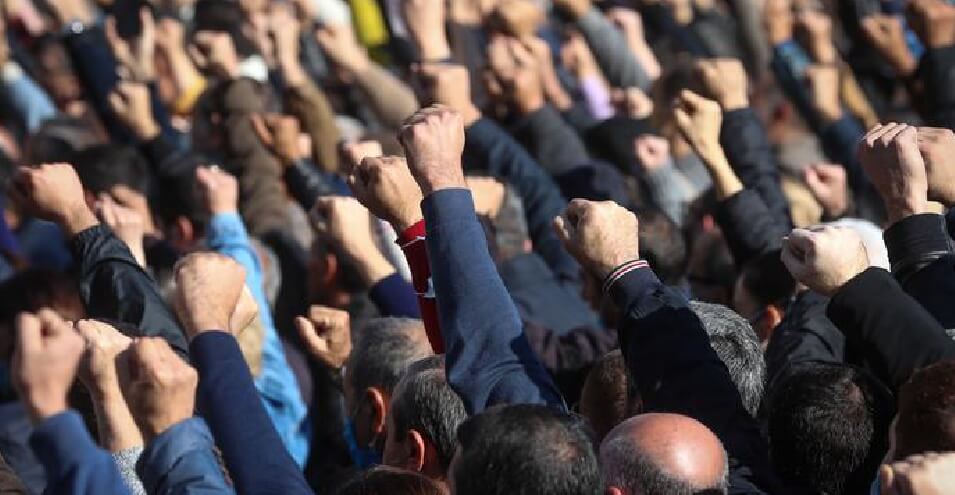
Demonstrations continue in Yerevan, the capital of Armenia. Protesters are calling for the resignation of Armenian Prime Minister Nikol Pashinyan. Experts say the peace agreement resulting from Armenia's military defeat in the confrontation with Azerbaijan is fragile.
Russian peacekeepers have arrived in the Karabakh region. Protests continue in Yerevan and other parts of Armenia despite a ban on gatherings.
A number of Armenian opposition leaders have been arrested on charges of promoting unrest and uprising against the government. The November 9 agreement between Armenia, Azerbaijan, and Russia ended the six-week war and confrontation in the Karabakh region, but it did not pave the way for a lasting peace.
People in the streets of Yerevan have chanted slogans against Armenian Prime Minister Nikol Pashinyan, calling him a "traitor" and calling for his removal.
Pashinyan announced in a post on Facebook that he was forced to make such a decision under pressure from the country's military authorities.
The Armenian Prime Minister wrote in his explanation that, according to the assessment of the military leaders, continuing the war with Azerbaijan could have resulted in the complete loss of the Karabakh region, and therefore, he has agreed to this agreement.
An agreement and a few questions
With the participation and mediation of Russia, the two countries of Azerbaijan and Armenia reached an agreement on a ceasefire, an agreement that means the transfer of a significant part of the disputed region of Karabakh to Azerbaijan.
Pashinyan stated in his Facebook post that the Stepanakert mountainous region was in danger. Continuing the war could have led to the advance of Azerbaijani military forces into the Karabakh region and effectively led to the loss of Martuni and Askeran. In such a case, Armenia's military defeat in the war would have taken on wider dimensions.
The Armenian Prime Minister has emphasized that he was forced to sign the text of the agreement after consulting with the Chief of the General Staff of the country's Armed Forces.
According to this agreement, part of the areas that the Azerbaijani army has captured in recent weeks will come under Baku's control.
Thus, control of the cities of Kalbajar, Aghdam, and the Lachin Pass is scheduled to be transferred to the Republic of Azerbaijan in several stages by the end of November.
Russian and Turkish peacekeepers
Clause 3 of the trilateral agreement between Russia, Armenia, and Azerbaijan states that the ceasefire will be monitored by the Russian army. It is planned that 1,960 Russian soldiers will be stationed in the area.
The three-nation peace agreement does not mention Turkey's military presence in the region, while the ceasefire is to be monitored jointly by the Russian and Turkish armies.
Turkish Foreign Minister Mevlut Cavusoglu, who is in Baku, has announced that a delegation from Russia is scheduled to leave for Turkey on Friday, November 13, regarding the formation of a joint peacekeeping force.
The purpose of the meeting is to discuss the establishment of a joint headquarters to monitor the ceasefire in the Karabakh region. Cavusoglu announced that this headquarters will monitor the process of maintaining the ceasefire using drones and other means.
"I hope Armenia has learned from its mistakes," said the Turkish foreign minister. Cavusoglu also threatened Armenia once again that it would "pay the price" if it violated the ceasefire agreement.
An unstable peace
Experts from the International Crisis Group believe that the agreement signed between the three countries of Russia, Azerbaijan, and Armenia is an unstable and fragile agreement.
According to the group's experts, Azerbaijan has won militarily in the war over the Karabakh region, and Armenia has suffered a "devastating defeat."
According to the experts of this group, an agreement that arises from the defeat and "humiliation" of one side cannot be considered a suitable basis for establishing a lasting peace.
According to the agreement, Russian troops will be stationed at the Lachin border crossing, which connects Stepanakert from within Azerbaijan to Armenia, for five years. It is envisaged that the mission of Russian troops can be extended for another five years if necessary.
Source: DW