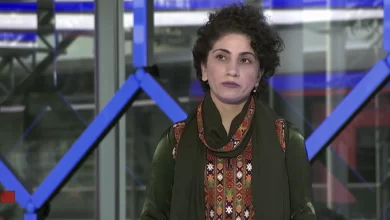
Ayan Hirsi Ali: I still have a lot to learn about Christianity

"Ayan Hirsi Ali," an atheist who converted to Christianity, announced that she still has a lot to learn about Christianity.
Ayan Hirsi Ali (born 1969 in Mogadishu) is a Somali-Dutch-American social and political activist, feminist, and writer critical of Islam. She is known as a vocal atheist. Ayan is known for her criticism of Islam, her advocacy of the rights and independence of Muslim women, her active opposition to forced marriage, honor-based violence, child marriage, and female genital mutilation, and she founded the AHA Foundation to defend women's rights.
He was a former member of the People's Party for Freedom and Democracy from January 2003 to May 2006 and a member of the Dutch Parliament. He is a writer and filmmaker critical of Islam, whose film "Surrender" angered Islamists to the point that he received death threats.
Ayan Hirsi was once considered a radical Muslim who supported Ruhollah Khomeini's fatwa to kill Salman Rushdie. He later joined the likes of Salman Rushdie in signing the "Against the New Totalitarianism" statement, which warned against Islamism as a threat.
In the past, he was attracted to a lack of faith and became an atheist, but now he has converted to Christianity for spiritual and cultural reasons. “I still have a lot to learn about Christianity,” Ayan wrote in an article published this week. “I gain more and more every Sunday in church, but in my long journey through the wilderness of fear and doubt, I have come to realize that there is a better way to handle the challenges of existence than Islam or atheism,” he wrote.
In an article published on the UnHerd website, prominent Muslim apostate Hirsi Ali noted that the Muslim Brotherhood had a unique ability to turn him and his fellow teenagers into activists, almost overnight.
Amidst rigorous sessions of prayer and fasting, Somali-born Hirsi Ali and his friends were taught to hate Jews and to refrain from indulging in primal pleasures or face the wrath of God.
He said that the "cost-free escape" from a life of self-denial and persecution offered by atheism made the lack of belief appealing to him for a time. The atheists in his circle, such as Christopher Hitchens and Richard Dawkins, offered him a new set of friends who were intelligent.
Yet as Hirsi-Ali witnessed the threats to Western civilization from authoritarian regimes like Russia and China, the rise of global Islamism, and the viral spread of atheism, the benefits of atheism seemed insufficient to combat the problems of modern civilization. Hirsi-Ali realized that the solution to this problem lay in the individual preservation of the Judeo-Christian tradition.
He also praised the freedom of conscience and the freedom found in Western civilization. Hirsi Ali believes that such freedom is the product of debate within the Jewish and Christian communities.