Will the "future of ethnic groups" in Iran be unified or fragmented?
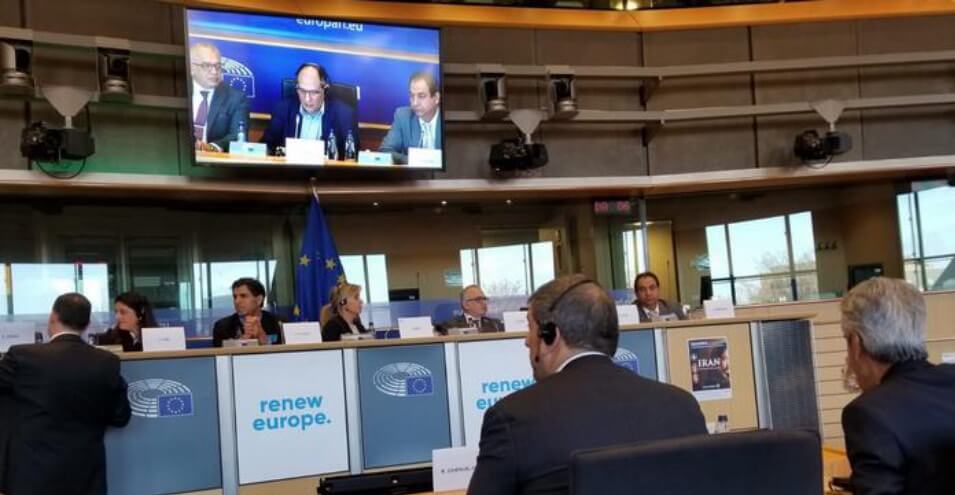
Representatives of Iran's ethnic minorities, including Shirin Ebadi, called on Europe not to remain silent about the repression of the Iranian people. They warned of the dangerous consequences of this process: the growth of radicalism among the ethnic groups and the threat to Iran's unity.
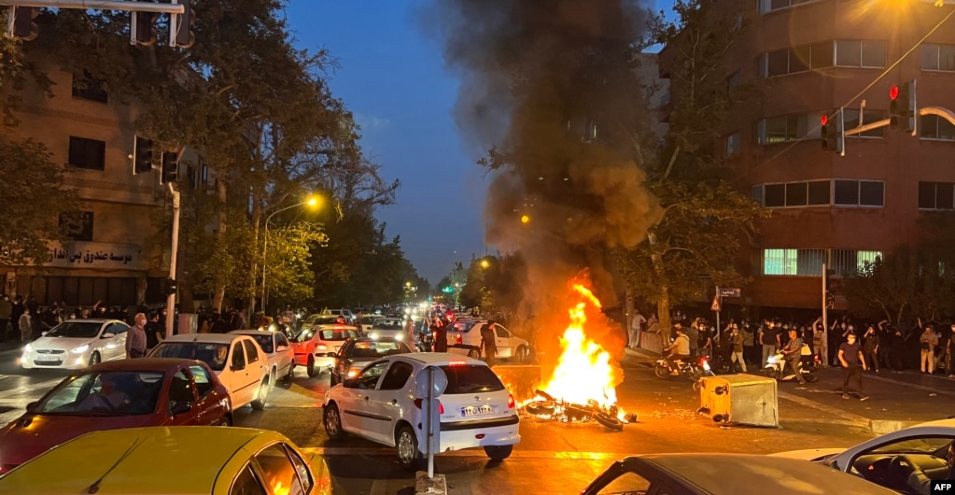
“The Future of Ethnicities in Iran” was the title of a meeting held on December 12 at the European Parliament in Brussels. Representatives from political parties and ethnic groups spoke at the meeting. The common denominator of the speeches was the emphasis on a “serious danger”: that continued repression, discrimination and violence, especially against ethnic minorities, are destroying the last capacity for peaceful coexistence in a unified Iran. The speakers all pointed to the wounds of the latest round of repression of protesters in Iran, which are still open and rest on old wounds from the past.
They spoke of the transformation of dissatisfaction into deep hatred, and from deep hatred into a serious threat to the integrity of Iran. However, the demands raised in this meeting and the alternative proposed by the speakers, namely “democracy and solidarity in the form of a federal system,” have not only been and continue to be endorsed by the Islamic Republic for security reasons, but also by parts of the opposition, who see it as a challenge to Iran’s “territorial integrity.”
Who is Europe on?
The “Future of the Iranian Peoples” conference began with a speech by Shirin Ebadi, a lawyer and Nobel Peace Prize laureate. She was followed by Raphael Chenville-Hazan, Director General of Together Against the Death Penalty, and then five representatives of different Iranian peoples.
Shirin Ebadi bluntly asked European governments, “Why do they consider human rights good only for themselves,” but when it comes to the people of Iran, they remain “indifferent to the violent suppression of human rights by the Islamic Republic?” Briefly reviewing what happened in Iran in November of this year, she criticized European governments for “despite considering themselves defenders of human rights,” standing “on the side of dictators” when their commercial interests are at stake, and not a word is heard from the world when “defenseless people are killed by bullets and tanks roll into the streets.”
“Why are you only thinking about trade with Iran in such a situation?” This was a question that perhaps many have been asking themselves these days. Shirin Ebadi told European governments: “You can postpone trade with Iran and the start of INSTEX until at least the end of repression and the release of prisoners who only wanted bread and work.” She warned European countries that the consequences of this policy could affect Europe itself and asked them to help the Iranian people.
Referring to other participants in the meeting and the accusations they face, namely “separatism,” Ms. Ebadi told DW Persian that in her opinion, “separatism is a mark that the Islamic Republic puts on their foreheads to suppress ethnic groups.”
"The face of the geography of oppression and occupation"
Inequality, discrimination, political, economic and social oppression of different ethnic groups in Iran by the central government were the common denominator of the subsequent speeches of the meeting. Representatives of Kurdish, Baluch, Arab, Turkmen and Turkish parties and groups in Iran tried to explain to the attendees of the European Parliament the dimensions and depth of discrimination against the most basic rights of ethnic groups in Iran.
They pointed to the failure to give the slightest consideration to the development and well-being of ethnic and religious minorities, their repression and sheer disenfranchisement, and a "dangerous" trend that this repression is accelerating; the growth of separatist tendencies and radicalism that is constantly on the rise, and the more violence is used, the more serious this threat will become.
Mustafa Hejri, the executive chairman of the Kurdistan Democratic Party of Iran, said in his speech that Iran’s multi-religious nature not only has no place in the “constitution and discourse of Iranian nationalism,” but has also been examined as “a sensitive problem and a security issue,” to the extent that “the areas inhabited by non-Persian nationalities have taken on the appearance of oppressed and occupied geography.”
A “face” that manifests itself through “the lack of any opportunity for free and legal political activity, the plundering of Kurdistan’s capital and resources and their transfer to the central regions.” Through “execution, imprisonment and demobilization of Kurdish activists and fighters, the transfer of water resources, environmental destruction and… militarization of cities and villages, the security of offices, educational centers, mosques and public places.”
Is there a prospect for peaceful change?
The executive chairman of the Kurdistan Democratic Party concluded that this series has “severely weakened the prospect of peaceful change in a united and unified Iran and, on the contrary, strengthened the desire and will for separation among the ethnic groups. As a result, this discourse has “become dominant among a significant part of their public opinion.”
At the end of his speech, Mustafa Hejri says that the Kurds and other ethnic groups in Iran “are seeking sovereignty and the right to determine their own destiny in any way that is possible for them.” I ask him what he means by “any way that is possible for them” and is it not a kind of endorsement of “separatist tendencies”?
He denies this and says: “The accusations and stigmas that are being leveled at us and others are aimed at creating nationalism among Iranians. Unfortunately, some of our compatriots are unknowingly following this propaganda.” He emphasizes: “Our name is the “Kurdistan Party of Iran.” Our program and statute all emphasize staying within the framework of Iran, and these labels are unjust. These accusations are aimed at confusing public opinion, and this has led to them immediately dismissing even the request for the minimum rights of the Kurdish people and other nationalities as separatism and dependence on enemies. But this method has not helped so far and will not help in the future.”
Mustafa Hejri continued his response by saying: "If the situation continues like this, it will be very difficult to maintain Iran's territorial integrity. We say this so that both the Europeans and the Iranian people are aware of this danger. Territorial integrity cannot be guaranteed through repression. We must do our utmost and reduce the risks that lead to the disintegration of Iran to the extent we can."
"We want a secular, federal, and democratic Iran"
The risk of growing radicalism among Iran's ethnic minorities was also a central point in the speech of Nasser Blidayi, spokesman for the Balochistan People's Party. He told DW Persian:
"In my opinion, the solution is to establish a proper dialogue between opposition groups and the international community. Political groups must unite because none of the opposition groups, whether they consider themselves constitutionalists and monarchists, republicans, or those like us who want a federal republic, can impose our views and tastes on others. We must respect and accept the ethnic diversity in Iran and avoid violence against each other. We must foster dialogue in society."
Nasser Blidayi denied that the Balochistan People's Party is calling for secession, saying: "We do not want the separation of Balochistan. We want a federal, secular, and democratic Iran. A country where all nationalities and religions are equal and democratic. But this is possible by overthrowing the Islamic Republic and creating a democratic atmosphere."
"The Islamic Republic and the Pahlavi regime have refused to even mention the word 'Sahrawi Turkmen'"
In his speech, Yousef Karr, spokesman for the “Turkmen-Sahrawi Cultural and Political Organization,” referred to “ancient” discrimination that does not even bear words. He said that not recognizing the existence of an ethnic minority called Turkmen, not considering the Turkmen-Sahrawi in the country’s divisions, and not mentioning the Turkmen-Sahrawi in government and administrative bodies in comparison to other ethnic minorities are “long-standing and inexcusable characteristics.”
Youssef Kerr pointed to the “government’s inability to manage in areas such as the use of various resources such as water, soil, environmental affairs, economic corruption, and theft,” which has caused countless harm throughout Iran, including the Turkmen of the Sahara. Nasser Kerr told those present at the meeting that the people are “in despair, limbo, and hatred,” are tired of “false promises and intimidation,” and called on the people and governments of Europe to “provide decisive and effective support” to the people of Iran.
He strongly criticized the European Union for its hesitant stance on the Iranian government's violence and brutality against the November protesters.
"A sensitive time and a region undergoing bitter events"
Jalil Sherhani, Secretary General of the Ahvaz Democratic Solidarity Party, was the next speaker at the meeting, who touched on the sensitivity of the situation in the region. His assessment of the current situation was that the outlook for “the nations of Iran and the entire Middle East region is undergoing bitter developments and incidents that, if not dealt with rationally and wisely, may darken the future of this land.”
Jalil Sherhani spoke of the suffering of the people of his region, who “have to witness the plundering of their underground and above-ground wealth, the insult and humiliation of their language and culture.” He referred to the “statistics of deprivation, low living standards, welfare levels, and unemployment rates in the Arab-populated areas of Ahvaz,” which “is where the majority of Iran’s wealth comes from,” and called it shocking.
What was heard in Jalil Sherhani’s speech was a repetition of words familiar to Iran’s ethnic minorities: discrimination and brutal underdevelopment. He spoke of people’s “dropping out of education and lack of cultural and sports facilities,” of “environmental destruction and the drying up of rivers and the diversion of their water to other parts of Iran,” of the pollution of the air people breathe and the particles suspended in it, of the lack of water as “another example of the oppression inflicted on the Arab nation of Ahwaz.”
"With justice, brotherhood endures"
The Secretary General of the Ahvaz Democratic Solidarity Party mentioned at a meeting of the European Parliament that "rational and fair interaction with existing geographical, social, political, and ethnic realities" is the only solution, and warned that "narrow-mindedness, discrimination, totalitarianism, and ethnic totalitarianism from any group or ethnicity will have disastrous consequences for everyone."
"Brotherhood endures through fairness," was the proverb with which Jalil Sherhani concluded his speech. But what if the rationality that Mr. Sherhani spoke about does not exist?
Hafez Fazel, a member of the political bureau of the Ahvaz Democratic Solidarity Party, responded to this question and said: "The type of struggle is imposed on the people by the governments, not the people. The trend of increasing violence that we have faced in previous years, especially in recent protests, is causing people to resort to self-defense."
I ask him what he means by legitimate defense. He says, “Legitimate defense means that everyone will defend themselves with whatever means they have.” He goes on to emphasize that “since the Islamic Republic regime is not a regime that can be reformed, at least the central opposition, meaning those who still chant the slogan of one language, one nation, one flag, and one country, must take a step toward overthrowing the regime by considering the demands of other nations and forming an alternative, and by introducing themselves to neighboring countries and Western countries.”
I ask him about accusations such as separatism and receiving financial assistance from neighboring countries to advance this program. He replies:
"We have a very clear political program. We believe that Iran is a multinational country and should be governed by a fully democratic and federal system. There is no talk of secession or independence in our program. There are other parties that really want this, but we have no relationship with them. We have not received and will not receive any support from any Arab country. All expenses are paid by the party members on a monthly basis. I emphasize again that we have not asked for help to maintain our independence, nor will we accept any help in this regard."
Hafez Fazel concludes: "Iran is a land that has been created and preserved by these people for centuries, and has managed its existence to this day. Unfortunately, for 85 years, they have imposed a totalitarian system on us. A system that denies the growing part of this history."
“Linguistic and ethnic diversity is the wealth of a land”
Another speaker at the “Future of Ethnicities in Iran” conference was Saeed Azizi, spokesman for the Democratic Union of Azerbaijan (Birlik). He began by looking at the glass as half full, saying that the existence of linguistic and ethnic diversity is “considered a wealth” for a land, and that with tolerance, accepting this plurality and dealing with it correctly, “this diversity will lead to economic, political, and certainly cultural growth.”
Saeed Azizi also emphasizes that the “lack of freedom, equality, and social justice” will forever push Iran “to war and conflict and further destruction,” he says. It is the extremist forces that will take the most advantage of ignoring the demands of the tribes and fearing a federalist system to govern society.
The Democratic Union of Azerbaijan calls for a federal system "in which the central government and parliament, composed of representatives of different nationalities, and local and national governments elected by the people, are responsible for administering the affairs of their region. Iran is composed of Turkish, Kurdish, Lor, Arab, Baluch, Turkmen, Persian nationalities, all of which are in the millions."
"We will see in the near future which of these two paths the centrist forces will choose," says Birlik's spokesman.
Source: DW