Evin Prison Administration by Former Kahrizak Director and Increased Illegal Restrictions on Political Prisoners
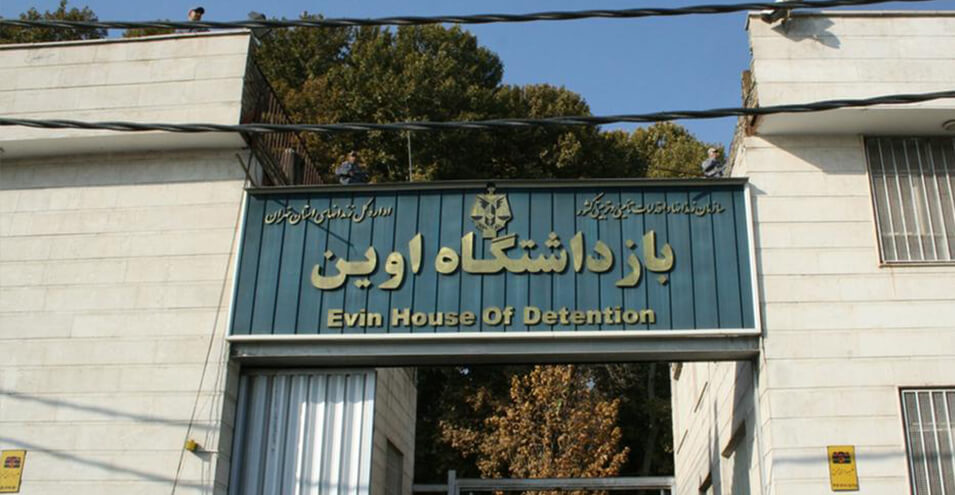
Under the leadership of Gholamreza Ziaei, the former head of Rajai Shahr Prison and Kahrizak Detention Center, Evin Prison has been subject to numerous illegal restrictions on prisoners, especially political prisoners. According to an open letter by Farhad Meysami and Mohammad Habibi, two Evin Prison prisoners, published on October 6, “reducing in-person visits for all political prisoners and eliminating the special day for imprisoned mothers to visit their children, illegally banning the receipt of authorized books and publications, and limiting telephone calls” are examples of these new restrictions.
In response to these illegal restrictions, civil society activist Farhad Meysami and teachers’ union activist Mohammad Habibi announced in their protest letter addressed to “policymakers of the judiciary and the prisons organization” that they would refuse to comply with prison regulations, including daily censuses and mandatory morning rituals, until the illegal restrictions on prisoners were stopped. Explaining the reason for this protest, they wrote: “Given the clear violation of numerous provisions of the executive regulations of the prisons organization and other current laws of the country regarding prisoners’ rights and the prison director’s failure to respond to prisoners’ repeated requests for discussion on this matter, we no longer consider ourselves obligated to comply with the arbitrary rules of your prisons.” According to the Haft Tappeh Prisoners Defense Campaign, as of October 9, 16 other political prisoners have joined this protest movement.
One of the victims of the new arbitrary and illegal restrictions in Evin Prison is Narges Mohammadi and her family. Narges Mohammadi’s husband, Taghi Rahmani, told the Campaign for Human Rights in Iran that the imprisoned activist has been denied access to a telephone to talk to her children for the past two months, and her trips outside the prison for medical treatment have also been suspended. “They have cut off her phone calls to her children for two months. At the same time, they are not making her trips, and they are not taking orders for books, and they are delaying them,” said Taghi Rahmani. “All this is done under the pretext that the prosecutor and the prison director have changed, and these simple things are not being done. When she needs regular medical trips and needs to be able to talk to her children on the phone, this is the children’s right,” he said.
Another example of the worsening conditions and the imposition of illegal restrictions is the suspension of visits between Amir Hossein Mohammadifar and his wife Sanaz Alhayari, both activists of the Gam magazine. According to the Haft Tappeh Detainees Defense Campaign, “Amir Hossein Mohammadifar has threatened to declare a hunger strike in protest of this action.” This is despite the fact that “Ziaei, the general director of Evin Prison, Salmani, the deputy executive director of Evin Prison, and Vahidpour, the head of Ward 4 of Evin Prison, had promised to cooperate and meet with his family and Sanaz Alhayari in their ward as usual on Mondays and Tuesdays.”
Sedighe Pakzamir, a member of the board of directors of the Tehran Teachers' Association, has stated in a series of tweets "details of the restrictions imposed on political prisoners in Evin Prison" as follows: "Since Ziaei was appointed as the new head of Evin Prison, restrictions have been imposed on political prisoners. In this regard, Ziaei has ordered that in-person visits to these prisoners be canceled once and that political prisoners be given in-person visits once every two months. In another measure, sending books and magazines by the families of prisoners has been prohibited. Political prisoners are prohibited from participating in the internal administration of the prison, which is the responsibility of prisoners, and they cannot be elected as ward lawyers, room managers, cultural managers, etc. In some cases, restrictions are imposed on all prisoners beyond political prisoners, which is a clear violation. Among them is the monetization of prisoners' treatment, which has prevented low-income and poor prisoners from being sent to the hospital due to illness."
This is despite the fact that, according to Article 180 of the Prisons Organization's regulations, "all convicts and defendants are under full supervision and are allowed to have contact with their relatives and acquaintances in accordance with the regulations..." In other words, visiting family members and children is the right of all prisoners, and in cases such as the case of Narges Mohammadi, whose children are unable to meet their mother in person due to their residence abroad, having continuous telephone contact with their children is an alternative to the right to visit.
According to the same regulations, depriving a prisoner of visits is only possible in two cases: first, when, in accordance with the note to Article 180, the judge hearing the case considers in writing that visiting or corresponding with the accused is contrary to the proper conduct of the case and declares it prohibited. In this case and during the period of prohibition, as the case may be, visiting or corresponding with the convict is only permitted with the written permission of the competent judicial authorities.
The second case is the deprivation of the right to visitation as a disciplinary punishment. According to Article 175 of the Prisons Organization Regulations, the prison disciplinary council can deprive a prisoner of visitation for a maximum of three times, but the deprivation of the right to make phone calls as a punishment is not foreseen in the regulations.
Interfering with the right of imprisoned parents to have regular contact with their children violates not only their rights but also the rights of their children. The imprisonment of both or one of the parents does not deprive them of their right to be parents and their children of their right to have parents.
Regarding the reason for the recent restrictions, Taghi Rahmani, Narges Mohammadi's husband, told the campaign: "Apparently, these restrictions have also increased for other prisoners. The excuse is that the prison director came and did not give any new orders, and the prosecutor, who just came, did not give any new orders. And they also oppose his leave. In all this time, he has only been granted leave once, a year and four or five months ago."
However, as the above-mentioned regulations indicate, a prisoner's visits and telephone calls with his relatives do not require the permission of the prison governor or judicial authorities. This right exists for all prisoners unless the said authorities, through an official written decision, deprive the prisoner of this right. Consequently, a change of authorities or new appointments in no way justifies the cessation of telephone calls with children or the cessation of medical measures.
Gholamreza Ziaei, who was appointed as the head of Evin Prison in early August of this year by the order of the Director General of Tehran Province Prisons, has played an important role in increasing pressure and imposing illegal restrictions on prisoners in this prison. Ziaei previously headed Rajai Shahr Prison in Karaj, which is known for its inadequate conditions for prisoners. He was also the head of this detention center in 2009, when the Kahrizak crimes occurred.
According to Article 10 of the Convention on the Rights of the Child, States Parties are obliged to facilitate the reunification and contact between parents living in different countries and their child, and to facilitate entry and exit for this purpose. In general, the best interests of the child must always be a primary consideration in all decisions concerning the child. According to Article 18 of the Convention, States Parties must cooperate with parents in the performance of their responsibilities towards their children and facilitate the upbringing of the child by both parents.
Source: Human Rights Campaign