Europe prepares to deal with second wave of coronavirus
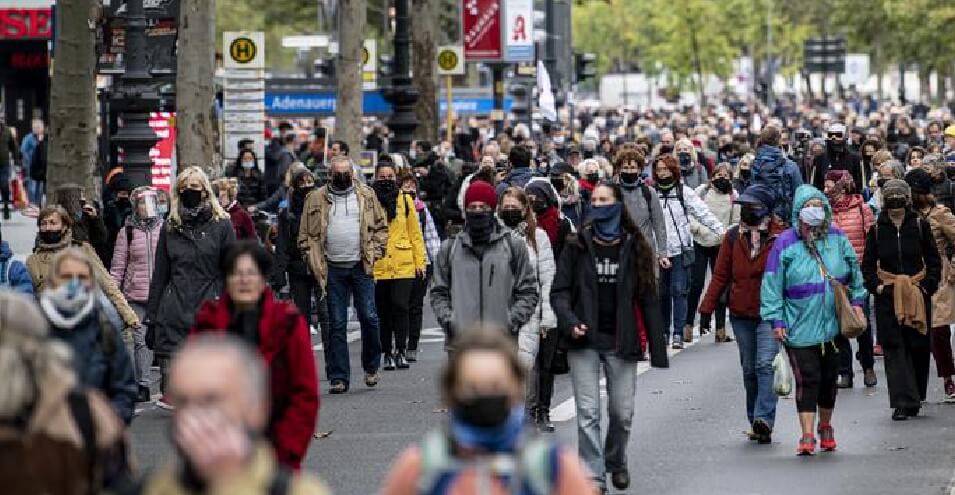
Germany's daily recorded cases of coronavirus have surpassed 5,000, the highest since April. France, Spain, the Netherlands, Austria and the Czech Republic have also seen significant increases in the number of cases.
A number of European countries have once again imposed new restrictions to combat the coronavirus. Cafes, bars and restaurants have been closed in some countries. The European Union has designated three zones for member states: red, orange and green.
As the cold weather continues to spread across Europe, the number of coronavirus cases has risen again. According to the Robert Koch Institute, the number of daily coronavirus cases in Germany exceeded 5,000 on Tuesday, October 13, for the first time since April.
The same institute announced that 5,132 people in Germany tested positive for coronavirus on this day, a phenomenon that has been unprecedented in Germany since April.
In this regard, German Chancellor Angela Merkel is scheduled to hold a meeting with state officials on Wednesday, October 14.
The aim of the meeting is to find a common solution to combat the further spread of the coronavirus in Germany, while the situation related to the coronavirus pandemic is much worse within Germany's borders.
Creating three regions in Europe
To help those traveling in European countries, the European Union has defined three separate zones, areas that actually indicate the extent of the spread of the coronavirus.
The green zone includes countries and cities where the coronavirus outbreak rate has been less than 25 cases per 100,000 people within 14 days.
If the number of confirmed cases of coronavirus is less than 50, that area is orange, and if more than 50 people are infected in a city or country, that area is red.
The determination of these areas is being done in a situation where the rate of coronavirus testing is not the same in different European Union member countries.
Josep Borrell also went into quarantine.
The European Union is talking about dividing different regions in a situation where the coronavirus has also penetrated the Union's headquarters .
News agencies have announced that Josep Borrell, the European Union's foreign policy coordinator, has also gone into home quarantine since Tuesday, October 13.
In addition to him, EU Crisis Management Commissioner Janez Lenarčič is also in quarantine. Borrell and Lenarčič announced their home quarantine via a Twitter post.
Last week, a number of EU commissioners were forced to self-isolate. For example, European Commission President Ursula von der Leyen has been in self-isolation since last week after coming into contact with a person infected with the coronavirus.
Setting new limits
Many European countries have imposed new restrictions to combat the resurgence of the coronavirus. In some countries, including parts of the United Kingdom, France, the Netherlands and the Czech Republic, restaurants and bars have been closed for several weeks.
Wearing masks has become mandatory in some countries, even outdoors. Schools and kindergartens are likely to be closed in some countries.
The World Bank, in its latest initiative, has allocated $12 billion to distribute COVID-19 vaccines in poor countries. One billion people in different countries are expected to have access to the vaccine.
This is while a total of $160 billion has been earmarked to help poor countries deal with the consequences of the coronavirus.
The number of people infected with the coronavirus worldwide has reached 38.5 million, and more than one million people have died from COVID-19 so far.
Source: DW