Delta Force deployment on Iraqi borders, a warning of a major change
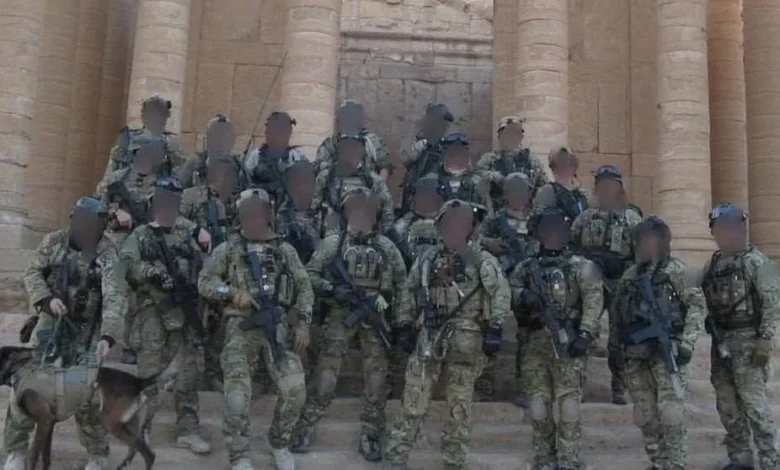
The deployment of the US Delta Force on the Iraqi borders, along with Trump's threats, signals the possibility of a major change.
Recent reports of US military activity in the region have once again raised tensions around Iran. Kurdistan 24 TV channel, citing a political and military analyst, announced that US Delta Special Forces have been deployed on the Iraqi border, a deployment that, according to the analyst, could be the prelude to a “major shift.”
The report was published in a context where in recent days, US President Donald Trump has repeatedly threatened the Islamic Republic with resuming nuclear and missile activities, as well as suppressing and killing protesters. At the same time, some media outlets have reported the transfer of American troops and fighter jets to bases in Europe to prepare for “possible scenarios” against Iran.
In an interview with Kurdistan 24, political and military analyst Kazem Zubaidi emphasized that such movements are usually not without purpose, referring to the presence of US special forces in the region. In his analysis, he also addressed the nature of ideological armed groups in the region, saying: "Armed groups that operate under the cover of ideology and consider weapons to be "sacred" have in fact become an ideological belief for them."
According to Zubaidi, this kind of ideological view of weapons makes the path to any compromise or retreat difficult, and this issue could change the military calculations of foreign powers.
What makes this news even more sensitive is the direct reference to the operational history of the Delta Force. The Kurdistan 24 report notes that this special unit has previously carried out the operation to arrest Venezuelan President Nicolas Maduro, an issue that has been considered in political circles as an example of America's cross-border and targeted operations.
This history has led analysts to evaluate the deployment of Delta Force near Iran's borders not simply as a deterrent maneuver, but as part of a more complex scenario.
Delta Force, officially known as the First Special Operations Division, is one of the most secretive and elite units in the United States military. It was formed in the late 1970s, modeled after the British SAS, and operates directly under the command of the United States Joint Special Operations Command (JSOC).
Members of the force are selected from among the most experienced soldiers, mainly Rangers and Green Berets, in a process that, according to military sources, eliminates more than 90 percent of the volunteers. Delta Force missions are usually so sensitive and risky that they are considered beyond the capabilities of conventional military units.
The unit's main focus is on operations that require high precision, speed of action, and absolute secrecy. Its specialties include countering international terrorism, hostage rescue, strike operations to capture or eliminate key targets, and protecting high-ranking figures in high-risk areas.
Delta Force members use the most advanced military equipment and are often allowed to operate in civilian clothing, making them extremely difficult to identify. For this reason, the unit is known as the “Silent Hunters,” a nickname that refers to the covert nature of many of its operations, which never make it to the media.
Overall, the deployment of Delta Force on the Iraqi borders, along with Washington's increasingly threatening tone and reports of the relocation of American forces, is a multi-layered signal; a signal that can both act as a deterrent and carry a message of readiness for more difficult scenarios.
In such an environment, Kazem Zubaidi's warning about the possibility of a "major transformation" is, rather than being a definitive prediction, a reflection of the increasing level of uncertainty and the entry of regional developments into a more sensitive phase; a phase where any military move could have consequences beyond the borders of Iraq and Iran.