Human Rights Watch protests intensifying repression of workers and teachers in Iran
Human Rights Watch has criticized recent security crackdowns on labor activists and teachers in Iran, calling Iranian authorities’ statements about national unity “absurd” in light of the jailing of these activists.
Human Rights Watch released a statement today, Thursday, November 22, stating that in recent weeks, the Islamic Republic authorities have intensified their crackdown on labor activists and teachers for peacefully protesting and organizing these protests.
In its statement, Human Rights Watch specifically referred to the teachers' union movement in various cities in Iran, as well as the protest gatherings and marches of Haft Tappeh Sugar Company workers in recent days and weeks.
On November 12, Iranian teachers, at the invitation of the “Coordination Council of Teachers’ Unions,” went on a nationwide strike to protest inadequate wages due to high inflation and difficult living conditions. This was the second strike organized by Iranian teachers since schools reopened on October 1.
Michael Page, deputy Middle East and North Africa director at Human Rights Watch, said in this regard: "Iranian authorities are punishing teachers and labor activists for their legitimate demands for wage increases and for peaceful protests, which are among the basic rights of workers."
Mr. Page added: “Recent statements by Iranian officials about national unity and resistance to foreign pressure, while they are imprisoning labor activists and educators for demanding fair wages, are empty words.”
Citing the Telegram channel of the "Coordination Council of Teachers' Unions," Human Rights Watch announced that at least 12 teachers have been arrested in Iran since November 10, and 30 others have been summoned and interrogated.
IRGC intelligence officers arrested Hashem Khastar, a prominent member of the Mashhad Teachers’ Union, on November 1, following the first round of teachers’ strikes. After a period of inaction, Mr. Khastar’s relatives learned that IRGC intelligence had transferred the 65-year-old retired teacher to the psychiatric ward of Mashhad’s Ibn Sina Hospital for unknown reasons. Mr. Khastar was later released on November 10. This is despite the fact that Hashem Khastar had no history of mental illness.
Rasoul Badaghi, a member of the Teachers’ Union of Iran who spent more than seven years of his life in Evin and Gohardasht prisons for his peaceful activities, told Human Rights Watch that security agents detained Hashem Khastar without charge and in a hospital. According to Human Rights Watch, three prominent members of the Teachers’ Union of Iran remain in prison.
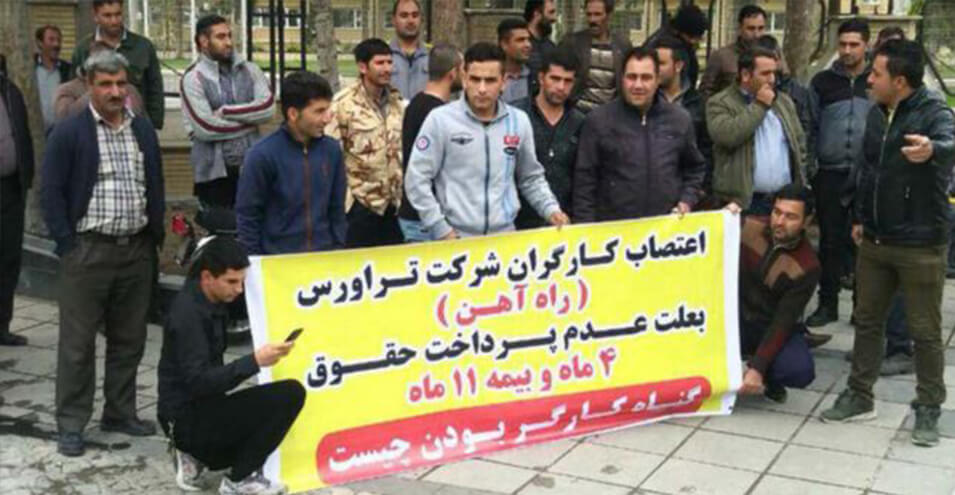
According to the international human rights organization, the recent crackdown on labor activists in Iran has also spread to the private sector. On November 17, the Telegram channel of the Hafttapeh Sugarcane Workers’ Syndicate announced the arrest of all members of the company’s labor representative assembly, including Esmaeil Bakhshi and Muslim Armand. Although Mostafa Nazari, the prosecutor of Shush city, announced the release of 15 of the detainees two days earlier, several of them have not yet been released. The Telegram channel of the Hafttapeh Sugarcane Syndicate quoted the workers’ lawyer as saying that Esmaeil Bakhshi and three other workers “will remain in detention until further notice.”
Nearly three weeks ago, labor protests began at the Haft Tappeh Sugarcane Company. Workers at the company have not received their salaries for four months. The company is run by Ferrari. While protesting the company’s “endless problems” and “incompetence of the private employer,” the workers are demanding that the ownership of the industrial unit be transferred to the workers and that it be run by a workers’ council, or that it be returned to the state sector and that a council composed of workers oversee the company’s management.
Human Rights Watch, while noting that Iran's labor law does not recognize the right to form independent labor unions, has written that over the past 13 years, Islamic Republic institutions have "repeatedly harassed, summoned, arrested, and sentenced workers associated with independent labor unions."
Both the International Covenant on Civil and Political Rights and the International Covenant on Economic, Social and Cultural Rights, to which Iran is a party, support the right to form or join trade unions.
Regarding the “increasing repression” of teachers and labor activists, Human Rights Watch’s deputy Middle East director said that this is “an old practice” that Iranian institutions have been following “for decades.” According to Michael Page, “Instead of turning unions into a bridge between officials and union members, Iranian institutions are suppressing any attempt at peaceful organizing.”
Source: DW