Truckers' strike continues; 256 drivers arrested
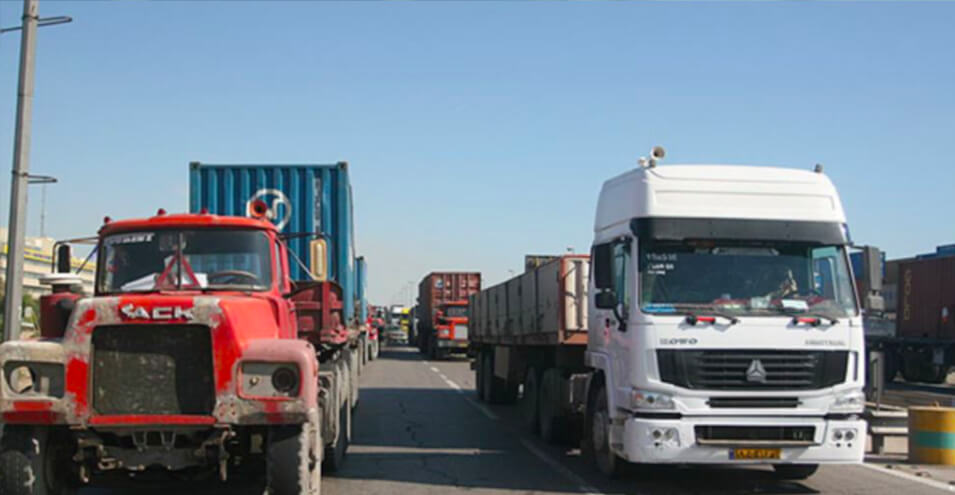
While the truckers' strike continues in various cities in Iran, some human rights sources have reported the arrest of at least 256 truckers and drivers in a new round of truckers' strike in various cities in Iran.
HRANA, which covers human rights news in Iran, wrote on Tuesday that it can say that the total number of detainees in various cities is more than 256 people.
Iranian truck drivers have been on strike for the second time since October 1st in protest against union demands such as shortage of fares, reduced fuel quotas, and rising prices for car accessories such as tires, in various cities including Qazvin, Alborz, Ardabil, Isfahan, Fars, Semnan, Kermanshah, Zanjan, Hamedan, North Khorasan, Razavi Khorasan, and the cities of Nahavand, Bojnourd, Kangan, Pakdasht, Neyshabur, Shirvan, Sanandaj, Azarshahr, Gorgan, Bandargaz, Izeh, Razan, Harsin, Dalahu, Zarand, and Shahrekord, refusing to take on the load.
Regarding the truckers' protests, Mehr News Agency quoted some truck drivers as saying: "The approved price of bias tires is 1.9 million to 2 million tomans, while brokers sometimes sell them to truckers for 5.5 million tomans."
Threatened with death sentence
After several days of this round of protests, the authorities claimed to address the truck drivers' demands, but in practice they took a judicial approach to the strikers, with Attorney General Mohammad Jafar Montazeri threatening the arrestees of the strike with the death penalty.
Mohsen Karami, the head of the Qazvin prosecutor's office, also announced regarding the 17 drivers arrested in the province that after sending their cases, the prosecutor's office has demanded the most severe punishment, namely the death penalty, on charges of "corruption on earth," "road blockade," and "disturbing order and security."
Continued strikes
Despite all the threats and widespread arrests by the Islamic Republic government, truck drivers have not stopped their strike, and the videos they are publishing emphasize that these strikes have not yet ended.
The truckers' protest has caused problems, including the high price of agricultural products in the market. Recently, Behnam Nikfar, CEO of the Iran International Stone Exhibition in Nimvar Mahallat, told IRNA about the impact of the truckers' strike on the holding of the Iran International Stone Exhibition, saying, "Only 50 percent of the booths, of which 30 percent belong to miners from Markazi Province and Mahallat, have been prepared and have transported their stones to the exhibition, and the remaining 50 percent are still busy providing trucks to transport the stones."
Truck drivers first began a two-week nationwide strike on June 1st of this year in response to a reduction in commission rates, an increase in fares, and government assistance in paying insurance premiums.
These strikes have also drawn support from global unions, including the International Transport Workers' Federation, for the truckers' and drivers' strike. In recent days, there has been further international support for the strike.
The North American Truck Drivers International Union also supported the striking truck drivers in Iran in June of this year.
Source: Voice of America