Ebrahim Raisi's order for "precautionary stockpiling" of essential goods
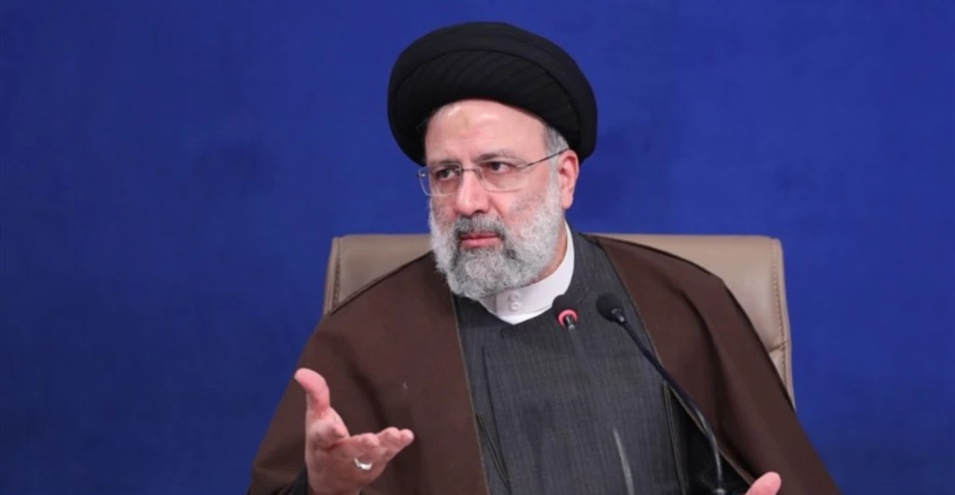
At the same time as the "price of the US dollar in the Iranian market" has accelerated again and news has been released of a draft resolution condemning the Islamic Republic being presented to the Board of Governors, Ebrahim Raisi has ordered several government agencies to pursue the "precautionary" supply and storage of essential goods.
On Tuesday, June 17, the 13th Prime Minister of the Islamic Republic of Iran ordered the Ministers of Industry, Mines, Trade, and Agricultural Jihad to identify the obstacles to the implementation of the "Basic Goods Supply and Storage Program" and, in coordination with his First Deputy, Mohammad Mokhbar, to "remove" them.
According to a report published by the Iranian Presidential Information Center, in a meeting chaired by Ebrahim Raisi and attended by the First Vice President, the Ministers of Economic Affairs and Finance, Agricultural Jihad, Roads and Urban Development, Security, Defense and Support of the Armed Forces, and the heads of the Central Bank and the Planning and Budget Organization, the level of the country's "basic commodity reserves" was stated to be in a "desirable state."
On Monday evening, May 19, Ebrahim Raisi announced during a live television interview on the Islamic Republic Radio and Television that the "preferential currency - 4,200 tomans" would be eliminated and that the inflationary effects of this decision would be offset by introducing an "electronic bill" that would be distributed later.
While government officials of the Islamic Republic speak of the "desirable condition" of the "essential goods storage" warehouses in the country and at the same time order their "supply and storage", last month, following the "price liberalization" of these same goods, reports indicate that the general public's ability to purchase many of these goods has decreased.
Boroumand Chahar-Ayin, head of the National Union of Agricultural Cooperatives for Broiler Breeders, told the Tehran-based newspaper Shargh on June 29 that "the new economic policies of the Ebrahim Raisi government" have caused "domestic purchases to decrease by 35 percent" and that chicken prices in Iran are higher than in "neighboring countries."
Amirreza Sabetpay, head of the Iranian Food Industries Federation, also told ILNA news agency that "following price increases," sales of food industry products in the country have "halved," and with a 40 percent increase in the prices of chicken, eggs, and bread, as well as the formation of campaigns not to buy products, "sales of food industry products have decreased by 50 percent."
Therefore, some analysts believe that issuing such orders to "stockpile" essential goods by the authorities of the Islamic Republic goes beyond the country's current needs and is related to some possible macro-political developments or future international decisions related to Iran.
Meanwhile, Reuters reported on Tuesday the text of a "draft resolution" written by the governments of the United States, Britain, Germany, and France, and addressed to the "Board of Governors of the International Atomic Energy Agency" criticizing the Islamic Republic for "failing to fully respond" to the organization's questions about the "discovery of uranium particles" at "undeclared" sites.
On the other hand, Iran's economy and its market sector have also been concerned about the renewed impact of the Islamic Republic's controversial nuclear programs, to the extent that the exchange rate of one US dollar against the Iranian rial accelerated last week, first to more than 300,000 rials, then to the range of 310,000 rials, and now to 320,000 rials, which is the highest record since December of last year.
Accordingly, and following the increase in demand for buying "coins and gold" in Iran, the "Supreme Council for Coordination of the Heads of State," an institution established by order of Ayatollah Ali Khamenei, the leader of the Islamic Republic, "banned" "tomorrow's transactions" of gold and coins as currency on June 11, granting new powers to the Central Bank.
In his meeting today with some members of the Islamic Republic government, Ebrahim Raisi called for "prioritizing" the "acceleration" of the supply and "precautionary stockpiling" of essential goods by them and "removing obstacles" to this "stockpiling".
Since June 14, 2021, and during the presidential election campaign, the 13th head of state of the Islamic Republic and his senior managers have consistently promised a "rapid and revolutionary" boost to the Iranian economy, "single-digit inflation," and "eliminating absolute poverty."
Source: Voice of America