Execution of Afghan child criminal confirmed in Qom prison
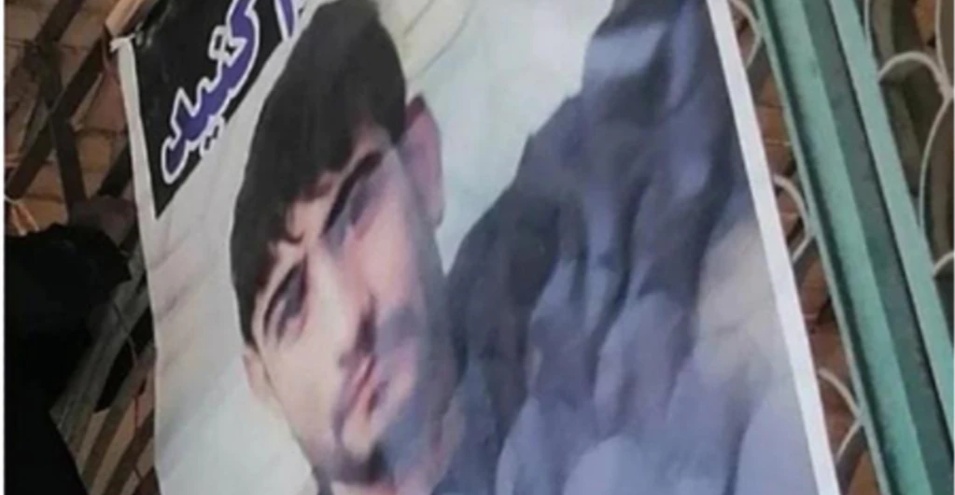
The Halwash news site published documents confirming that Mohammad Hossein Alizadeh, an Afghan national who was recently executed in Qom Prison, was a child offender at the time of his arrest.
In the images of Mr. Alizadeh's prison documents, as well as his court order and verdict, published by "Hal-Vash" on Wednesday, September 29, he is introduced as being born in 1380, from Afghanistan, and residing in the city of Qom.
Mr. Alizadeh was arrested in 2017, when he was 16 years old, on charges of murder with a knife in a street brawl and was held in Qom Prison until his execution on August 9.
According to reports, the child criminal had previously stated that he was forced to confess to the murder under "torture, force, threats, beatings, and verbal abuse," adding: "I do not accept the murder. The knife belongs to me, but I do not remember whether I hit anyone with it. I was not in a normal state, I had been drinking."
Despite these statements, the text of the Supreme Court's published ruling states: "A five-member panel of neurologists and forensic experts have declared that the named person suffers from conduct disorder, aggression, and irritability, but has the ability to distinguish between good and bad, good and bad, and is mentally and intellectually mature for his age. No evidence has been found to indicate that he did not recognize good and bad at the time of committing the crime."
Iran is one of the few countries in which the death penalty is issued and carried out against child criminals, and according to the Iranian Human Rights Organization, available statistics show that the Islamic Republic of Iran has been responsible for 70 percent of the executions of children in the world over the last three decades.
According to this organization's report, at least 63 child criminals have been executed in Iran since 2010, with at least two of these executions taking place in 2021 and four in the year before that.
The laws of the Islamic Republic of Iran set the age of criminal punishment for children at 15 years for boys and 9 years for girls, and despite Iran's accession to the Convention on the Rights of the Child about 27 years ago, the execution of child criminals continues in the country.
According to these Iranian laws, the death sentence of children under 18 years of age is temporarily suspended until they reach the legal age, but it is not canceled. After the defendant reaches the legal age, if the parents do not consent, the person is sentenced to death.
The United Nations General Assembly passed a resolution condemning the human rights situation in Iran in December last year. Among the issues of concern expressed in the resolution was the continued use of the death penalty in the Islamic Republic of Iran for minors, and the Iranian government was called upon to stop the use of the death penalty against children.
Last November, the Third Committee of the United Nations General Assembly, while condemning the widespread and systematic violations of human rights in Iran, expressed serious concern about the continued implementation of the death penalty in the Islamic Republic of Iran for minors and called for an end to this process.
Source: Radio Farda