Exposing the network of corruption and systematic confiscation of Christian property, through the illegal sale of properties belonging to the Urmia Chaldean Church
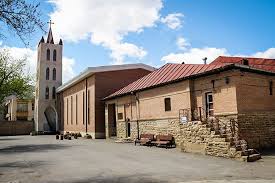
With the revelation of the illegal sale of properties belonging to the Urmia Chaldean Church, the curtain has once again been lifted on the network of corrupt sales and systematic confiscation of Christian property.
The revelation of the illegal sale of several properties belonging to the Chaldean Catholic Church in Urmia has once again drawn attention to the difficult situation of Christians in Iran and the government’s treatment of religious minority properties. The case, which was first made public on February 22 by the Chaldean Catholic Church’s “Patriarch” website with an official statement, quickly became a controversial issue among the Assyrian and Chaldean community inside and outside Iran.
With the arrival of "Imad Khoshabeh," the Chaldean and Assyrian bishop of Iran, to pursue legal action and attempt to reclaim church property, this case has now entered a new phase; a phase that could further reveal the hidden dimensions of corruption and encroachment on the assets of religious minorities in Iran.
According to a notice published on the website of the Patriarch of the Chaldean Church, the sale of these properties, which included a nursing home and a caliphate building, was carried out by an individual who was responsible for the diocese's financial affairs at the time.
The statement said the abuse occurred during a period when the church faced a leadership vacuum following the retirement of former bishop Thomas Myram, a situation that apparently paved the way for the illegal transfer of church assets.
Published reports indicate that a person named Darwin Warda, who was in charge of church finances, is at the center of this case. According to church sources, the sale of properties was carried out without the full knowledge of the main church institutions, and now the Assyrian and Chaldean Christian community is demanding that all aspects of this matter be clarified.
According to informed sources, Bishop Emad Khoshabeh has traveled to Urmia to closely examine the case and pursue the return of church property. This issue is not limited to Iran, but has also become a hot topic of discussion among the Assyrian immigrant community in the United States.
Some community activists have even accused former Bishop Thomas Myrm, who is said to have immigrated to the United States after retiring and now lives there, of being involved in the sale of the properties.
One of the troubling aspects of this case is the new owner's attempt to demolish the church's historic buildings using construction machinery.
This action is said to have been taken before the outbreak of military tensions between Iran, Israel and the United States. However, church officials and members of the Christian community in the region have tried to prevent the destruction of these buildings so as not to lose the possibility of returning the properties to the church.
A statement released by the Chaldean Patriarchate website said that Iranian judicial authorities had arrested the church's financial manager. However, he was later released on bail.
The investigation into this case is still ongoing, and church lawyers, under the supervision of Bishop Emad Khoshabeh, are pursuing legal action to return the properties.
The Assyrian-Chaldean community of Iran, once considered one of the most important and dynamic branches of Christianity in the Middle East, is today facing a sharp decline in population.
According to unofficial estimates, the remaining Assyrian and Chaldean population in Iran is now estimated at only between 1,500 and 4,000. Many members of this community have been forced to leave the country over the past decades due to social, economic, and religious pressures.
The recent Urmia case did not occur in a vacuum. Since the Iranian Revolution of 1979, there have been numerous reports of the confiscation or seizure of property belonging to Christians in Iran.
In many cases, these confiscations were carried out by orders of revolutionary courts or government agencies. For example, in one well-known case, a property belonging to the Council of Churches of the Congregation of the Rabbani of Iran, known as “Bagh Sharon,” was confiscated by a revolutionary court order and seized in favor of the Executive Headquarters of the Imam’s Decree.
This property, which was purchased before the revolution, was used as a location for Christian camps and religious gatherings, and its value was estimated at several million dollars.
There have also been other reports of church closures, hospitals, and property belonging to the Christian community being confiscated. After the revolution, many churches were closed and their property confiscated by the government.
In some cases, even historic Christian monuments have been destroyed, including the historic Christian cemetery in Kermanshah, parts of which were given over for urban development.
Critics say this trend has in effect become a form of "structural pressure" to reduce the presence of religious minorities in Iran.
Given the history of the sale and confiscation of religious minority property in Iran, many observers believe that the case of the sale of the Chaldean Church property in Urmia is not just a case of local corruption, but part of a broader pattern.
In this model, the assets of religious minorities, who often have less political and media power, are subject to confiscation, forced sale, or destruction.
If the ongoing investigation can uncover the truth, the Urmia case may become one of the most important examples of exposing the encroachment on the property of religious minorities in Iran.